
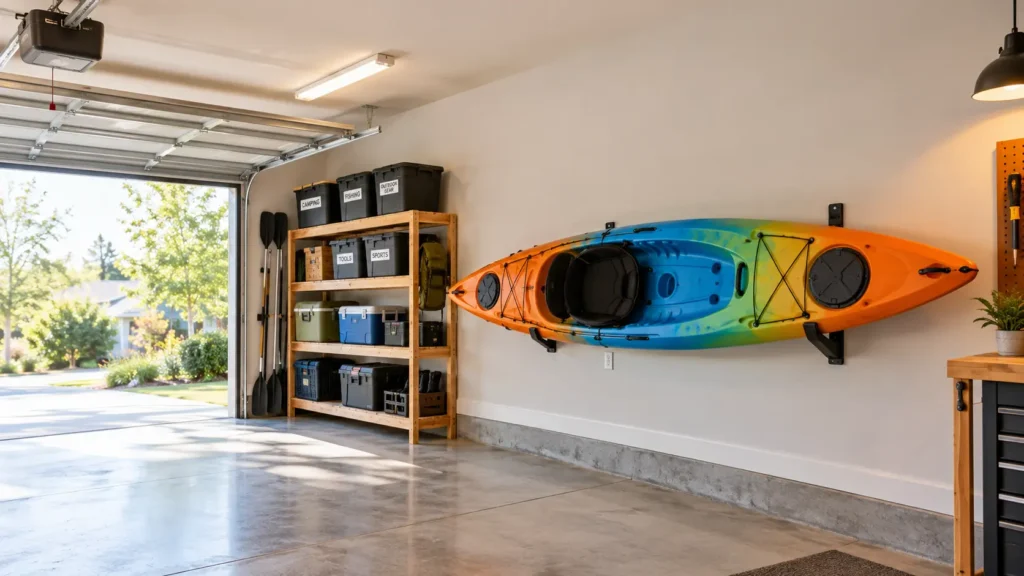
Knowing how to store kayak in garage properly keeps your boat protected, saves floor space, and makes every paddling trip easier. The safest garage kayak storage options are a padded wall rack, a ceiling hoist, or a freestanding rack that supports the hull evenly without creating pressure points.
A kayak rack for garage use is the simplest solution for most paddlers. Wall-mounted racks keep the boat off the floor and easy to reach, while a ceiling kayak hoist works best when wall space is limited. For small garage kayak storage, vertical storage or an overhead pulley system can free up valuable room for your car, tools, and other gear.
This guide walks you through the best garage kayak storage methods, the equipment worth buying, and the mistakes that can damage your kayak over time
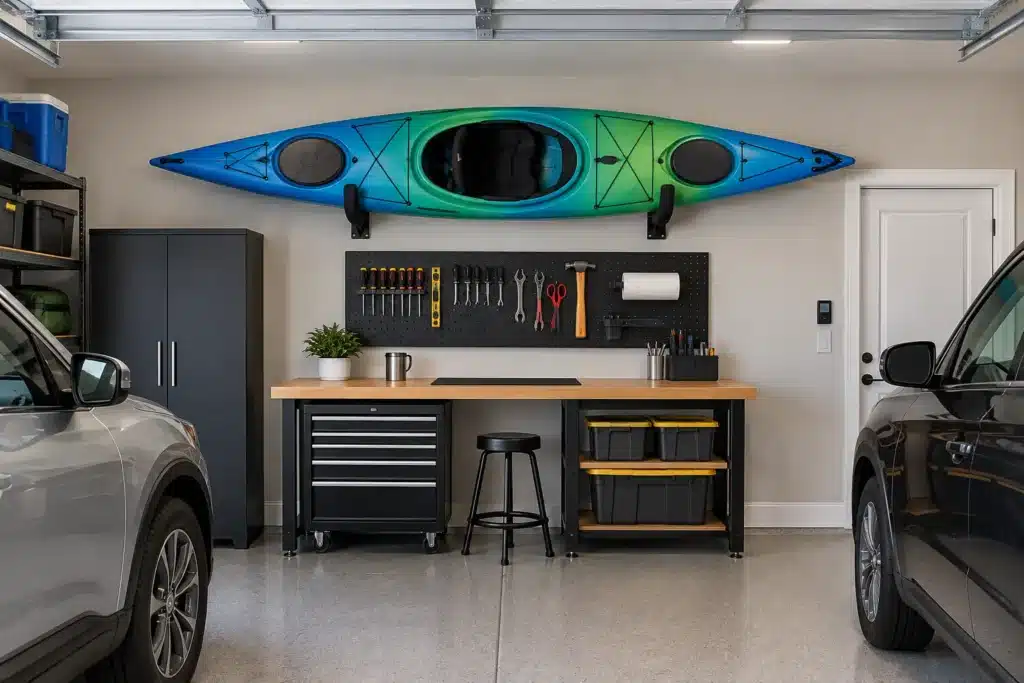
Top Recommended Garage Kayak Racks & Storage Units of 2027
- Kayak Storage Rack – Freestanding, 175 Weight Capacity – Indoor & Outdoor
- RAD Sportz Double Kayak Storage Rack- with Adjustable Safety Strap System
- StoreYourBoard 2 Kayak Ceiling Rack, Overhead Mount, Adjustable
- RaxGo Freestanding Kayak Rack garage, Heavy Duty Storage for Two-Kayak
- Wallmaster Kayak Storage Hooks Hangers, Adjustable Kayak Storage Rack Wall Mount
How to Store Kayak in Garage – What You Need to Know?
The best way to store a kayak in a garage depends on three things: your available space, the kayak’s weight, and how often you use it. A kayak used every weekend needs quick access. A kayak stored through winter needs better hull protection and a dry, stable environment.
Before choosing a storage method, measure these areas:
- Kayak length, width, and weight
- Garage wall length and ceiling height
- Distance from the garage door track
- Location of wall studs or ceiling joists
- Clearance needed for your car, garage door, and walking space
A kayak should never rest directly on concrete for long periods. It should also avoid narrow supports that press into one section of the hull. Wide, padded contact points spread the weight and reduce the chance of dents or flat spots.
Manufacturers such as Hobie specifically warn against hanging a kayak from its bow and stern handles for long periods. Those handles are made for carrying, not storage, and repeated load can stretch the plastic or eventually cause failure.hobie
Clean and Dry Your Kayak Before Storing It
Cleaning takes ten minutes and prevents most long-term storage problems. Salt, sand, mud, algae, and standing water can damage fittings, promote mildew, and leave stains on the hull.
Follow this simple routine:
- Rinse the kayak with fresh water.
- Wash it with mild soap and a soft sponge.
- Clean the cockpit, seat tracks, foot braces, and hatches.
- Remove drain plugs and let water escape.
- Dry the inside and outside completely.
- Store paddles, seats, electronics, and removable accessories separately.
Moisture trapped inside a cockpit can lead to mold, mildew, and unpleasant odors. Manta Racks recommends washing with mild soap and water, drying the kayak fully inside and out, and removing accessories before winter storage. mantaracks
Choose the Best Kayak Storage Method for Your Garage
There is no single “best” garage kayak storage method. The right choice depends on your garage layout and how often you paddle.
| Storage method | Best for | Space needed | Main advantage |
|---|---|---|---|
| Wall rack | One or two kayaks, regular use | Wall space | Easy access and strong support |
| Ceiling hoist | Small garages, seasonal storage | Ceiling height | Frees floor and wall space |
| Vertical storage | Narrow garages or corners | Minimal floor space | Saves the most room |
| Freestanding rack | Renters or multiple kayaks | Floor space | No drilling required |
| Floor cradle | Heavy kayaks, frequent use | Floor space | Easy loading and unloading |
For most homeowners, a kayak rack for garage walls is the best balance of convenience, safety, and cost. If your garage is tight, use a ceiling kayak hoist. If you rent or cannot drill into walls, choose a sturdy freestanding rack.
How to Store a Kayak on Garage Wall Racks
Wall racks are one of the easiest ways to store a kayak in a garage. They keep the boat visible, accessible, and off the floor.
Choose the right wall location
Pick a wall section with enough clear length for the kayak. Avoid placing the rack where it blocks the garage door, shelves, or walking paths.
Install into solid framing
Anchor the rack into wall studs, masonry, or another structural surface. Drywall alone cannot safely hold a kayak. A wall-mounted rack should use wide, padded arms that support the hull without concentrating weight in one spot.mantaracks
Support the hull correctly
Use padded J-style hooks, cradles, or wide foam-covered arms. Position the supports roughly one-third of the way in from each end. This gives the kayak balanced support and reduces stress on the middle of the hull.mantaracks
Keep your kayak secure
If children, pets, or vehicles move through the garage, add straps around the kayak. Straps prevent accidental bumps from knocking the boat off the rack.
How to Hang a Kayak From the Garage Ceiling?
A ceiling kayak hoist is ideal when you need small kayak holder for garage. It uses overhead space that would otherwise go unused and keeps the floor clear for parking.
– Check ceiling structure first
Never attach a hoist to thin ceiling panels, metal battens, or unknown framing. Attach it to solid joists, rafters, or a properly installed support spanning multiple framing members. Bunnings Workshop notes that garage roof framing is often designed for the roof and ceiling load, not added point loads from a hoist, so the mounting method matters.workshop.bunnings.com
– Use wide straps, not rope
Hang the kayak with at least one-inch webbed straps. Hobie recommends webbing because it spreads the load across more hull area; thin rope can leave dents in the rails, especially on heavier kayaks.hobie
– Position the straps correctly
Place one strap near the front third of the kayak and another near the rear third. Keep the kayak level. Avoid tightening the straps so much that they deform the hull.
– Use a pulley system for easy lifting
A ceiling hoist with pulleys lets you load the kayak at floor level and raise it with minimal effort. This is especially useful for longer touring kayaks, fishing kayaks, or heavier boats.
How to Store a Kayak on the Floor Without Damaging It
Floor storage is the easiest option, but it needs the right setup. Never leave a kayak flat on concrete for weeks or months.
Use one of these methods:
- Two padded sawhorses: Place them about one-third of the way in from each end.
- Low kayak cradles: These support the hull shape and keep the boat off the ground.
- A rolling kayak cart: Useful if you launch often and want to wheel the kayak outside.
- Foam blocks: A temporary option, but use wide blocks and check for pressure marks.
If you store the kayak right side up, use shaped cradles that match the hull. Hobie warns that storing a kayak right side up with little support can put the full weight on one point and create a flat area.hobie
Storing the kayak upside down on two padded crossbars is another good option because the cockpit rails are usually stiff and can handle the load well.hobie
Best Kayak Storage Racks and Hangers for Garages (kayak storage ideas)
The best garage kayak storage equipment should have wide padding, strong mounting hardware, and a design that matches your space.
Wall-mounted kayak rack
A wall rack is best for paddlers who use their kayak regularly. Look for:
- Foam-coated arms
- Weight rating above your kayak’s weight
- Mounting hardware for studs or masonry
- Safety straps
- A low-profile design that does not block parking space
Ceiling kayak hoist
A hoist is best for small garages or seasonal storage. Look for:
- Pulley system with a locking mechanism
- Wide lifting straps
- Mounting hardware for joists or rafters
- Enough ceiling clearance for the kayak and garage door
Freestanding kayak storage rack
A freestanding rack works well for renters, garages without usable wall space, or households with several boats. Choose a rack with a wide base, padded supports, and a weight rating that covers every kayak you plan to store.
Vertical kayak wall mount
Vertical storage is useful when horizontal wall space is limited. It works best for lighter kayaks and requires secure padding at the base plus a strap or bracket near the top to prevent tipping.
How to Store Multiple Kayaks in a Small Garage?
Storing several sea kayaks does not require a larger garage. It requires better use of vertical space.
Use stacked wall racks
A two-tier or three-tier wall rack keeps kayaks separated while using the same wall area. Put the kayak you use most on the lowest level.
Store kayaks vertically
Storing kayaks vertically works well in a corner or beside a garage door. Place padding under the bow or stern, secure the top of the kayak to the wall, and make sure it cannot tip.
This method saves space, but it is less convenient for heavy fishing kayaks. Manta Racks notes that horizontal wall storage may be easier on both you and the boat when the kayak is heavy. mantaracks
Combine wall and ceiling storage
Use wall racks for the kayaks you paddle most and a ceiling hoist for seasonal boats. This approach keeps everyday gear accessible while protecting the kayaks you rarely move.
Keep paddles and gear together
Add a paddle hook, mesh bag, or small shelf under the rack. Keeping life jackets, paddles, and dry bags in one place prevents clutter.
Common Kayak Storage Mistakes to Avoid:
Avoid these mistakes to protect your kayak and your garage:
- Hanging the kayak by its handles: Handles can stretch or fail under long-term load. hobie
- Using thin rope: Rope can create pressure points and dent the hull or rails.
- Resting the kayak directly on concrete: This can trap moisture and create flat spots.
- Using narrow supports: Narrow boards or hooks concentrate weight in one area.
- Overtightening straps: Straps should hold the kayak securely, not compress the hull.
- Storing near heaters or direct heat: Heat can damage certain kayak materials over time.
- Leaving water inside: Trapped moisture can cause mildew and damage accessories.
- Ignoring weight limits: Check the rack, hoist, and mounting hardware ratings before loading the kayak.
A good rule is simple: support the kayak widely, evenly, and gently.
How to Protect Your Kayak During Long-Term Garage Storage
Long-term garage kayak storage needs more attention than short-term storage between weekend trips.
Keep it dry and ventilated
A garage should stay dry and reasonably ventilated. Avoid storing the kayak against a damp wall or directly on the floor.
Keep it away from heat sources
Keep the kayak away from furnaces, space heaters, hot vehicles, and direct sunlight through windows. Manta Racks recommends a cool, dry storage area away from furnaces and space heaters.mantaracks
Loosen straps slightly
For long-term storage, keep the kayak secure but avoid excessive strap tension. Constant pressure in one area can eventually leave marks or contribute to hull deformation.mantaracks
Inspect it every few months
Check for:
- Soft spots or dents
- Cracks around fittings
- Mold or mildew
- Loose hardware
- Strap marks
- Pest activity
Use a breathable cover if needed
If dust is a problem, use a breathable kayak cover. Avoid wrapping the kayak tightly in plastic because trapped moisture can cause mildew.
kayak storage Solution & Rack Ideas – FAQs
How to hang kayak in garage?
Hang a kayak in a garage using a ceiling hoist or wall-mounted rack with wide, padded straps or cradles. Attach the hardware to solid joists or studs, support the hull near the front and rear thirds, and never hang it by the bow or stern handles.
How to hang a kayak in your garage?
To hang a kayak in your garage, install a padded ceiling hoist into ceiling joists or mount a wall rack into studs. Use wide webbing straps to spread the load, keep the kayak level, and avoid thin rope or narrow pressure points.
How to store a kayak in your garage?
Store a kayak in your garage by cleaning and drying it first, then placing it on a padded wall rack, ceiling hoist, freestanding rack, or floor cradle. Keep it off concrete, support the hull evenly, and store it away from direct heat and moisture.
How to store a kayak vertically?
To store a kayak vertically, stand it upright in a garage corner with padding under the bow or stern. Secure the upper section to a wall stud or bracket so it cannot tip, and check that the kayak’s weight and length are manageable.
How to store kayaks vertically?
Store multiple kayaks vertically by using padded wall brackets, corner supports, or a vertical multi-kayak storage. Keep each kayak stable with a top strap, leave space between boats, and use horizontal storage for heavier kayaks when lifting is difficult.
Can I store a kayak upside down in the garage?
Yes. Many kayaks can be stored upside down on two padded crossbars because the cockpit rails provide strong support. Use wide padding and avoid placing pressure on delicate fittings.
Is it better to store a kayak horizontally or vertically?
Horizontal storage is generally safer and easier for heavy kayaks. Vertical storage saves more space and works well for lighter kayaks in a secure corner.
How much ceiling height do I need for a kayak hoist?
You need enough height for the kayak, hoist hardware, straps, and clearance underneath. Measure the fully lowered and fully raised positions before installing anything.
Can I store a kayak on the garage floor?
Yes, but only on padded cradles, sawhorses, foam blocks, or a rolling cart. Do not leave it flat on bare concrete for long periods.
What is the best kayak rack for garage storage?
The best kayak rack for garage storage is a padded wall-mounted rack for regular use or a ceiling hoist for small garages. Choose a model with a weight rating above your kayak’s weight and wide contact points that protect the hull.
Conclusion
Learning how to store kayak in garage the right way protects your investment and makes your space easier to use. The best setup supports the hull evenly, keeps the kayak off the floor, and avoids pressure from narrow straps, thin rope, or carry handles. For most paddlers, a padded kayak wall rack offers the best mix of access and protection. For small garages, a ceiling kayak hoist turns unused overhead space into practical garage kayak storage. If you have several boats, combine vertical storage, stacked racks, and overhead storage to keep everything organized.
Before storing your kayak, clean it, dry it completely, and inspect the hull, straps, and mounting hardware. A few minutes of preparation can prevent dents, mildew, warped fittings, and expensive repairs.
Ready to reclaim your garage space? Choose a padded kayak rack for garage walls, a reliable ceiling kayak hoist, or a sturdy freestanding rack that fits your kayak’s size and weight. The right garage kayak storage system keeps your boat ready for the next launch while giving you back the space you need.
If you liked this article, we think you’ll like these too:
- How Do You Store A Kayak When You Live In An Apartment? (Kayak Storage Made Simple)
- What Are The Best Fishing Kayaks For Big Guys? (Complete Buyers Guide)
- Customizing A Kayak For Fishing – 10 Accessories Fishing Kayakers Must Have