
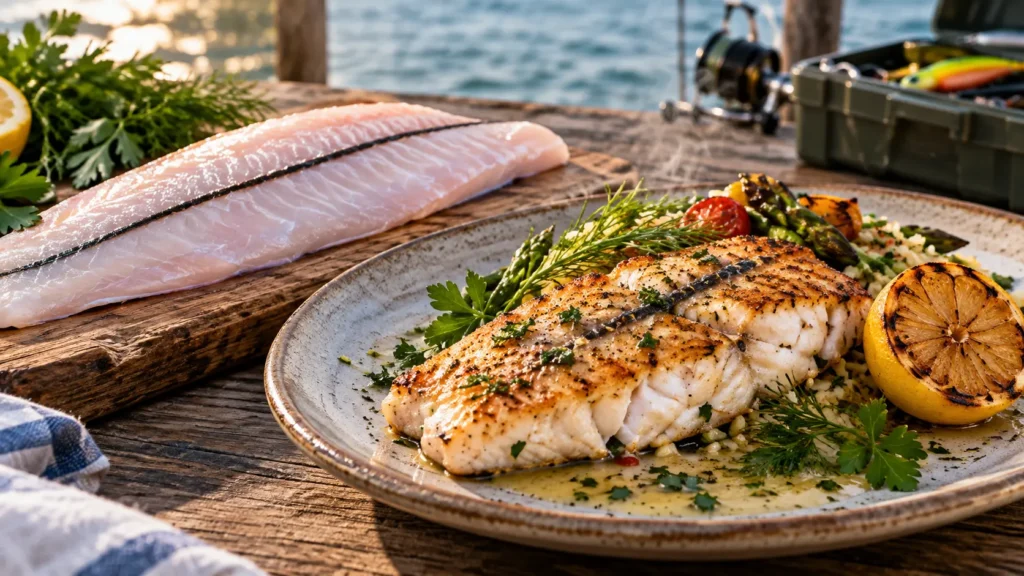
Is snook good to eat? Common snook is a good fish to eat. It has mild, slightly sweet white meat, a firm yet flaky texture, and enough natural flavor to shine with simple seasoning. Many anglers consider it one of the best-tasting inshore fish, especially when the fillets are fresh, properly cleaned, and cooked without drying them out.
That said, snook is not a fish you can simply buy at most seafood counters. In Florida, common snook is managed as a recreational gamefish, so commercial sale is prohibited there; anglers must follow location-specific harvest regulations before keeping one.
One Fishing Trip. Memories That Last for Years.” Bring your family aboard for a fun-filled day chasing snook, redfish, and trout.
What Is Snook Fish?
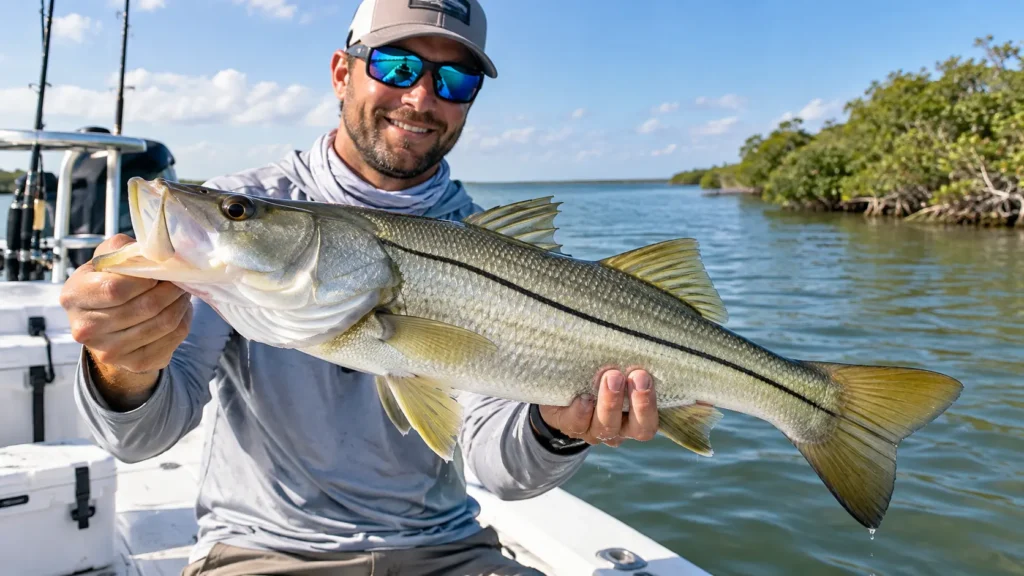
Snook—often called the common snook or linesider—is a popular inshore game fish found along Florida’s Gulf and Atlantic coasts, as well as in tropical and subtropical waters from the Caribbean to South America. It has a long, silvery body, a sloping forehead, a large mouth with a protruding lower jaw, and a bold black lateral line running from the gills to the tail.
Snook live around mangrove shorelines, seagrass beds, estuaries, docks, bridges, river mouths, beaches, and other structure. They are ambush predators that face into moving water and feed on small fish, shrimp, and crabs.
Anglers prize snook for hard runs and dramatic jumps, but the species also has a reputation as excellent table fare. In Florida, it is managed mainly as a recreational fish, with strict harvest rules designed to protect the population.
How to identify a snook
- Black lateral line extending onto the tail
- Protruding lower jaw
- Sloping forehead and large mouth
- Yellow pelvic fins
- Silvery body with a golden or yellowish tint
- High, divided dorsal fin
Is Snook Good to Eat? (Taste, Texture, and Quality)
Is snook a good eating fish? For most people, yes. Snook fillets are white, lean, and moist when cooked correctly. The flavor sits between snapper and grouper: clean and mild, with a subtle sweetness rather than a strong “fishy” taste.
The texture is another reason snook earns praise. It is firmer than trout but softer and more delicate than swordfish, producing large, satisfying flakes when it is baked, grilled, or pan-seared.
Quality depends heavily on handling. Snook live in warm inshore waters, so the flesh can soften quickly if the fish sits in heat. Ice it immediately, bleed it if you plan to keep it, and cook the fillets within a day or two for the best eating experience.
What affects snook quality?
- Freshness: Firm flesh, clear eyes, and a clean ocean smell are good signs.
- Handling: Keep the fish cold from the moment it is landed.
- Cleaning: Remove the skin and dark bloodline to improve flavor.
- Cooking method: Gentle heat protects the moist, flaky texture.
What Does Snook Fish Taste Like?
Snook has a mild flavor with a light sweetness. It does not taste overly oily, muddy, or intensely briny. Many people describe it as a premium white-fish flavor: clean enough for kids and picky eaters, but flavorful enough to stand up to citrus, garlic, herbs, and spices.
The flesh is white to off-white and cooks into large flakes. Because snook is relatively lean, it benefits from butter, olive oil, citrus, or a light marinade. Overcooking is the main mistake; dry snook loses much of what makes it special.
Snook compared with other fish
| Fish | Flavor | Texture | Best simple use |
|---|---|---|---|
| Snook | Mild, lightly sweet | Firm but flaky | Pan-seared fillets, fish tacos |
| Snapper | Mild, slightly nutty | Firm, flaky | Baked whole or grilled |
| Grouper | Mild, meaty | Dense, large flakes | Blackened sandwiches |
| Trout | Delicate, sometimes earthy | Soft, fine flakes | Pan-fried |
| Mahi-mahi | Mild, slightly sweet | Firm, meaty | Grilled tacos |
Is Snook Safe to Eat?
Snook is generally safe to eat when it is legal to harvest, fresh, and prepared properly. Like many locally caught fish, it can carry region-specific contaminants, so check the local consumption advisory for the exact body of water before eating it regularly. The FDA advises anglers to check fish advisories because locally caught fish may contain mercury or other contaminants.fda
If no advisory exists for your water body, the FDA suggests limiting locally caught fish to one serving per week and avoiding other fish that week. This is a conservative general guideline, not a snook-specific rule.fda
Pregnant people, breastfeeding parents, and young children should be especially careful about mercury exposure. The FDA and EPA recommend choosing a variety of lower-mercury seafood and following local advisories for fish caught by family or friends.fda+1
Safety checklist
- Confirm that snook harvest is open in your area.
- Follow the legal size range and daily limit.
- Check state and county health advisories.
- Keep the fish on ice immediately.
- Cook snook to an internal temperature of 145°F.
- Avoid eating raw or undercooked snook.
Does Snook Fish Have Bones?
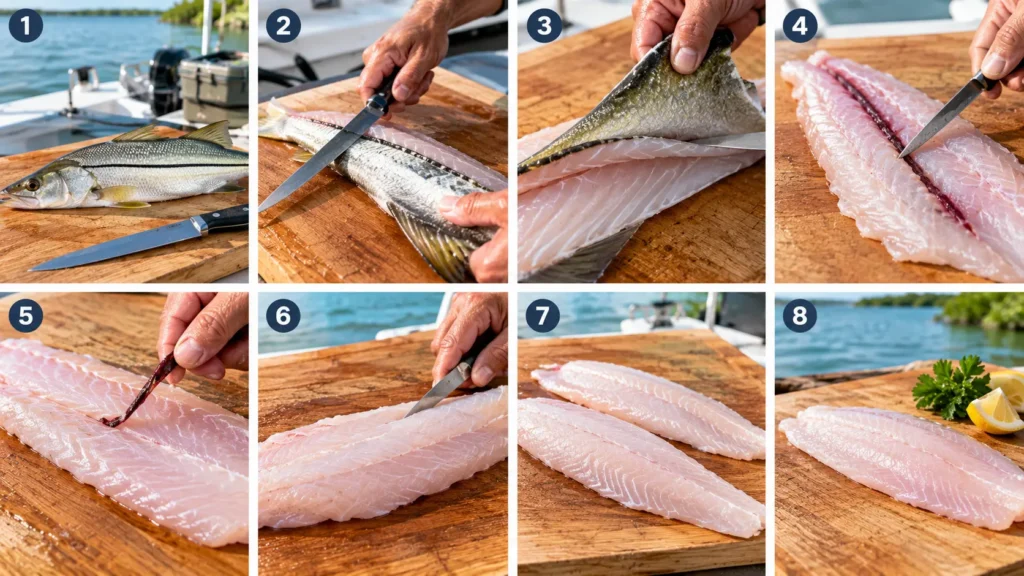
Yes, snook has bones, but it fillets well. The main bones sit along the backbone and rib cage, and a careful filleting job removes most of them. Snook also has a dark bloodline along the fillet; removing it improves both appearance and flavor.
For beginners, ask a local fish market, charter captain, or experienced angler to demonstrate the first cleaning. Once you learn the technique, snook yields clean boneless fillets that are easy to cook.
Quick cleaning method
- Rinse the fish and place it on a stable cutting board.
- Cut behind the gill plate down to the backbone.
- Run the knife along the spine toward the tail.
- Lift the fillet and cut it free.
- Repeat on the other side.
- Remove the skin, ribs, pin bones, and dark bloodline.
- Rinse briefly, pat dry, and keep the fillets cold.
Is Snook a Healthy Fish to Eat?
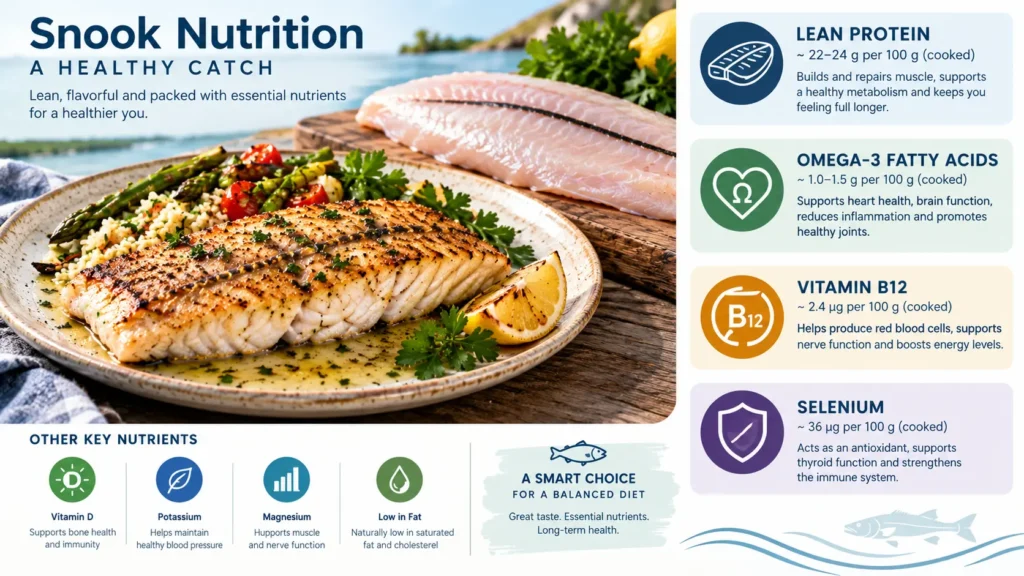
Snook can be a healthy choice because it provides lean protein and beneficial omega-3 fats. Like other fish, it also supplies nutrients such as vitamin B12, selenium, and iodine. The exact nutrition varies by fish size, diet, and location.
The main health consideration is contamination risk from the shallow waters where the fish was caught. Larger, older predatory fish often accumulate more mercury over time, which is one reason local advisories matter.fda
For most healthy adults, an occasional properly handled snook meal is a nutritious way to enjoy fresh seafood. If you eat locally caught fish often, rotate species and follow public-health guidance for your area.fda
What Is the Best Size Snook to Eat?
The best snook to eat is usually a legal-sized fish in the middle of the allowed slot—not the biggest fish you can catch. Larger snook are often older breeding females, and releasing them helps protect the population. In Florida, the common snook is protected by slot limits, daily bag limits, and seasonal closures designed to conserve larger fish.
Florida’s rules vary by management region. In many areas, the recreational slot limit is 28–33 inches total length, with a one-fish-per-person daily bag limit; some east-coast regions use a 28–32 inch slot.myfwc+1
Florida snook rules at a glance
| Area | Typical slot limit | Daily limit | Important note |
|---|---|---|---|
| Most west-coast regions | 28–33 inches | 1 per person | Closed Dec. 1–end of February and May 1–Aug. 31. |
| Southeast, Indian River Lagoon, Northeast | 28–32 inches | 1 per person | Closed Dec. 15–Jan. 31 and June 1–Aug. 31. |
| Charlotte Harbor and Southwest | 28–33 inches | 1 per person | Season timing differs; check FWC before fishing. |
Regulations change, and boundaries matter. Always confirm current rules with the Florida Fish and Wildlife Conservation Commission or your local wildlife agency before keeping a snook.
How to Clean and Prepare Snook for Cooking
Snook is easy to prepare once it is filleted. The most important step is removing the skin and bloodline. Some anglers call snook the “soap fish” because the skin can give an unpleasant soapy taste if it is left on.
After cleaning, pat the snook fillets dry. Moisture prevents a good sear and can make the coating soggy. Season simply at first: salt, black pepper, garlic, paprika, and lemon are enough to let the natural flavor come through.
Simple preparation ideas
- Skin-off fillets: Best for pan-searing, baking, and fish tacos.
- Light marinade: Olive oil, lime, garlic, and cilantro for 15–30 minutes.
- Dry rub: Paprika, cumin, garlic powder, onion powder, salt, and pepper.
- Egg wash and crumb coating: Works well for fried snook strips.
What Is the Best Way to Cook Snook?
The best way to cook snook depends on the cut and your preference, but pan-searing is hard to beat. A hot pan, a little butter or olive oil, and a squeeze of lemon create a golden crust while keeping the inside tender.
Snook also works well grilled, baked, blackened, or fried. Because the flesh is lean, avoid long cooking times. A thick fillet usually needs only a few minutes per side, depending on heat and thickness.
Three reliable methods
- Pan-seared: Sear skin-off fillets in butter or olive oil for 2–4 minutes per side, then finish with lemon.
- Grilled: Oil the grates well, cook over medium-high heat, and baste with citrus butter.
- Baked: Bake at 400°F for 10–14 minutes, depending on thickness, until the flesh flakes easily.
What Does Snook Taste Best With? (Seasonings and Side Dishes)
Snook’s mild, sweet flavor pairs well with bright, fresh ingredients. Citrus is especially effective because it balances the fish’s richness and adds aroma without covering up the natural taste.
Best seasonings
- Lemon, lime, or orange zest
- Garlic and shallots
- Fresh parsley, cilantro, dill, or basil
- Smoked paprika or blackening seasoning
- Cajun spice blends
- Butter, olive oil, or a little mayo-based marinade
Best side dishes
- Coconut rice or cilantro-lime rice
- Grilled vegetables
- Black beans and corn salsa
- Roasted potatoes
- Mango or pineapple salsa
- Crisp slaw
For fish tacos, season snook with chili powder, cumin, and lime. Top it with cabbage slaw, avocado, and a creamy lime sauce. The mild flavor and flaky texture make snook an excellent taco fish.
Is Snook Better Fried, Grilled, or Baked?
Each method works, but they highlight different qualities.
| Method | Why it works | Best for |
|---|---|---|
| Fried | Crispy coating contrasts with tender flakes | Snook strips, tacos, family meals |
| Grilled | Adds smoky char and keeps the fish light | Thick fillets and warm-weather dinners |
| Baked | Easy, hands-off, and less likely to stick | Beginners and meal prep |
| Pan-seared | Creates a golden crust and preserves moisture | Best all-around method |
If you want the cleanest snook flavor, bake or grill it. If you want maximum crunch and crowd appeal, fry it. If you want the best balance of texture, speed, and flavor, pan-sear it in butter and finish with lemon.
What Bait to Use for Snook?
The best bait for snook is live bait that matches what the fish naturally eats: pilchards or scaled sardines, live shrimp, finger mullet, and pinfish. Snook readily take both live bait and artificial lures, but live bait is especially effective during warm months and around docks, bridges, mangroves, and passes.
Best live baits
| Bait | When to use it | How to fish it |
|---|---|---|
| Pilchards or scaled sardines | Warm months; clear water | Free-line near passes, docks, and mangrove points |
| Live shrimp | Cooler water or when snook are picky | Fish under dock lights, near structure, or on a jighead |
| Finger mullet | Summer and fall, especially during mullet runs | Free-line along beaches, inlets, and mangrove edges |
| Pinfish | Targeting larger snook near bridges or deep structure | Fish on a knocker rig or fish-finder rig |
The Florida Fish and Wildlife Conservation Commission specifically recommends live pinfish, small mullet, shrimp, or sardines, either free-lined or fished off the bottom with a fish-finder rig.
FAQs
Is snook good eating?
Yes. Snook is good eating, with mild white meat, a lightly sweet flavor, and a firm, flaky texture. Freshness and proper cleaning make a major difference.
Is snook a good fish to eat compared with grouper?
Snook is lighter and more delicate than grouper. Grouper is meatier and denser, while snook has a softer flake and a slightly sweeter taste.
Can you buy snook in Florida?
Usually no. Florida prohibits commercial harvest and sale of common snook, so it is primarily a recreational catch there. Catching a snook on light tackle delivers an exhilarating fight that puts your fishing skills to the test.
What size snook tastes best?
A legal, mid-slot fish usually offers the best balance of meat quality and conservation value. Avoid targeting oversized breeders if you do not need to keep a fish.
Does snook have a lot of bones?
No. Once filleted properly, snook has few remaining bones. Remove the ribs, pin bones, and bloodline before cooking.
Is snook high in mercury?
Mercury levels depend on the fish’s size, age, and where it was caught. Check local advisories, especially if you are pregnant, breastfeeding, or serving fish to young children. fda
What is the best way to cook snook?
Pan-searing is the best all-purpose method. Grill or bake snook for a lighter meal, and fry it when you want crispy fish tacos or sandwiches.
Conclusion
Is snook good to eat? Absolutely. Snook is one of the most rewarding fish an angler can bring home: its white fillets taste mild and slightly sweet, while the firm, flaky texture works beautifully in tacos, grilled dishes, baked meals, and crispy fried recipes. The key is treating it well—ice it quickly, remove the skin and bloodline, and avoid overcooking.
Before keeping one, respect the rules. Snook harvest regulations, slot limits, closed seasons, and local consumption advisories vary by location, particularly across Florida waters. Check the current rules for your exact area, keep only what you legally can, and release oversized breeding fish carefully. When handled responsibly, snook offers excellent table fare and a memorable connection to the Gulf Coast’s inshore fisheries. If you get the chance to cook a fresh, legal snook, simple citrus butter and a hot pan are all you need to discover why so many anglers rate it so highly.
Recommended posts
- Snook Fishing Tips – Best Baits, Techniques & Tackle
- Can You Eat Tarpon Fish? Here’s What You (Need-To-Know)