
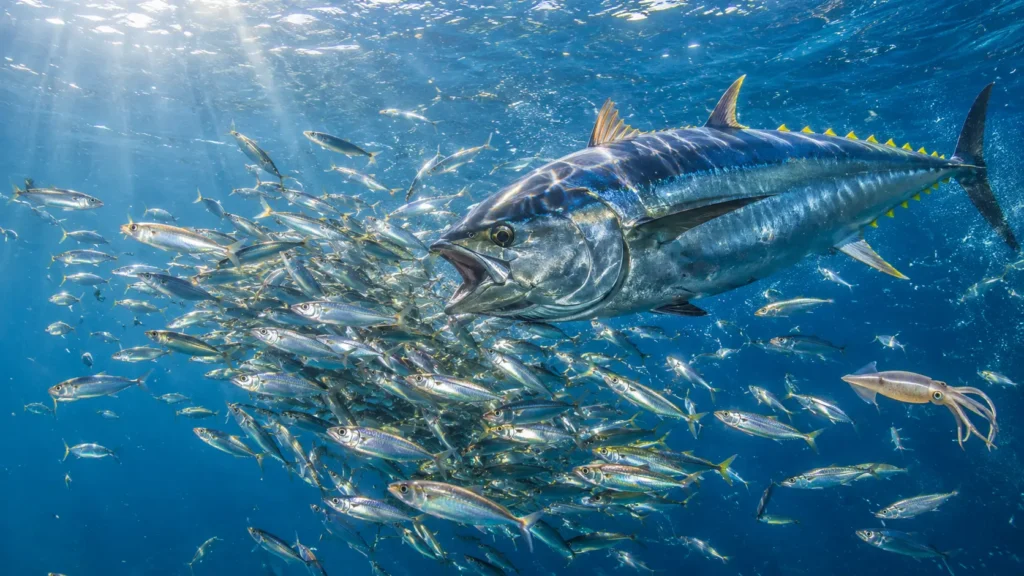
What do bluefin tuna eat in the wild? Blue fin tuna eat a wide range of marine animals, including sardines, herring, anchovies, mackerel, squid, and crustaceans. Their bluefin tuna diet changes as they grow: young fish feed on tiny plankton and larvae, while adults and giant bluefins pursue larger schools of baitfish.
Understanding what drives these massive, warm-blooded predators gives us a clear window into how the open ocean functions. From fast-moving juveniles darting through coastal waves to massive giants cruising thousands of feet below the surface, blue fin tuna play a major role in marine food webs.
This deep dive uncovers everything you want to know about their daily meals, favorite snacks, hunting strategies, and the specific bait that hooks them.
Ready for the Catch of a Lifetime? Reserve Your Bluefin Tuna Trip Now!
What Do Bluefin Tuna Eat in the Wild?
A bluefin tuna with its mouth wide open swimming directly toward the camera in greenish underwater environment.
Bluefin tuna are opportunistic ocean predators.
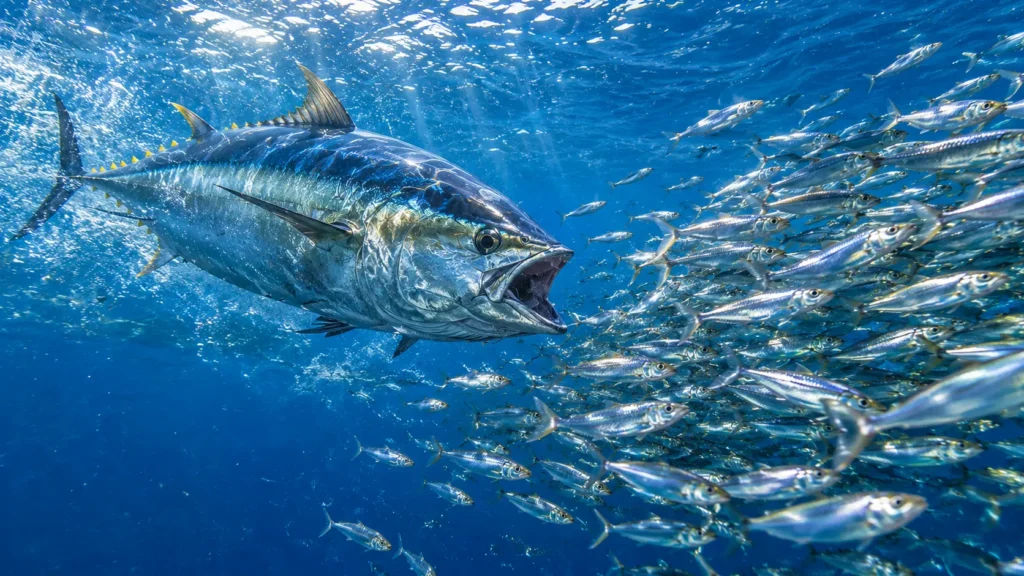
They do not rely on one food source; they eat whatever abundant, energy-rich prey they can find in their migration route. NOAA Fisheries describes them as top predators, with juveniles eating fish, squid, and crustaceans, while adults feed mainly on baitfish such as herring, bluefish, and mackerel.
Their prey usually lives in large schools, which makes it easier for bluefin to feed efficiently. When a school of small fish bunches near the surface, bluefin can charge through it, scatter the bait, and pick off individual fish.
Main food groups include:
- Small schooling fish
- Squid and other cephalopods
- Shrimp, crabs, and other crustaceans
- Eels and occasional larger fish
- Plankton and larvae during early life stages
What Are Bluefin Tuna’s Favorite Foods?
A blue fin tuna favorite food is usually whatever baitfish is most plentiful at the time. In the Atlantic, that often means herring, mackerel, and bluefish; in Pacific waters, anchovies and flying fish are common targets.
These prey species matter beyond the fish itself. Healthy baitfish populations help support tuna stocks, fishery management, and the broader conservation of Atlantic tunas.
Do Bluefin Tuna Eat Squid, Shrimp, and Crabs?
Yes. Bluefin tuna eat squid, shrimp, crabs, and other invertebrates, especially when baitfish are less available. Squid are an important part of the diet because they gather in schools and provide protein-rich food for both young and adult tuna.
Shrimp and small crabs are more common in the diets of juvenile bluefin and smaller tuna. Adults may still eat them, but they usually prefer faster, higher-volume prey such as herring, mackerel, or squid.
What Do Baby and Juvenile Bluefin Tuna Eat?
Baby bluefin tuna start life in open water after eggs hatch about two days after fertilization. At that stage, they feed on plankton and very small marine organisms.
As they grow, their diet expands:
- Larvae: plankton, fish eggs, and tiny crustaceans
- Juveniles: small crustaceans, fish larvae, squid, and small fish
- Young adults: schooling baitfish, squid, and larger crustaceans
This shift matters because a young bluefin must grow quickly to escape predators. Juvenile bluefin face threats from bluefish, seabirds, and larger fish, so finding dense food sources can improve survival.
What Do Adult and Giant Bluefin Tuna Eat?
What do giant bluefin tuna eat? Mostly larger schools of oily baitfish. Adults feed heavily on herring, bluefish, and mackerel, while very large fish can also take bigger prey when the opportunity appears.
Atlantic bluefin tuna can grow to 13 feet and 2,000 pounds, according to NOAA Fisheries. That size gives them access to more prey, deeper water, and longer migrations than smaller species of tuna such as skipjack tuna, albacore tuna, yellowfin tuna, or bigeye tuna.
Giant bluefin are not limited to surface feeding. Atlantic bluefin frequently dive to depths of 500 to 1,000 meters, where they may encounter squid, deepwater fish, and other prey.
How Do Bluefin Tuna Hunt and Catch Their Prey?
Bluefin tuna hunt by sight and speed. They are built like torpedoes, with powerful muscles, a stiff body, and a lunate tail that drives fast bursts of swimming. This body design helps them charge into a bait school and capture prey before it escapes.
They often hunt cooperatively or at least take advantage of schooling behavior. When baitfish gather near current lines, temperature breaks, or underwater structure, bluefin can push the school upward. Birds diving, whitewater, and baitfish spraying across the surface often reveal feeding bluefin below.
Their ability to regulate body temperature also gives them an advantage. Bluefin can hunt in colder North Atlantic waters where many other large predators slow down.
Do Bluefin Tuna Feed at Night or During the Day?
Bluefin tuna can feed during the day and at night. Daytime feeding often happens when baitfish school near the surface, while nighttime feeding may increase around squid and vertically migrating prey that rise toward shallower water after dark.
Light, water temperature, current, and prey movement all influence feeding. Anglers often find bluefin more active around first light, late afternoon, tide changes, and areas where bait concentrates. The key is not the clock alone—it is where the food is.
Does the Bluefin Tuna Diet Change With the Seasons?
Yes. The bluefin tuna fish diet changes with migration, water temperature, and prey availability. In spring and summer, bluefin may follow warming water and abundant baitfish northward. In fall, they often feed heavily before long movements or colder conditions arrive.
Seasonal patterns differ by ocean. Atlantic bluefin live in temperate waters and migrate across the Atlantic, while Pacific bluefin tuna follow prey along the California and Baja coast during prime fishing months.
For anglers, this means matching the hatch: use the bait species that local bluefin are actively feeding on, rather than assuming one bait works everywhere.
What Bait Do Anglers Use to Catch Bluefin Tuna?
A human hand holds a blue and silver fishing lure with treble hooks in the foreground, with several large bluefin tuna lying on a surface in the background.
The best bait attracts bluefin tuna by copying their natural prey. Common choices include sardines, mackerel, squid, herring, anchovies, and flying fish.
Popular fishing methods include:
- Live baiting: drifting or slow-trolling a live sardine, mackerel, or similar baitfish
- Chunking: cutting bait into pieces to create a scent trail and keep fish near the boat
- Trolling: pulling lures, spreader bars, or rigged baits to cover more water
- Casting: throwing poppers, stickbaits, or jigs into surface-feeding fish
- Kite fishing: presenting a bait at the surface, often mimicking flying fish
AFTCO notes that bluefin commonly feed on anchovies, mackerel, flying fish, and other forage, and that anglers often locate them around current edges, temperature breaks, and underwater structure.
Bluefin Tuna and Other Tuna Species
Bluefin tuna are one of several important tuna species. Atlantic bluefin tuna (Thunnus thynnus), Pacific bluefin tuna (Thunnus orientalis), and southern bluefin tuna (Thunnus maccoyii) are the three bluefin species. Other well-known species include yellowfin tuna, bigeye tuna, skipjack tuna, and albacore tuna.
These differences explain why tuna fishing tactics vary by region and species. A tuna catch in the Pacific Ocean may involve a different bait, depth, and technique than one in the Atlantic.
Why the Bluefin Tuna Diet Matters
Bluefin tuna sit near the top of the marine food web. Their need for large amounts of forage fish connects them directly to fish stocks, tuna fisheries, and broader ocean health. Overfishing, habitat pressure, and changes in baitfish abundance can affect the species across its range.
The western Atlantic bluefin tuna fishery is managed under a rebuilding plan, with quotas, gear rules, size limits, and time-area closures designed to support recovery. Bluefin meat is prized for sushi and sashimi, and it can also be served fresh or frozen as a rich tuna steak; its high fat content makes it distinct from most canned tuna.
Frequently Asked Questions About What Bluefin Tuna Eat
Do bluefin tuna eat other tuna?
They can. Bluefin are opportunistic predators, so they may eat smaller tuna or tuna-like fish when available. Their usual diet, however, centers on schooling baitfish, squid, and crustaceans.
Do bluefin tuna eat sharks?
No. Adult bluefin tuna do not hunt sharks as a normal food source. In fact, large sharks, toothed whales, and very large billfish can prey on bluefin.
Do bluefin tuna eat octopus?
Occasionally. Bluefin mainly eat squid rather than octopus, but they may take an octopus if it is small enough and easy to catch. Squid are a much more regular part of their diet.
Do bluefin tuna eat smaller fish?
Yes. Smaller fish make up much of the adult diet, especially herring, sardines, anchovies, mackerel, sand lance, and bluefish.
How much food does a bluefin tuna eat per day?
Feeding amounts vary with size, water temperature, activity, and prey availability. Some fishing sources estimate that bluefin can eat up to 10 percent of their body weight daily during periods of intense feeding.
Do bluefin tuna eat jellyfish?
Jellyfish are not a major adult food source. They may affect very young bluefin as predators rather than prey, and bluefin larvae can face jellyfish predation in spawning areas.
What bait attracts bluefin tuna most?
Live sardines, mackerel, herring, squid, and flying fish are strong choices because they resemble natural prey. The best option is usually the baitfish bluefin are actively feeding on in that area.
How old is a 1,000-pound bluefin tuna?
Usually 20–30 years old, though growth varies by ocean and food availability. Large bluefin can live several decades.
What goes well with bluefin tuna?
Soy sauce, wasabi, citrus, avocado, sesame, ginger, rice, and light olive oil pair well with bluefin’s rich, buttery flavor.
Is tuna high in mercury?
Bluefin and bigeye tuna can be relatively high in mercury; pregnant people and young children should limit high-mercury tuna and choose lower-mercury options.
What are bluefin tuna fed in aquaculture?
Farms commonly feed them fresh or frozen sardines, anchovies, herring, mackerel, and squid; some operations test formulated pellets.
Conclusion
What do bluefin tuna eat? They eat an adaptable mix of baitfish, squid, shrimp, crabs, and other marine prey. Young bluefin begin with plankton and tiny crustaceans, then shift toward fish larvae and small fish. Adults become powerful hunters of herring, sardines, anchovies, mackerel, bluefish, and squid.
Understanding the bluefin tuna favorite food helps anglers choose better bait, helps scientists track ocean health, and helps consumers understand why these fish need strong management.
Whether you are trying to catch bluefin tuna, identify tuna species, or simply learn more about the ocean’s largest tuna, their food choices reveal how connected the open ocean really is. Protecting baitfish, reducing overfishing, and supporting responsible tuna fisheries all help keep bluefin populations—and the food web they depend on—healthy.
Recommended posts
- Are Tuna Warm-Blooded? The Surprising Truth Explained
- What Do Yellowfin Tuna Fish Eat? A Look at Their Favorite Prey
- What Is the World Record Yellowfin Tuna? (443-Pound Giant)