
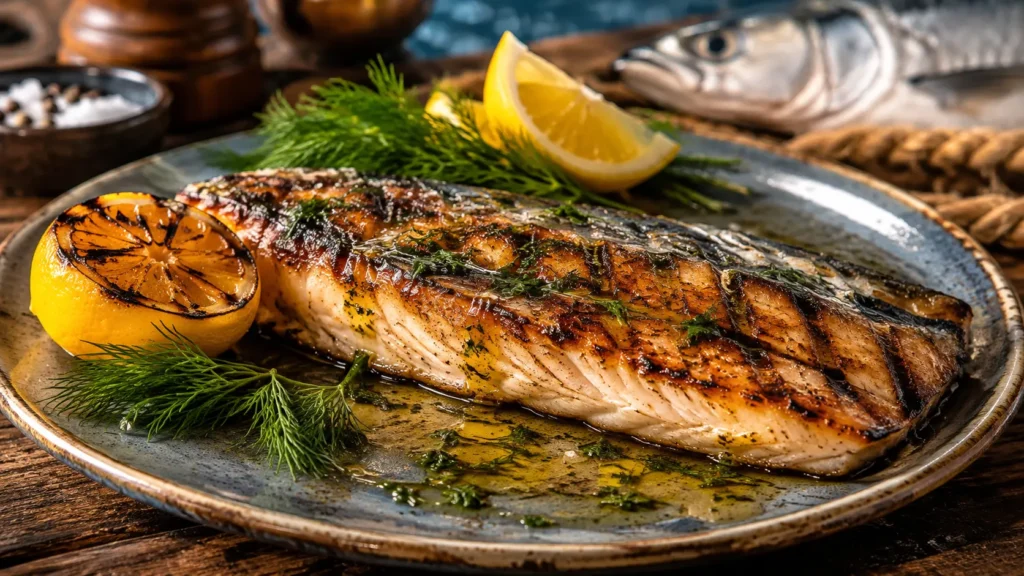
Are bluefish good to eat? Bluefish are good eating when they are fresh, properly chilled, and cooked with their rich, oily nature in mind. They have a bold, savory flavor that is stronger than mild white fish, so they work best with bright acids, herbs, and high-heat cooking methods.
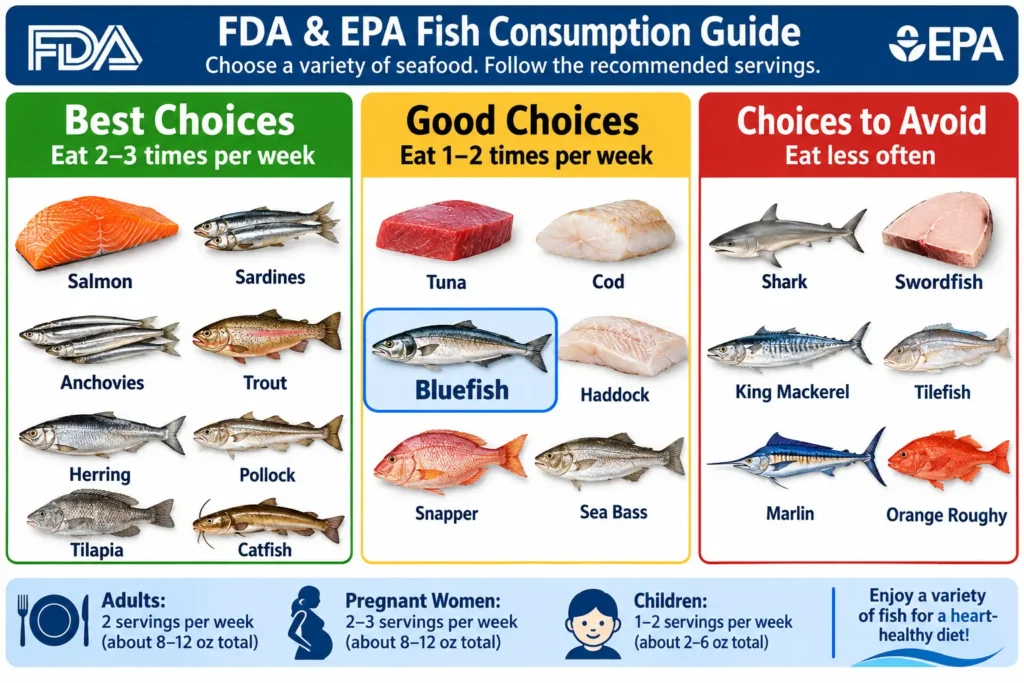
Bluefish or “Tailor fish” are a wild Atlantic fish with firm, fatty flesh, making them satisfying and versatile in the kitchen. The main things to know before eating bluefish are freshness, portion size, and mercury guidance: the FDA/EPA classify bluefish as a “Good Choice,” generally meaning one 4-ounce serving per week for people who are pregnant or breastfeeding.
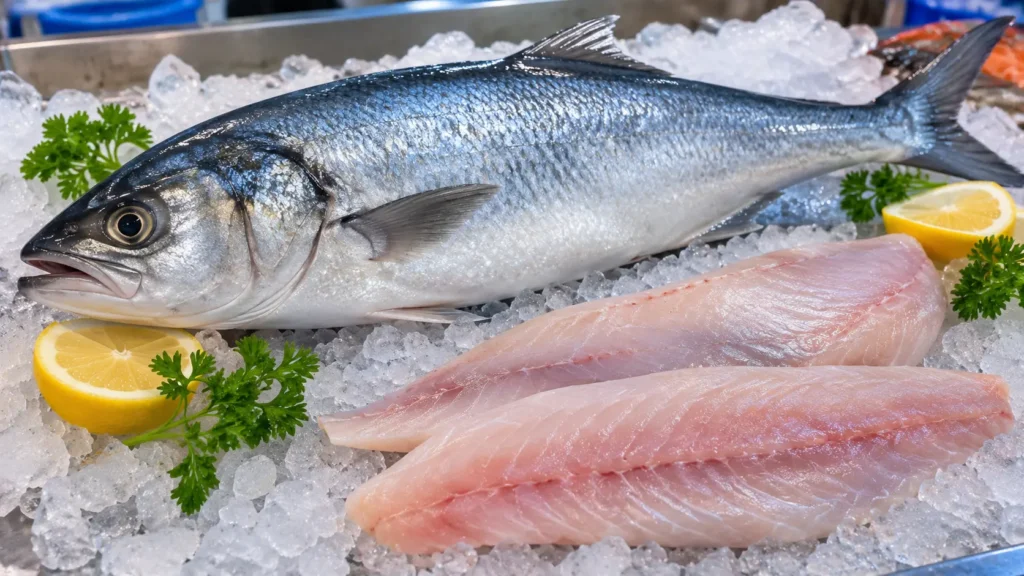
Are Bluefish Good to Eat?
Bluefish are good to eat, but they are not a neutral-tasting fish for everyone. Their flesh contains natural oils that create a rich, almost meaty flavor, often compared to mackerel, bluefish’s oilier cousins, or a stronger-tasting striped bass.
The biggest difference between a great bluefish meal and a disappointing one is handling. Bluefish spoil faster than many fish because their oils react quickly after harvest; rapid icing, prompt cleaning, and cooking fresh blue fish within a day or two make a major difference in taste and safety.
If you enjoy salmon, mackerel, sardines, or smoked fish, you will likely enjoy bluefish. If you prefer very mild fish such as cod, haddock, or flounder, choose smaller bluefish and use lemon, vinegar, mustard, or tomato to balance the richness.
What Does Bluefish Taste Like?
Bluefish tastes rich, savory, and distinctly “fishy” in a good way. It has a firm texture, moderate flake, and a fatty mouthfeel that stands up well to grilling, roasting, and smoking.
Unlike delicate white fish, bluefish does not disappear into a sauce. It contributes flavor to the dish, especially when paired with sharp or smoky ingredients.
Flavor profile:
- Richness: High because of natural oils.
- Texture: Firm, moist, and flaky when cooked correctly.
- Intensity: Stronger than cod, haddock, tilapia, or flounder.
- Best comparison: Somewhere between mackerel and a full-flavored salmon.
- Freshness factor: Fresh blue fish tastes cleaner and sweeter; older bluefish becomes increasingly strong and oily.
Is Bluefish Healthy? Nutrition and Health Benefits
Wild-caught bluefish can be a healthy part of a balanced diet. Like other oily fish, it provides protein and marine omega-3 fats, which support a heart-healthy eating pattern. Federal dietary guidance recommends at least 8 ounces of seafood weekly for adults on a 2,000-calorie diet.
Bluefish also supplies nutrients commonly found in seafood, including vitamin B12, selenium, iodine, and vitamin D. The exact nutrition varies by fish size, season, and preparation method, especially if the fish is breaded, fried, or served with heavy sauces.
Nutrition highlights
| Nutrient or feature | Why it matters |
|---|---|
| High-quality protein | Supports muscle maintenance and satiety |
| Omega-3 fats | Part of a heart-healthy seafood pattern |
| Vitamin B12 | Important for energy metabolism and nerve function |
| Selenium and iodine | Support normal thyroid and antioxidant functions |
| Natural fish oils | Create flavor but require fresh handling |
The healthiest preparations are grilling, baking, broiling, poaching, or smoking with minimal added fat. Deep-frying adds calories and can mask the clean, fresh flavor that makes well-handled bluefish enjoyable.
Is Bluefish High in Mercury?
Bluefish contain more mercury than low-mercury “Best Choices” such as salmon, sardines, or tilapia, but they are not in the FDA/EPA “Choices to Avoid” group. The agencies place bluefish in the “Good Choices” category, which generally allows one serving per week for people who are pregnant, might become pregnant, or are breastfeeding.
For the general adult population, the key is variety rather than fear. Eating bluefish occasionally alongside lower-mercury seafood is a sensible approach.
Practical mercury guidance
- Pregnant or breastfeeding: One 4-ounce serving of bluefish per week; do not add other “Good Choices” fish that week.
- Children: Follow age-based portions; FDA guidance uses smaller servings, such as 1 ounce for ages 1–3, 2 ounces for ages 4–7, and 3 ounces for ages 8–10.
- Other adults: Enjoy bluefish in moderation and rotate it with lower-mercury fish.
- Local advice matters: If you catch bluefish yourself, check state fish-consumption advisories because local contamination can differ from general federal guidance.
Are Bluefish Safe to Eat Raw?
Bluefish are not a good choice for raw preparations such as sushi or sashimi unless they are specifically sold as sushi-grade and handled under strict cold-chain controls. Their oily flesh and rapid spoilage rate make careful handling especially important.
The main concern is scombrotoxin, also called histamine poisoning. Certain fish can develop elevated histamine when they are not chilled quickly after capture; cooking, freezing, smoking, or curing does not destroy histamine once it forms.
How to reduce the risk
- Buy from a reputable fishmonger who keeps fish on ice.
- Avoid fish with an ammonia-like smell, dull eyes, soft flesh, or discolored gills.
- Refrigerate fresh bluefish at 40°F or below and cook it promptly.
- Keep caught bluefish on ice immediately and gut larger fish soon after landing.
- Skip raw bluefish unless you have complete confidence in its sourcing and handling.
What Is the Best Size Bluefish to Eat?
The best bluefish for eating are usually smaller fish, often called “snappers” or “harvesters,” generally in the 1- to 3-pound range. They tend to have milder flavor, softer bones, and less accumulated oil than very large adult bluefish.
Larger bluefish can still be delicious, especially when smoked or grilled, but their flavor becomes more pronounced. Many cooks prefer to remove the dark bloodline from bigger fillets because it carries much of the strongest taste.
Size guide
| Bluefish size | Eating experience | Best use |
|---|---|---|
| Under 2 pounds | Milder, tender, easier to cook | Pan-frying, baking, grilling |
| 2–4 pounds | Rich but balanced | Grilling, roasting, chowder |
| Over 4 pounds | Bold, oily, strongly flavored | Smoking, stews, strongly seasoned recipes |
How to Clean and Prepare Bluefish for Cooking
Good preparation turns bluefish from overly fishy to genuinely delicious. Work quickly, bleed and keep the fish cold, and remove the parts that hold the strongest flavor.
Step-by-step preparation
- Chill immediately. Put the fish on ice as soon as possible after catching or purchasing it.nj
- Scale and gut promptly. Remove the guts, gills, and bloodline to reduce strong flavors.
- Fillet carefully. Use a sharp fillet knife and remove pin bones with tweezers.
- Trim the dark meat. The darker lateral line carries a more intense flavor; remove some or all of it depending on preference.
- Rinse briefly and dry. Pat the fillets dry so seasoning and high-heat cooking work properly.
- Marinate briefly. Use lemon, lime, vinegar, mustard, yogurt, or buttermilk for 20–45 minutes; avoid long acidic marinades, which can make the texture mushy.
- Cook soon. Fresh bluefish is best within 1–2 days; freeze only fish that has been handled and chilled properly.
What Is the Best Way to Cook Bluefish?
The best way to cook bluefish is usually a high-heat method that renders some of the oil and creates browned edges: grilling, broiling, roasting, pan-searing, or hot-smoking. Bluefish has enough fat that it does not need heavy breading or excessive butter.
Grilled Bluefish
Grilling is one of the best bluefish recipes because the flames complement its rich flavor.
Simple grilled bluefish
- Brush fillets with olive oil.
- Season with salt, black pepper, smoked paprika, and garlic.
- Grill skin-side down over medium-high heat for about 4–6 minutes.
- Flip carefully and cook another 2–4 minutes, depending on thickness.
- Finish with lemon juice, chopped parsley, and a little chili flakes.
A cedar plank or foil packet helps prevent sticking and keeps the fillet moist.
Baked Bluefish
Baking is easy and ideal for a weeknight meal.
Lemon-herb baked bluefish
- Heat the oven to 400°F.
- Place fillets in a baking dish with lemon slices, thinly sliced onion, garlic, olive oil, and oregano.
- Bake for 12–18 minutes, until the fish flakes easily.
- Serve with roasted potatoes, couscous, or a sharp green salad.
The acidity from lemon and onion balances the richness without overwhelming the fish.
Pan-Fried Bluefish
Pan-frying gives bluefish a crisp exterior while keeping the inside moist.
- Dust fillets lightly with seasoned flour or cornmeal.
- Heat a thin layer of oil in a skillet over medium-high heat.
- Cook about 3–4 minutes per side, depending on thickness.
- Drain briefly and serve with tartar sauce, remoulade, or a vinegar-based slaw.
This is a good method for smaller bluefish fillets.
Smoked Bluefish
Smoked bluefish is a classic preparation, especially in coastal areas. Bluefish’s natural oils absorb smoke beautifully, producing a dense, savory result.
- Brine fillets for 2–4 hours in a simple salt, sugar, and water solution.
- Rinse, dry, and let them form a tacky surface layer.
- Smoke at low heat until firm and fully cooked.
- Flake smoked bluefish into dips, pasta, salads, or spread it on toast with cream cheese and pickled onions.
What Does Bluefish Taste Best With?
Bluefish tastes best with ingredients that add freshness, acidity, smoke, or spice. Because the fish is naturally rich, avoid heavy cream sauces as the main flavor unless you want a very indulgent dish.
Excellent pairings
- Citrus: Lemon, lime, orange, grapefruit
- Vinegar: Red wine vinegar, apple cider vinegar, pickled onions
- Herbs: Parsley, dill, cilantro, basil, oregano
- Spice: Black pepper, paprika, cayenne, harissa, chili crisp
- Vegetables: Tomatoes, fennel, corn, peppers, zucchini, potatoes
- Starches: Rice, couscous, roasted potatoes, crusty bread
- Condiments: Mustard, tartar sauce, salsa verde, yogurt-dill sauce
A reliable formula is: bluefish + acid + fresh herbs + a little smoke or heat.
How Often Can You Safely Eat Bluefish?
For most healthy adults, eating bluefish occasionally is reasonable, especially when you rotate it with lower-mercury seafood. The FDA/EPA “Good Choices” guidance specifically advises one weekly serving for people who are pregnant, might become pregnant, or are breastfeeding.
For children, use smaller portions and prioritize lower-mercury “Best Choices” most weeks. A serving is generally 4 ounces before cooking for adults; children’s portions range from about 1 to 4 ounces depending on age.
If you catch bluefish locally, always check your state’s advisory before making it a regular meal. Local waters can have different contaminant concerns from the national guidance.
FAQs
Are blue fish good eating?
Yes. Bluefish are good eating when fresh and cooked properly. They have a stronger, oilier flavor than mild white fish, so they suit people who enjoy mackerel, salmon, or smoked seafood.
Does bluefish have a lot of bones?
Bluefish have a normal bone structure for a fish, including a backbone, rib bones, and some pin bones. They are not especially bony like shad or many freshwater panfish, but you should still remove pin bones before cooking.
What does bluefish taste like?
Bluefish tastes rich, savory, and full-flavored, with firm, flaky flesh. Fresh bluefish tastes cleaner and less intense than fish that has been poorly chilled.
Is bluefish healthy?
Bluefish can be healthy because it provides lean protein, omega-3 fats, and important seafood nutrients. Bake, grill, broil, or smoke it rather than frying it for the healthiest meal.
Is bluefish high in mercury?
Bluefish have moderate mercury levels and are classified as a “Good Choice” by FDA/EPA guidance. People who are pregnant or breastfeeding should limit bluefish to one 4-ounce serving per week.
Can you eat bluefish raw?
Avoid eating bluefish raw unless it is specifically sushi-grade and handled under strict cold-chain controls. Bluefish can develop histamine if it is not chilled rapidly after capture, and cooking does not remove histamine that has already formed.
Why does my bluefish taste so fishy?
The likely causes are an older fish, poor chilling, or leaving the dark bloodline in the fillet. Buy smaller fish, keep it ice-cold, trim the dark meat, and cook it with lemon, vinegar, or tomatoes.
What is the best size bluefish to eat?
Bluefish around 1–3 pounds are usually the best size for eating. They tend to taste milder and have a better texture than very large fish.
Do you need to soak bluefish before cooking?
You do not need to soak bluefish, but a short marinade in lemon juice, buttermilk, or a vinegar-based mixture can soften its strong flavor. Keep the soak brief so the flesh does not turn mushy.
What is the best way to cook bluefish?
Grilling, broiling, baking, pan-frying, and hot-smoking are the best methods. High heat renders the natural oils and creates a better texture than slow, low-temperature cooking.
Can you freeze bluefish?
Yes, freeze fresh bluefish as soon as possible in airtight packaging. Freezing preserves quality, but it does not remove histamine that formed before freezing.
Do bluefish migrate?
Yes, bluefish migrate seasonally along the Atlantic coast, moving north toward New England in warmer months and south again as water temperatures drop.fisheries.noaa+1
Where are bluefish commonly caught?
Bluefish are common from Maine to Florida, with strong seasonal runs around New England and the mid-Atlantic coast.fisheries.noaa+1
Are bluefish related to tuna?
No. Bluefish and tuna are both fast, powerful ocean fish, but they belong to different fish families; bluefish are Pomatomus saltatrix, while tuna are scombrid fish.
Can bluefish be used like tuna in recipes?
Yes, but expect a stronger, oilier flavor. Bluefish works well in grilled, smoked, or tomato-based dishes, while tuna is usually milder and meatier.
What fish is not recommended to eat?
For people who are pregnant, might become pregnant, or are breastfeeding, the FDA/EPA advise avoiding fish highest in mercury: shark, swordfish, king mackerel, tilefish from the Gulf of Mexico, bigeye tuna, and orange roughy.
Is bluefish safer than high-mercury fish?
Yes. Bluefish are classified as a “Good Choice,” while shark, swordfish, king mackerel, and bigeye tuna fall into higher-mercury categories that require stricter limits or avoidance for sensitive groups.fda+1
Should children avoid bluefish?
Children can eat bluefish in small, occasional portions, but lower-mercury “Best Choices” such as salmon, sardines, and tilapia are better for regular meals.
What are some examples of tropical blue fish?
Tropical blue fish include the blue tang, royal blue tang, mandarinfish, blue-green chromis, yellowtail damselfish, emperor angelfish, and blue parrotfish. They are colorful coral-reef species, not the edible Atlantic bluefish.
Conclusion
Are blue fish good to eat? Yes—bluefish are an underrated, flavorful wild fish that deserves a place on the table when handled with care. Their rich, oily flesh delivers a satisfying meal, especially when you choose smaller fish, keep them ice-cold, trim the dark bloodline, and cook them with lemon, herbs, tomatoes, or smoke.
Bluefish are not the right choice for someone seeking a bland, neutral fillet. They are ideal for cooks who enjoy real fish flavor and want a versatile seafood that grills, bakes, fries, and smokes well. The smart approach is simple: buy fresh, use high heat, balance richness with acidity, and follow mercury guidance—particularly if you are pregnant, breastfeeding, or serving children.
Recommended posts
- Are Redfish Good to Eat? Taste, Texture & Best Recipes
- Are False Albacore a Good Eating fish? Taste, Prepare, and Recipes
- Is Amberjack Good Eating Fish? Taste, Benefits & Risks