
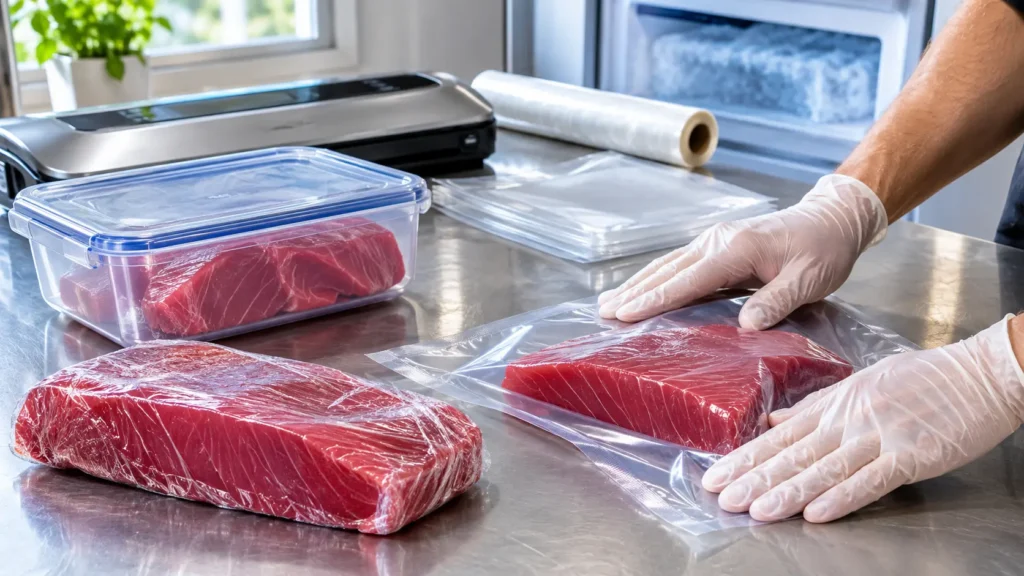
How to freeze tuna fillets properly? To freeze tuna fillets properly, start with very fresh, chilled tuna, pat each fillet dry, wrap it tightly, remove as much air as possible, and store it at 0°F (-18°C) or below.
The best way to preserve its taste and texture is to freeze it quickly in airtight, moisture-proof packaging and thaw it safely in the refrigerator. Freezing fresh tuna lets you store fish for a longer period without waste, but the result depends on what you do before it enters the freezer.
Tuna is a lean, meaty fish that freezes well when handled promptly; however, air exposure, slow freezing, and repeated temperature changes can dry out the fillet and damage its texture. This guide explains how to prepare, package, freeze, defrost, and refreeze tuna steaks or fillets safely.
Why Properly Freezing Tuna Fillets Matters
Freezing fresh tuna protects both food safety and quality—but in different ways. At 0°F (-18°C) or below, frozen food remains safe indefinitely because microbial growth stops; the USDA explains that freezer storage times are mainly about maintaining flavor, color, moisture, and texture rather than safety.
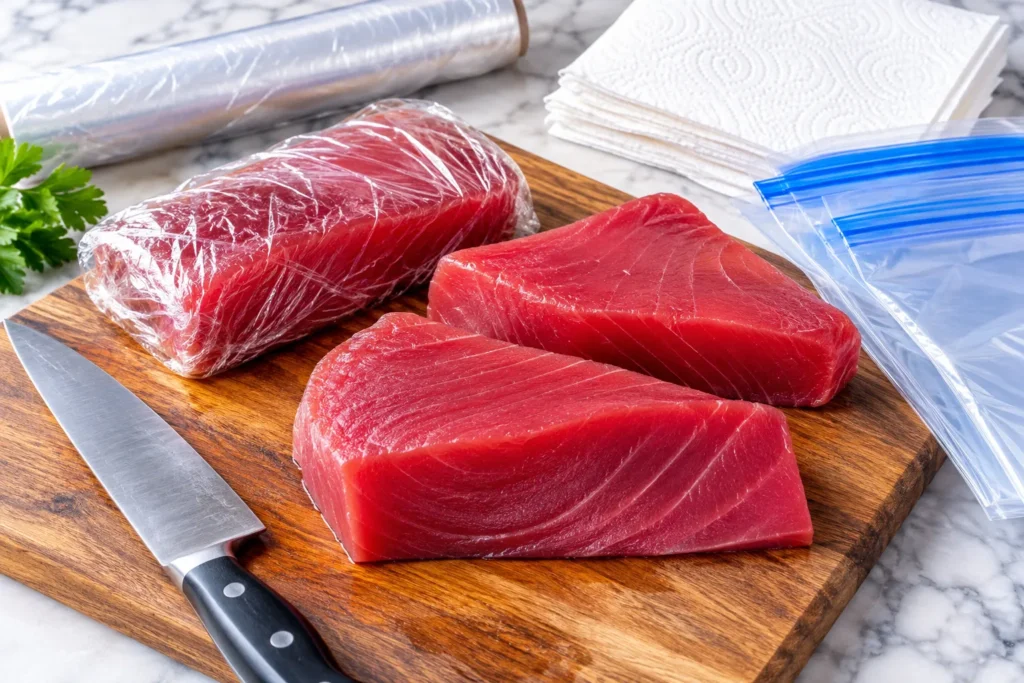
For tuna, quality matters especially much. A fresh yellowfin or bluefin fillet has a firm, steak-like texture and clean, mild flavor. Poor freezing can cause ice crystals to damage muscle fibers, leading to moisture loss, a softer bite, and a duller taste after thawing. Rapid freezing creates smaller ice crystals than slow freezing, which helps the fish retain more juice and structure.
Proper handling also prevents freezer burn. Freezer burn appears as dry, grayish-brown, leathery patches caused when air contacts the surface of the food; it does not make tuna unsafe, but it can seriously reduce quality.
Benefits of freezing fresh tuna
- Reduces waste when you buy a large fillet or catch more than you can eat in 2 days.
- Preserves tuna at its freshest point instead of letting it deteriorate in the fridge.
- Makes meal planning easier with individual portions.
- Allows you to keep tuna steaks ready for grilling, searing, poke-style dishes, or cooked recipes.
How freezing changes tuna
Freezing does not improve fish quality. It can only maintain the quality the tuna had when it went into the freezer. A fillet that is already soft, wet, sour-smelling, or discolored will not become better after freezing.
How to Prepare Tuna Fillets Before Freezing
Preparation is the most important part of freezing tuna. Work quickly, keep the fish cold, and avoid introducing extra moisture.
1. Start with fresh, properly chilled tuna
Choose tuna that smells clean and mild—not fishy, sour, or ammonia-like. Fresh tuna fillets should feel firm, look moist rather than dried out, and have no darkening or drying around the edges.
If you bought fresh tuna, refrigerate it at 40°F (4°C) or below and freeze it as soon as possible if you will not use it within 2 days.
2. Trim and inspect the fillet
Use a clean knife and cutting board. Remove:
- Dark bloodline sections if you prefer a milder flavor
- Any tough connective tissue
- Dry or discolored edges
- Small bones, if present
Do not soak tuna in fresh water before freezing. Extra water can dilute flavor and create more surface moisture, which increases the chance of ice crystals.
3. Pat the tuna completely dry
Lay the fillet on clean paper towels or a clean kitchen towel. Press gently to absorb surface moisture. A dry surface seals better and reduces the amount of water that can freeze on the outside of the fish.
4. Cut into meal-size portions
Slice a large fillet into portions you will actually cook at one time. For freezing tuna steaks, keep each steak separate. For fillets, aim for 6- to 8-ounce portions or whatever size suits your usual recipes.
Smaller, flat portions freeze faster than a thick block of meat. The USDA recommends freezing food quickly and spreading packages out in a single layer until solid, rather than stacking them immediately.
How to Freeze Tuna Fillets Properly (Step-by-Step)
This is the best way to freeze tuna fillets at home without specialty equipment.
- Chill the tuna first. Keep it in the refrigerator until you are ready to package it.
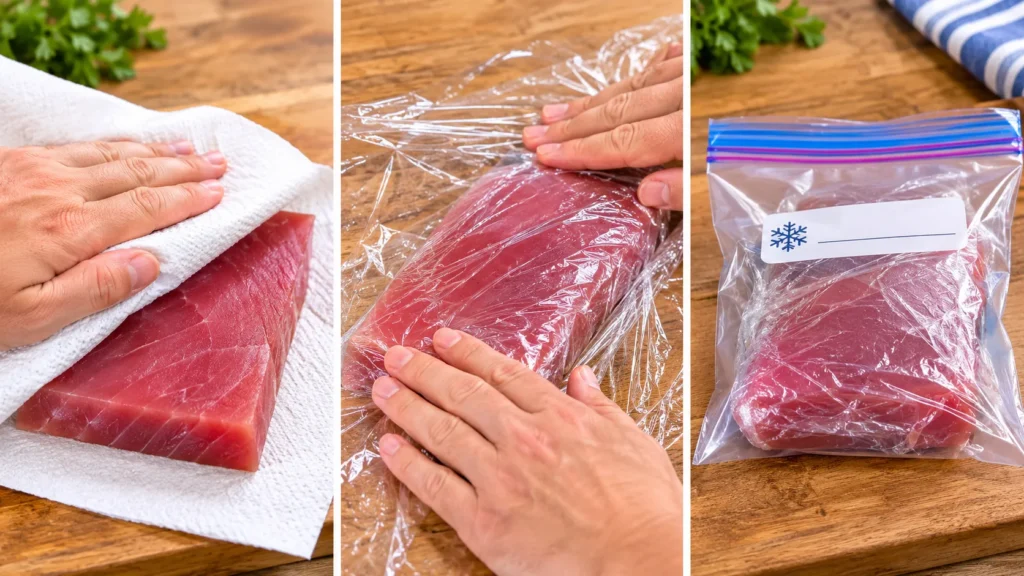
- Pat each fillet dry. Use paper towels to remove surface moisture.
- Wrap tightly in plastic wrap. Press the wrap directly against the fish, smoothing out air pockets.
- Add a second layer. Use another layer of plastic wrap, freezer paper, or heavy-duty aluminum foil. Double wrapping helps block air and moisture.
- Place the wrapped fillet in a freezer bag. Use a gallon-size ziplock bag or another freezer-safe bag.
- Press air out of the bag. Flatten the bag gently before sealing, or use a straw to draw out excess air if you do not have a vacuum sealer.
- Label the package. Write the fish type, cut, weight, and freezing date.
- Freeze quickly in one layer. Place packages apart on a freezer shelf until solid, then stack them to save space.
A simple no-vacuum-sealer method
If you do not own a vacuum sealer, use this sequence:
- Plastic wrap directly on the fish
- Foil or freezer paper around the wrapped fillet
- A labeled freezer bag with the air pressed out
This triple barrier is not as compact as vacuum sealing, but it works well for home freezing when done carefully.
Should You Vacuum Seal Tuna Before Freezing?
Vacuum sealing tuna is one of the best ways to protect quality during long-term freezer storage. A vacuum sealer removes most of the air from the bag, limiting oxidation, moisture loss, and freezer burn.
| Method | Best for | Quality protection | Notes |
|---|---|---|---|
| Vacuum sealing | Long-term storage, tuna steaks, bulk fillets | Excellent | Removes nearly all air; use freezer-grade bags |
| Freezer bag + tight wrap | Short- to medium-term home storage | Very good | Press out air carefully and double wrap |
| Original store packaging | Immediate freezing only | Fair | Overwrap it for longer storage because it may be permeable to air |
| Fish in water | Some lean fish, not ideal for premium tuna | Variable | Can protect from air but may affect texture and dilute flavor |
Vacuum sealing works especially well for freezing tuna steaks because the firm flesh holds its shape during sealing. Leave a little headspace if you plan to freeze a marinade or liquid, but for plain tuna, remove as much air as possible.
Important: Vacuum packaging changes thawing safety. Do not thaw vacuum-sealed fish on the counter. Follow the package instructions, and remove or open the vacuum packaging before refrigerator thawing unless the label specifically directs otherwise. Low-oxygen packaging can create conditions where Clostridium botulinum may produce toxin if fish is mishandled during thawing.www2.myfloridalicense+1
What Is the Best Temperature for Freezing Tuna?
Keep your freezer at 0°F (-18°C) or below. The USDA recommends this temperature for long-term frozen-food storage and advises using an appliance thermometer to confirm it.
For ordinary home freezing, 0°F is enough to keep tuna safe. For the highest possible quality—especially for sushi-grade or sashimi-style tuna—commercial operations often use much colder temperatures. Industry guidance notes that tuna stored for premium markets is commonly held between -50°C and -60°C (-58°F to -76°F), because lower temperatures slow color and flavor changes over time.
Home freezers usually cannot reach or maintain -60 degrees consistently, so do not rely on home freezing to make tuna safe for raw consumption. Freezing can destroy some parasites under strict commercial conditions, but home freezing cannot be relied upon to do so.
Why stable temperature matters
Every time the freezer warms and refreezes, surface moisture can melt and form larger ice crystals. That moisture loss makes the fillet less juicy and can deteriorate its taste and texture. Keep the freezer door closed, avoid overloading warm food into the freezer, and use a thermometer if your appliance runs warm.
How Long Can You Keep Tuna Fillets in the Freezer?
For best flavor and texture, use raw frozen tuna within 2 to 3 months. It may remain safe longer if it stayed frozen at 0°F or below, but quality will gradually decline.
The USDA notes that frozen food remains safe indefinitely at 0°F, while recommended storage periods are for quality only. Tuna is a relatively lean fish, but it still contains oils that can slowly oxidize during a longer period in the freezer.
Signs of quality loss
Discard or trim tuna based on condition after thawing:
- Dry, pale, gray, or brown leathery spots
- Heavy frost or ice crystals inside the package
- Strong fishy, sour, or ammonia-like odor
- Very soft, mushy flesh
- Excess liquid or juice in the package
A little freezer burn can be cut away before cooking. Heavily freezer-burned tuna is better discarded for quality reasons.
How to Prevent Freezer Burn on Tuna Fillets
Freezer burn is preventable with airtight packaging and stable freezer temperatures.
- Keep air away from the fish. Press plastic wrap directly onto the surface and remove air from the bag.
- Use moisture-proof packaging. Choose freezer bags, vacuum-seal bags, freezer paper, or heavy-duty foil—not thin sandwich bags.
- Freeze fillets individually. This prevents portions from freezing into one block and reduces handling later.
- Double wrap for longer storage. Plastic wrap plus a freezer bag provides a strong barrier.
- Avoid temperature swings. Do not leave the freezer door open or place a large amount of warm food beside the tuna.
- Freeze quickly. Spread packages out in one layer until solid.
A light brine dip is sometimes used for lean fish preservation, but it is usually unnecessary for quality tuna. If you use a salt-water dip, keep it brief, dry the fillet thoroughly afterward, and package it immediately. For most home cooks, dry packaging gives the cleanest result.
How to Thaw Frozen Tuna Fillets Without Ruining Their Texture
The best way to thaw frozen tuna is slowly in the refrigerator. Plan ahead and let it thaw overnight, or for about 24 hours for a thicker steak.
Refrigerator thawing
- Move the tuna from the freezer to the refrigerator.
- If it is vacuum packed, remove it from the vacuum packaging or follow the manufacturer’s thawing instructions exactly.
- Place the fillet on a plate or tray to catch any drip.
- Let it thaw until it is still cool in the center but pliable.
- Cook or prepare it promptly after thawing.
The FDA recommends thawing frozen seafood gradually in the refrigerator overnight; for faster thawing, seal the fish in a plastic bag and immerse it in cold water.
Cold-water thawing
For a faster method:
- Put the tuna in a leak-proof plastic bag.
- Submerge the bag in cold water.
- Change the water every 30 minutes so it stays cold.
- Cook the tuna immediately after it thaws.
Never use hot water. It warms the outer layer too quickly and can make the texture mushy.
Why room-temperature thawing is unsafe
Do not thaw tuna on the counter, in a garage, in a car, or outdoors. The USDA specifically warns against thawing food at room temperature because it can leave food unsafe to eat.
Microwave thawing
You can use the microwave’s defrost setting only if you will cook the tuna immediately afterward. Stop while the fish is still icy but pliable; some areas may begin to cook during microwaving. fda
Can You Refreeze Tuna Fillets After Thawing?
You can refreeze raw tuna if it thawed in the refrigerator and stayed at a safe temperature. Expect some loss of moisture and texture, because thawing draws juice out of the flesh. The USDA says food thawed in the refrigerator can be refrozen without cooking, although quality may suffer.
Do not refreeze tuna that:
- Was left at room temperature for more than 2 hours
- Was left outside the refrigerator for more than 1 hour when temperatures exceed 90°F
- Smells sour, rancid, fishy, or like ammonia
- Feels slimy or unusually soft
- Was thawed in cold water but not cooked promptlyfsis.usda+1
If you bought tuna labeled “previously frozen,” you can refreeze it only if it has been handled properly and kept cold.
Common Mistakes to Avoid When Freezing Tuna Fillets
Avoid these errors to keep your fish fillets in the best condition:
- Freezing tuna that is already past its best. Freeze fresh fish at peak quality.
- Using thin storage bags. Regular sandwich bags let in air and moisture; use freezer-grade packaging.
- Skipping the drying step. Surface water turns into ice crystals and promotes freezer burn.
- Wrapping loosely. Air exposure is the main cause of dry spots.
- Freezing a huge block. Thick portions freeze slowly and lose more quality.
- Stacking packages before they freeze. Spread them out first for faster freezing.
- Leaving tuna on the counter. Keep it cold from store or boat to freezer.
- Thawing in a sealed vacuum bag without checking instructions. Follow the label and remove or open the packaging before refrigerator thawing when required.www2.myfloridalicense+1
- Refreezing carelessly. Only refreeze tuna that thawed under refrigeration and was handled safely.
FAQs
Can you freeze fresh tuna fillets?
is freezing tuna is the best way to store it? Yes. Fresh tuna fillets freeze well when they are dry, tightly wrapped, and stored at 0°F (-18°C) or below. Freeze them as soon as possible for the best taste and texture.
Is it better to freeze tuna raw or cooked?
Freeze tuna raw when possible. Raw fish generally maintains quality longer than cooked fish because cooking removes moisture. Cooked tuna can be frozen, but it often becomes drier after thawing.
Should you wash tuna before freezing?
No. Do not rinse tuna before freezing. Pat it dry with clean paper towels instead. Rinsing adds surface moisture, and the USDA notes that rinsing meat or poultry is not necessary before freezing.
Can you freeze tuna without vacuum sealing?
Yes. Wrap each fillet tightly in plastic wrap, add foil or freezer paper, then place it in a freezer bag with the air pressed out. Vacuum sealing is better for long-term storage, but it is not required.
Does freezing tuna change its taste?
Freezing can slightly change the taste and texture, especially after several months. Proper packaging and fast freezing minimize moisture loss, oxidation, and ice-crystal damage.
How long does frozen tuna last in the freezer?
Frozen tuna stays safe indefinitely at 0°F or below, but use it within 2 to 3 months for the best flavor and texture.
Can you freeze tuna steaks in water?
You can freeze fish in water, but it is not the best method for premium tuna. Water can dilute flavor and affect texture. If you use this method, cover the tuna completely, use a freezer-safe container or bag, and label it clearly.
Is previously frozen tuna safe to refreeze?
It can be safe to refreeze if it was thawed in the refrigerator and kept cold. Do not refreeze tuna that sat at room temperature too long or shows signs of spoilage. fsis.usda
Is yellowfin tuna healthier than regular tuna?
Yellowfin is leaner and high in protein, but “regular” canned light tuna often has less mercury and can provide more omega-3s. Neither is universally healthier; vary your seafood and watch serving size.verywellhealth+1
What organ is tuna good for?
Tuna is especially good for the heart. Its omega-3 fats may help lower triglycerides, support healthy blood pressure, and reduce cardiovascular risk; it also supports brain health.
Conclusion
Knowing how to freeze tuna fillets properly turns a fresh catch or market purchase into a convenient, high-quality ingredient for later. The process is simple: begin with fresh, chilled tuna, pat each fillet dry, wrap it tightly, force air out of the bag, label it, and freeze it quickly at 0°F (-18°C) or below. Vacuum sealing offers the strongest protection for freezing tuna steaks and fillets, while double wrapping and freezer bags work well at home.
Quality depends on what happens before freezing; safety depends on keeping the fish cold and thawing it correctly. For the best results, eat frozen tuna within 3 months, thaw it in the refrigerator or cold water, and never leave it at room temperature. Follow these steps and your tuna will keep more of its natural flavor, firm texture, and freshness.
Recommended posts
- Are Bluefish Good to Eat? Taste, Benefits & Best Recipes
- Is Amberjack a Good Fish to Eat? Taste, Benefits & Risks
- Are False Albacore Good to Eat? Taste, Prepare, and Recipes