
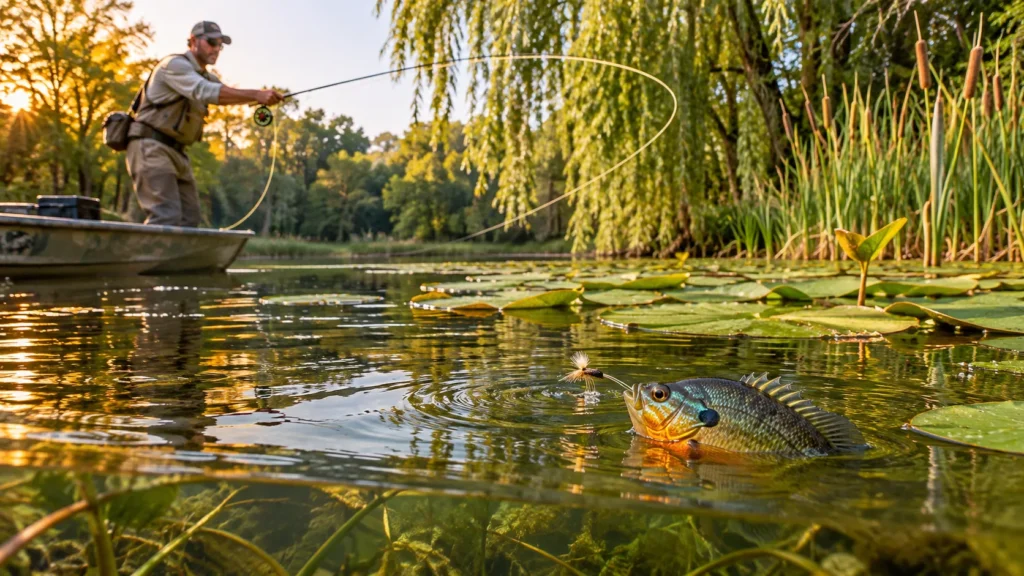
Have you ever tried fly fishing for bream? These popular freshwater fish offer an exciting challenge for fly anglers, especially when they feed near the surface or around shallow vegetation. With bream killer fly patterns, lightweight tackle, and accurate casting, you can catch bream in ponds, lakes, rivers, and slow-moving streams.
Fly fishing for bream works best with small flies that imitate insects, larvae, and other natural food sources. A 3- to 5-weight fly rod, floating line, and patterns such as poppers, foam beetles, and small nymphs make a reliable starting setup. Experienced fly anglers, including renowned instructor Tom Rosenbauer, emphasize matching fly selection and presentation to fish behavior and feeding conditions.
You don’t need expensive equipment or years of fly-fishing experience to get started.
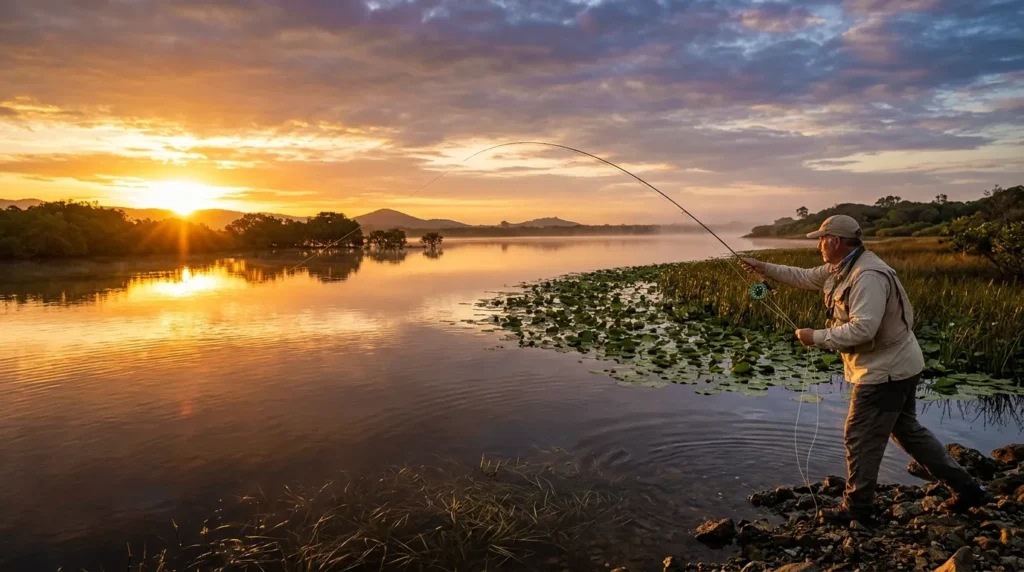
Learning where bream feed, which flies attract them, and how to present your fly can make a real difference. Ready to catch more bream on the fly? Let’s explore the essential bream fly fishing techniques, tackle, and proven fly patterns that can improve your next fishing trip.
What Is Fly Fishing for Bream?
Fly fishing for bream means using a fly rod, fly line, leader, and artificial fly to imitate the insects, crustaceans, baitfish, or small creatures that bream eat. Instead of casting a heavy lure, an angler casts the weighted fly line, which carries the nearly weightless bream fly to the fish.
The term bream changes by location. In much of the American South, bream commonly refers to bluegill, redear sunfish, longear sunfish, warmouth, and other panfish. In Australia, bream often refers to saltwater or estuary species such as black bream, which feed around structure and respond to shrimp, prawn, crab, and small baitfish patterns.
That distinction matters. A bluegill may rise eagerly to a small popper, while an Australian black bream may prefer a lightly weighted shrimp imitation worked slowly along a channel edge. Both fish can be caught on fly, but the best approach depends on the species and water.
Why Bream Are Great Fish to Catch on a Fly Rod
Bream are plentiful, willing to eat, and perfectly sized for lighter fly tackle. They also give newer fly fishers a realistic way to practice casting, line control, and strike detection without needing a boat, expensive gear, or remote water.
A bluegill or sunfish can turn sideways during the fight and use its flat body to resist, making it feel much stronger than its size suggests. Redear sunfish, often called shellcrackers, tend to feed closer to the bottom on snails, freshwater shrimp, crawfish, and insect larvae.
Fly fishing also works well because bream eat a wide range of food. They will take insects, worms, minnows, crustaceans, and small baitfish, so a compact selection of flies can cover most situations.
Best Fly Fishing Gear for Bream
You do not need premium gear to start catching bream on a fly. A simple, balanced kit will handle bluegill, sunfish, crappie, perch, and even an occasional bass.
Best Fly Rod for Bream
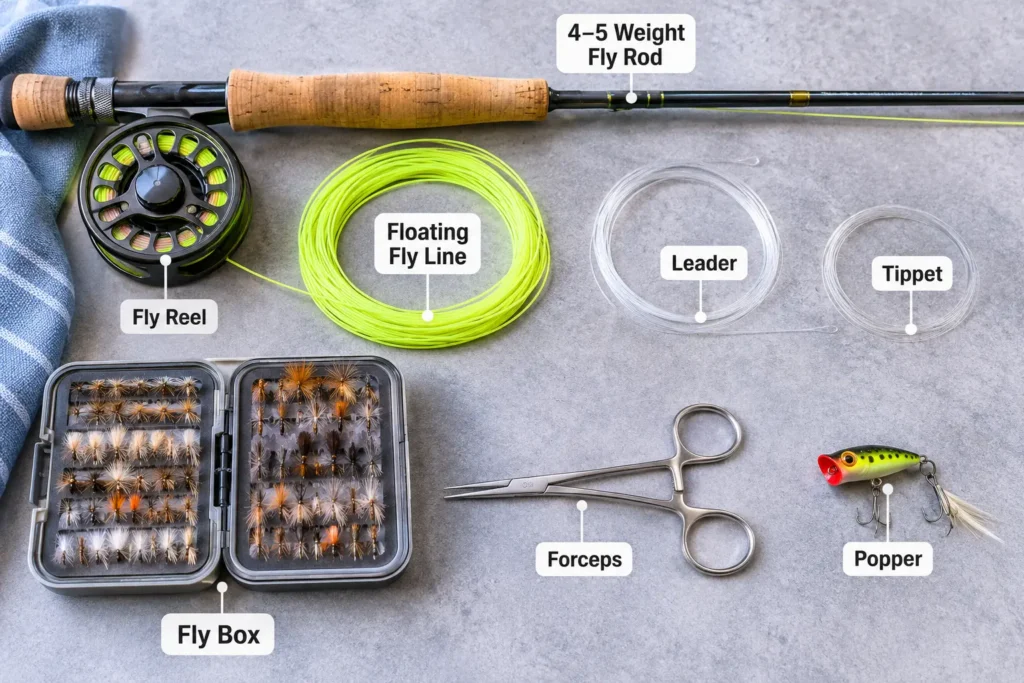
The best fly rod for bream is usually a 4- or 5-weight rod between 7 and 9 feet long. A 3-weight works well for tiny flies and calm ponds, while a 5-weight gives you more control in wind and makes it easier to cast a small popper or streamer.
For Australian bream, a 5- or 6-weight rod is a strong all-round choice, especially around wind, tide, and slightly heavier flies. A 9-foot rod is a safe default because it helps keep line above weeds, docks, and shoreline cover.
| Situation | Best rod choice |
|---|---|
| Small pond, calm morning | 3-weight, 7 ft 6 in to 8 ft |
| All-round freshwater panfish | 4- or 5-weight, 8 to 9 ft |
| Windy lake or larger bass water | 5-weight, 9 ft |
| Australian estuary bream | 5- or 6-weight, 9 ft |
Choosing the Right Reel, Fly Line, and Leader
The reel mostly stores line for smaller bream, so choose a durable, lightweight model rather than worrying about a powerful drag. If you fish saltwater or brackish estuary water, choose a reel with corrosion-resistant components and rinse it after each trip.
A weight-forward floating line is the best starting choice. It casts easily, supports small poppers and foam bugs, and works well in the shallow water where bream often feed.
Use a tapered leader in the 7.5- to 9-foot range, then add tippet as needed. For bluegill and sunfish, 4- to 6-pound tippet is a practical choice. For wary estuary bream, longer leaders of 9 to 16 feet and 4- to 8-pound fluorocarbon tippet can make a real difference.
A useful accessory is a small fly box with compartments for poppers, nymphs, wet flies, and streamers. Keep hooks sharp, carry spare tippet, and bring forceps or pliers to remove hooks safely.
Best Flies for Catching Bream
The best flies for bream fishing are small, visible, and easy to move. Because bream have relatively small mouths, smaller hooks generally hook more fish; size 8 to size 12 is a dependable range for many freshwater patterns.
Dry Flies, Poppers, and Foam Bugs
Topwater flies are exciting because you can see the strike. A small popper, foam spider, sponge bug, or bream fly with rubber legs can pull aggressive bluegill out of weed beds, along docks, and beside lily pads.
Good starting choices include:
- Small popper: Use a size 8 or 10 popper for bluegill and bass.
- Foam spider: A simple rubber-leg pattern that sits high and moves easily.
- Foam beetle or ant: Excellent when fish are sipping insects from the surface.
- Chubby-style foam bug: Floats well and remains visible in choppy water.
- Small popper with a dropper: Suspend a nymph below the popper to fish two depths at once.howtoflyfish.
Let a popper sit until the ripples disappear, then give it one small twitch. Pause again. Many bream take the fly during the pause rather than during the movement.
Nymphs, Wet Flies, and Small Streamers
When fish will not rise, go subsurface. A flashback pheasant tail fly, hare’s ear nymph, prince nymph, damselfly nymph, or small wet fly can imitate the insects and larvae bream feed on.
A bead head helps a nymph sink faster in deeper water or current. For a more natural drift, use an unweighted nymph in shallow water and add a strike indicator only when you need to control depth. orvis
Small streamers also produce larger fish. A woolly bugger—sometimes spelled “wooly bugger”—in black, olive, white, or copper can imitate a leech, minnow, or small crayfish. Strip it slowly, pause, and let the tail materials breathe in the water.
For Australian bream, carry shrimp, prawn, crab, and Clouser-style baitfish patterns. Flies with translucent materials, rubber legs, and a little flash often work well, especially when fished with short strips and long pauses.
Where to Find Bream When Fly Fishing
Bream hold near food, cover, and comfortable water temperature. The fastest way to find them is to fish the edges of structure rather than casting blindly into open water.
The best places to find bream when fly fishing include shallow feeding flats, weed edges, creek mouths, shaded banks, and spawning beds during the right season. Look for surface activity, small baitfish, insects,
Ponds, Lakes, Rivers, and Shallow Water
Ponds, small lakes, slow river backwaters, oxbows, and sheltered creek arms are excellent places to start. Bluegill and other sunfish often gather around shallow cover, especially where sunlight warms the water.
In rivers, target eddies, undercut banks, fallen trees, and slower water beside the main current. A natural drift along current seams can bring a wet fly or nymph into a fish’s feeding lane.
For Australian bream, focus on estuary flats, mangrove edges, oyster beds, rock walls, drains, and deeper channel margins. Fish shallow water first, then move slightly deeper when the tide drops or the sun gets high.
Weed Beds, Lily Pads, and Other Structures
Weed beds, lily pads, cypress knees, stumps, docks, fallen trees, and boat lanes all hold food and give bream cover. Cast close to the edge, but avoid putting the fly directly into thick vegetation where it may snag.
A small popper works well along pad edges and open pockets. A nymph or wet fly works better when you can let it sink beside a weed line, stump, or drop-off. Shellcrackers often feed deeper than bluegill, so a weighted nymph or small streamer can be more effective.
Best Time of Day and Season for Fly Fishing for Bream
Early morning and late afternoon are usually the easiest times to catch bream on a fly. Low light makes fish less cautious, and insects are often active near the surface.
Spring is prime time for bluegill and redear sunfish. Redear sunfish may begin spawning when water temperatures reach roughly 65 to 70 degrees Fahrenheit, while bluegill commonly spawn when water reaches about 75 to 80 degrees.
During the spawn, male bluegill guard nests in shallow water and may strike aggressively at anything that enters the area. Look for pale circular beds on sandy or gravel bottoms, especially near weed patches, wood, or drop-offs.
Summer mornings can produce steady action before the water warms. In hot weather, fish earlier, seek shade, or work deeper weed edges and drop-offs. A mayfly hatch can create excellent surface action, although fish may become selective when natural insects are abundant.
How to Catch Bream on a Fly Rod
What basic techniques help catch bream on a fly rod? Learning how to catch bream on a fly rod comes down to three skills: casting the line, presenting the fly naturally, and recognizing a strike.
– Basic Casting and Fly Presentation
Remember that you cast the line, not the lure. Use a smooth back cast and forward cast, letting the fly line unroll before it lands. A short, accurate cast is more valuable than a long cast that lands too hard.
Start with a sidearm cast when fishing under overhanging branches or beside a dock. This keeps the fly low and helps it land quietly. Let the fly settle, then make one small movement before waiting again.
For a popper, cast beyond the target and pull it into the strike zone. For a nymph, cast upstream or up-current and allow it to drift naturally before adding movement.
– Retrieving Flies and Detecting Strikes
Use short strips, then pause. A common rhythm is strip, strip, pause. Many bream take the fly as it stops or during the first movement after the pause.
Watch the line and fly closely. A bluegill strike may look like a subtle dip, twitch, or sideways movement rather than a violent pull. Set the hook with a short lift of the rod rather than a hard backward sweep.
If fish follow but refuse the fly, try a smaller pattern, slow the retrieve, or change depth. If they ignore a popper, switch to a nymph or wet fly beneath the surface.
Fly Fishing Techniques for More Bream
o catch more bream, focus on accurate casting, lightweight tackle, small flies, and gentle presentations. Target shallow weed beds, submerged structures, shaded banks, and areas where insects gather.
Experienced fly anglers, including Orvis instructor Tom Rosenbauer, emphasize matching fly patterns to local food sources and adjusting presentations to fish behavior.
– Topwater Fishing With Poppers
Topwater fishing is the simplest way to start flyfishing for bream. Cast a small popper beside cover, let it sit, then twitch it once or twice. Keep the fly in the strike zone longer than you think necessary.
A popper can also act as an indicator in a popper-dropper rig. Tie a small nymph 18 to 36 inches below the popper, then fish the combination along weed edges or over shallow beds. The popper may draw a strike, while the nymph catches fish feeding slightly deeper.
– Subsurface Fishing With Nymphs
When fish are not looking up, fish a nymph slowly near the bottom. A flashback pheasant tail, hare’s ear, damselfly nymph, or small crayfish pattern can be deadly around weeds, wood, and sandy bottoms.
Use a strike indicator when you need to suspend the fly at a consistent depth. Let it drift naturally, then add an occasional small strip. This style works especially well for redear sunfish, crappie, and deeper-holding bluegill.
Common Fly Fishing Mistakes to Avoid When Targeting Bream
- Using flies that are too large. Bream have small mouths, so downsize before assuming the fish are not there.
- Retrieving too quickly. Give the fly time to sink and pause where fish can see it.
- Fishing only the surface. Bluegill may rise, but shellcrackers, crappie, and larger sunfish often feed below the surface.
- Ignoring structure. Open water rarely produces as consistently as weed edges, docks, fallen trees, and drop-offs.
- Using a leader that is too heavy. Lighter tippet helps small flies move naturally and can increase bites.
- Fishing the same depth all day. Move between the surface, mid-column, and bottom until you find feeding fish.
- Overlooking estuary differences. Australian bream often require shrimp, prawn, crab, or baitfish imitations rather than freshwater insect patterns. fishingmonthly.com
Tips for Landing and Releasing Bream Safely
How do you fight and land bream on a fly rod? Bream are tough, but their mouths and gills are delicate. Use barbless hooks when possible, wet your hands before handling a fish, and support its body rather than squeezing it.
Keep the fish in the water while removing the hook when you can. Use forceps to back the hook out cleanly, and release the fish quickly if it is not intended for the table. Avoid lifting large fish high above hard surfaces, especially in hot weather.
If you keep fish for eating, follow local size and bag limits. A small cooler, measuring tool, pliers, and spare hooks make a practical addition to any bream fly-fishing kit.
FAQs
What is the best fly rod for bream?
A 4- or 5-weight, 8- to 9-foot fly rod is the best all-round choice for freshwater bream. It casts small poppers, nymphs, and streamers easily while still providing enough power for wind and occasional bass.
What are the best flies for bream?
Start with a small popper, foam spider, flashback pheasant tail, woolly bugger, and a shrimp or prawn pattern. These cover surface feeding, subsurface insects, baitfish, and estuary prey.
How do you catch bream on a fly?
To catch bream on fly rod, find shallow cover, cast close to the edge, and use a slow retrieve with pauses. If fish do not rise, switch to a nymph or small streamer and fish it near weeds, wood, or the bottom.
What size hook should I use for bream?
For most bluegill and sunfish, use size 8 to 12 hooks. Smaller hooks fit their mouths better and usually result in more solid hookups.
Can you catch bream on a popper?
Yes. Bluegill and other surface-feeding sunfish often attack small poppers, especially around lily pads, weed beds, docks, and spawning areas.
Is fly fishing good for Australian bream?
Yes. Australian anglers commonly target bream in estuaries with 5- or 6-weight rods, floating lines, long leaders, and shrimp, prawn, crab, or baitfish patterns.
What is the difference between bream and bluegill?
In the United States, bream is often a broad regional name for sunfish, including bluegill and redear sunfish. In Australia, bream usually refers to estuary species such as black bream, which live in different habitat and eat different prey.
How can I catch bream on a budget?
Use an inexpensive 4- or 5-weight rod, floating line, and a few size 10 flies: a popper, foam spider, woolly bugger, and flashback pheasant tail. Fish public ponds or shorelines, keep tackle simple, and focus on weed edges and shallow cover.
What tools and equipment are useful for fly fishing for bream?
Bring a 4- or 5-weight fly rod, floating line, tapered leader, 4–6 lb tippet, forceps, nippers, fly box, and a few small poppers and nymphs. Add polarized sunglasses, a landing net, and a small sling pack for comfort and organization.
What strategies work for bream fly fishing at dusk?
At dusk, cast a small popper or foam bug beside docks, weed edges, and overhanging cover. Let it sit, twitch it gently, and pause between strips. If surface bites fade, switch to a nymph or small woolly bugger.
Conclusion
Fly fishing for bream rewards anglers who pay attention to depth, cover, and presentation. A light fly rod, floating line, small popper, and a few nymphs can turn an ordinary pond, river backwater, or estuary flat into a productive day on the water. Start with a small fly, fish close to structure, and give every retrieve a deliberate pause.
Whether you are chasing bluegill and shellcrackers in freshwater or black bream in an Australian estuary, the same principles apply: match the food, control the depth, and watch closely for the take. With a simple kit and a little patience, fly fishing for bream becomes one of the most reliable and enjoyable ways to build fly-fishing skills while catching fish consistently.
You might also like these posts:
- What to Wear for Fly Fishing? (Complete Fishing Apparel Guide)
- How to become a fly fishing guide (Beginner’s Guide for Fishing Careers)
- Essential Fly Fishing Gear for Beginners – Exclusive FlyFishing Guide
- Clouser Minnow Fly Pattern: How to Tie and Cast (Like A Pro)
- Bream Fishing Basics That Work: (Catch More Fish, Fast!)