
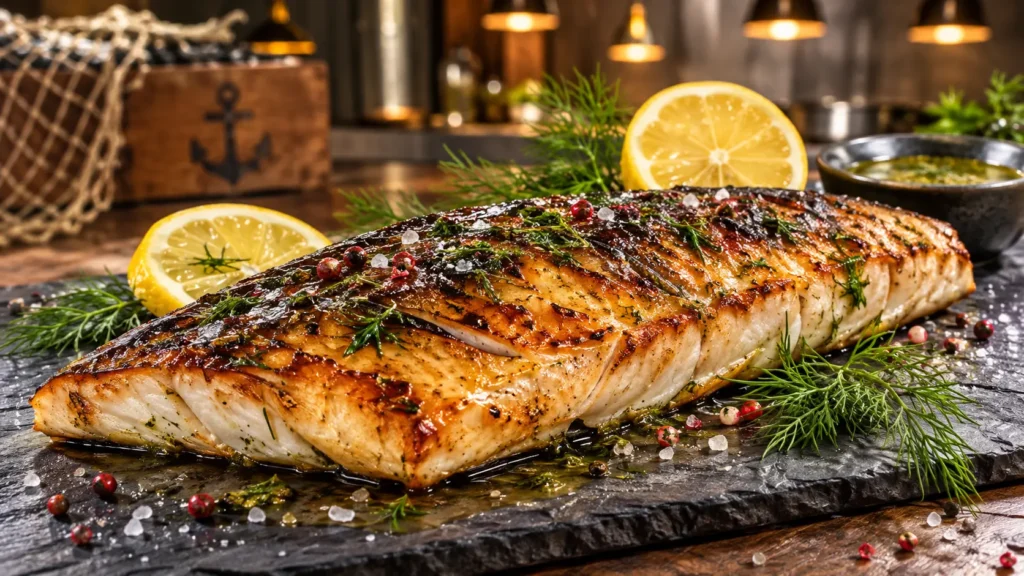
Is king mackerel good to eat? King mackerel is good to eat when it is fresh, properly handled, and cooked well—but it is not the best everyday fish for everyone. It has a strong, meaty flavor and plenty of protein, yet its high mercury content makes it a fish that adults should eat only occasionally and that pregnant people, breastfeeding parents, and young children should avoid.
If you enjoy bold saltwater fish, king mackerel can be rewarding. If you want mackerel for regular heart- and brain-supporting meals, Atlantic mackerel, Pacific chub mackerel, sardines, or salmon are usually safer choices because they contain less mercury.
Is King Mackerel Good to Eat?
Yes—is king mackerel good to eat depends on who is eating it and how often. For many healthy adults, king mackerel is a good fish to eat in moderation because it provides high-quality protein and beneficial fats. But the FDA and EPA place king mackerel in their “Choices to Avoid” group because it can contain high levels of mercury.
King mackerel is a large, fast-moving member of the Scombridae family. It lives offshore in warm waters, including the Atlantic and Gulf of Mexico, and feeds on smaller fish. Because it is a larger predator that lives longer than many smaller fish, it accumulates more methylmercury over time.
That does not mean kingfish is “bad fish.” Many fish lovers prize it off the coast of Florida and throughout the South Atlantic and Gulf, especially when it is bled immediately after capture, iced quickly, and cooked while very fresh. The issue is frequency: king mackerel is better as an occasional treat than a weekly staple.
Quick answer
| Question | Short answer |
|---|---|
| Is king mackerel safe to eat? | Yes for many healthy adults, but only in moderation. FDA |
| Is it safe during pregnancy? | No. The FDA advises pregnant and breastfeeding people to avoid it |
| Is it good for children? | No. Young children should avoid king mackerel because of mercury. |
| Does it taste fishy? | It can. Fresh, well-prepared kingfish tastes rich, meaty, and savory rather than overly fishy. |
| Best cooking methods | Grill, broil, smoke, bake, or make fish cakes. |
What Does King Mackerel Taste Like?
King mackerel has a stronger taste than Spanish mackerel, Atlantic mackerel, or Pacific mackerel. The flesh is firm, oily, and meaty, with a pronounced savory flavor that some people describe as fishy—especially if the fish was not handled well after being caught.
Fresh mackerel should smell clean and briny, not sour or ammonia-like. The meat should look glossy, moist, and translucent when raw. A fish that smells overly strong, has dull flesh, or feels slimy is past its best quality.
Because king mackerel is an oily fish, it stands up well to strong seasonings. Citrus, garlic, black pepper, smoked paprika, mustard, soy sauce, and fresh herbs all help balance its richness. A short marinate can improve flavor, but avoid masking poor freshness with heavy sauce.
Is King Mackerel Healthy? Nutrition and Benefits
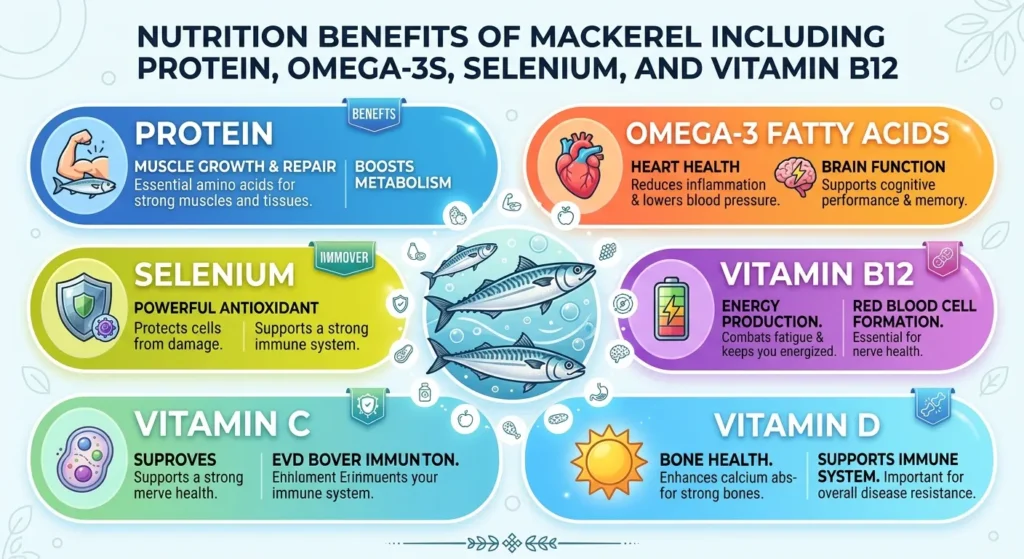
Mackerel is good for you in general because it is a fatty fish rich in omega-3 fatty acids, including EPA and DHA (docosahexaenoic acid). These good fats support the heart and brain, and fish also supplies protein, vitamin B12, vitamin D, iodine, and selenium.
King mackerel offers several nutrition benefits:
- Excellent source of protein: It helps support muscle maintenance and keeps meals satisfying.
- Omega-3s: Fatty fish provide unsaturated fats that can support cardiovascular health; omega-3 intake is associated with benefits for heart and brain function.
- Selenium: This mineral helps the body make antioxidant enzymes and supports normal thyroid function.
- Vitamin B12 and vitamin D: These nutrients support energy metabolism, nerve function, and bone health.
- Low saturated fat: Compared with many land-animal proteins, mackerel provides more unsaturated fats and less saturated fat.
The important distinction is that “mackerel is healthy” does not automatically mean every type of mackerel is equally safe to eat often. Atlantic mackerel and Pacific chub mackerel appear on the FDA’s lower-mercury lists, while king mackerel appears among the highest-mercury choices.
Is canned mackerel good for you?
Yes, canned mackerel can be good for you—especially canned Atlantic mackerel or Pacific mackerel. It is convenient, affordable, shelf-stable, and a useful source of protein and omega-3s. Check the label for the species, sodium level, and whether it is packed in water, olive oil, or tomato sauce.
Canned mackerel works well in fish cakes, salads, pasta, toast, and grain bowls. For people who want the benefits of oily fish without the mercury concern of king mackerel, canned Atlantic or Pacific mackerel is a smarter regular option.
How Much Mercury Does King Mackerel Contain?
King mackerel has high mercury content because mercury builds up in larger, longer-lived predatory fish. The FDA specifically lists king mackerel among the fish with the highest methylmercury levels, alongside shark, swordfish, tilefish from the Gulf of Mexico, marlin, orange roughy, and bigeye tuna.
Mercury is found throughout the fish’s tissue. Cleaning, trimming, marinating, or cooking does not remove it. The only practical way to reduce exposure is to choose lower-mercury fish more often.
For most healthy adults, an occasional serving of king mackerel is unlikely to be the central issue. The concern is repeated exposure over time, particularly for developing brains. If you eat mackerel, treat it as an occasional meal rather than a weekly habit—especially if you also eat tuna, grouper, snapper, or other larger saltwater species.
Who Should Avoid Eating King Mackerel?
The FDA and EPA advise these groups to avoid king mackerel:
- People who are pregnant
- People who may become pregnant
- People who are breastfeeding
- Children ages 1 to 11
Methylmercury can harm the developing brain and nervous system. Pregnant and breastfeeding people should still eat fish, but the FDA recommends 8 to 12 ounces per week of varied lower-mercury seafood instead.
If you fish locally, check state and local advisories before eating your catch. Mercury levels can vary by location, fish size, and species. If no advisory exists, the FDA suggests limiting locally caught fish to one serving per week and avoiding other fish that week.

What Does King Mackerel Meat Look Like?
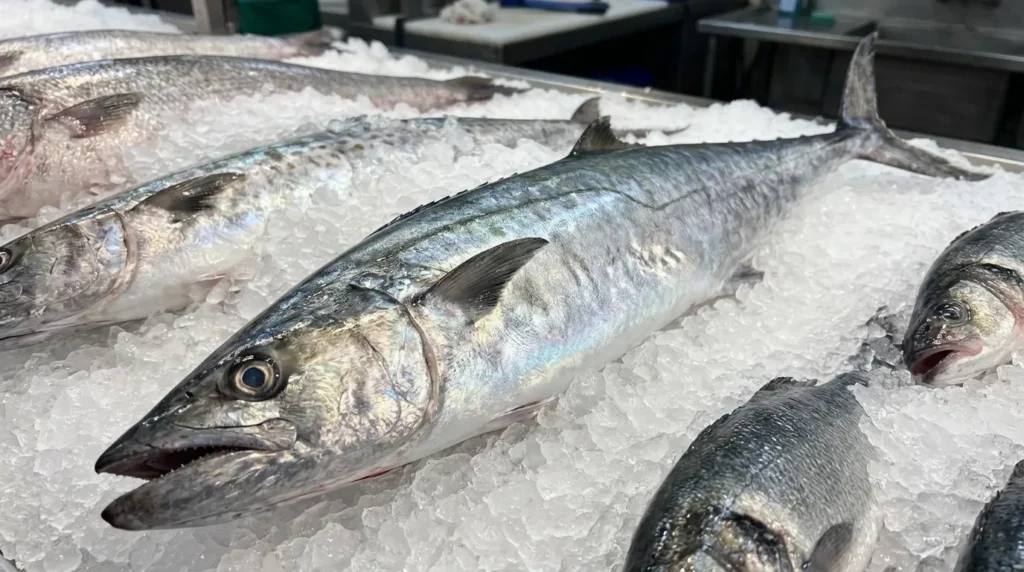
Raw king mackerel meat ranges from grayish-pink to light tan, with a firm texture and visible fat lines. Cooked filet turns opaque white to light beige and flakes into large, meaty sections.
King mackerel is larger than Spanish mackerel, so it often yields thick steaks or substantial mackerel fillets. A whole fish has a narrow, streamlined body, a sharp lateral line that dips noticeably, and a gray-blue back with silver sides. That pronounced lateral line drop is one of the easiest ways to tell king mackerel apart from Spanish mackerel.
What Is the Best Way to Cook King Mackerel?
The best way to cook king mackerel is with high, quick heat. Its oily flesh becomes dry and intensely fishy when overcooked. Grill, broil, smoke, or bake it just until the center turns opaque.
Grilled king mackerel steaks
- Pat thick king mackerel steaks dry.
- Brush with olive oil and season with salt, black pepper, garlic, and lemon zest.
- Grill over medium-high heat for about 4 to 5 minutes per side, depending on thickness.
- Finish with lemon juice and fresh herbs.
Broiled mackerel fillets
Place mackerel fillets skin-side down on a lined sheet pan. Brush with oil, season well, and broil 4 to 6 inches from the heat until the flesh flakes easily. Broiling keeps the exterior browned while the inside stays moist.
Smoked kingfish
King mackerel is popular for smoking because its fat carries smoke flavor well. Brine the filet briefly, dry it until tacky, then smoke it low and slow until firm. Smoked kingfish makes excellent dips, spreads, and fish cakes.
A simple flavor formula
Use acid + fat + aromatics: lemon or lime, olive oil, garlic, onion, chili, mustard, or fresh herbs. These ingredients cut through the oiliness and make the fish taste brighter.
Can You Eat King Mackerel Raw?
You can eat sushi-grade fish raw only when it has been handled specifically for raw consumption, but king mackerel is not the best choice for raw preparations. Its strong flavor, parasite risk, and mercury content make cooked preparations a better option for most people.
The FDA advises pregnant people and young children to avoid raw or undercooked finfish and shellfish. For everyone else, buy fish labeled for raw consumption from a reputable seafood seller, keep it very cold, and use it promptly. When in doubt, grill, broil, bake, or smoke it.
How to Clean and Prepare King Mackerel for Cooking
Fresh king mackerel deserves quick handling. On an offshore fishing trip, bleed the fish immediately, remove the guts, and pack it in ice. Rapid chilling protects flavor and extends shelf life.
At home:
- Rinse the fish briefly under cold water.
- Scale it if you plan to cook the skin.
- Fillet along the backbone, removing the dark bloodline if you prefer a milder flavor.
- Check for pin bones with your fingers and remove them with tweezers.
- Pat the filet dry before seasoning.
- Cook it the same day or freeze it properly for longer storage.
Fresh mackerel has a shorter shelf life than many lean white fish. For best quality, cook it within one to two days of purchase, or freeze it in airtight packaging.
King Mackerel vs. Spanish Mackerel: Which Is Better to Eat?
Spanish mackerel is usually the better everyday eating fish. It is smaller, milder, and generally lower in mercury than king mackerel. The FDA lists Spanish mackerel as a “Good Choice,” while king mackerel is in the “Choices to Avoid” category.
| Feature | King mackerel | Spanish mackerel |
|---|---|---|
| Flavor | Strong, rich, meaty | Milder, cleaner, slightly sweet |
| Texture | Firm and oily | Softer and flakier |
| Size | Large; often steaks or thick filets | Smaller; usually fillets |
| Mercury | High | Lower; FDA “Good Choice” |
| Best use | Grilling, smoking, bold recipes | Quick pan-searing, baking, tacos |
| Best for | Occasional meals for healthy adults | More frequent meals for many people |
Atlantic mackerel and Pacific chub mackerel are also strong alternatives. Both appear among the FDA’s lower-mercury “Best Choices,” making them better options for people who eat fish like mackerel regularly.
Sustainability: Is King Mackerel Overfished?
King mackerel is not automatically an unsustainable choice. NOAA reports that the South Atlantic and Gulf of Mexico king mackerel stocks are not overfished and are not subject to overfishing, based on recent stock assessments. fisheries.noaa
Still, fishing pressure can change. Commercial and recreational fisheries manage king mackerel through size limits, catch limits, and seasonal rules. If you buy it, look for responsibly sourced fish and ask where and how it was caught. NOAA’s seafood resources can help you check the current status of the Gulf of Mexico stock and South Atlantic stock.
FAQs
Is king mackerel a good fish to eat?
Yes, king mackerel is a good fish to eat for many healthy adults who enjoy strong-flavored, oily fish. It provides protein, omega-3s, and selenium, but its high mercury level means it should not be a frequent choice.
Is mackerel good for you?
Yes. Mackerel is an oily fish rich in omega-3 fatty acids, protein, vitamin B12, vitamin D, and selenium. These nutrients support the heart and brain, but choose lower-mercury varieties such as Atlantic mackerel or Pacific chub mackerel for regular meals.
Is canned mackerel good for you?
Yes. Canned mackerel is a convenient source of protein and omega-3s, with a long shelf life. Choose lower-mercury species and watch added sodium in flavored or sauce-packed varieties.
Does king mackerel taste fishy?
It can taste fishy, particularly if it is not fresh or is overcooked. Fresh king mackerel should taste rich, savory, and meaty rather than sour or ammonia-like.
Can I eat king mackerel every week?
Most healthy adults can eat it occasionally, but it is not ideal as a weekly staple because of its mercury levels. Rotate it with lower-mercury fish such as salmon, sardines, Atlantic mackerel, or Pacific mackerel.
Is king mackerel better than tuna?
They are different. King mackerel has a stronger, oilier flavor, while tuna is meatier and more neutral. Bigeye tuna also ranks among high-mercury fish, so neither is the best everyday choice for pregnant people or young children.
What fish should I eat instead of king mackerel?
Salmon, sardines, Atlantic mackerel, Pacific chub mackerel, trout, pollock, and canned light tuna are useful alternatives. The FDA identifies many of these as lower-mercury “Best Choices.”
How do I know if king mackerel is fresh?
Look for clear, moist flesh, a clean ocean smell, firm texture, and bright skin. Avoid fish with dull eyes, soft flesh, discoloration, or a strong sour odor.
Conclusion
So, is king mackerel good to eat? It can be. King mackerel is a flavorful, protein-rich saltwater fish with a satisfying steak-like texture, and it shines when grilled, broiled, or smoked. Its omega-3s, selenium, B12, and vitamin D make it a nutritious choice for people who enjoy bold, oily fish.
The key is balance. King mackerel contains high levels of mercury, so the FDA advises pregnant people, breastfeeding parents, and young children to avoid it completely. Healthy adults can enjoy it occasionally, but they should rotate it with lower-mercury fish like Atlantic mackerel, Pacific mackerel, sardines, or salmon.
If you love offshore fishing or strong-flavored fish, keep fresh kingfish as a special-occasion meal. Prepare it simply, cook it gently, and pair it with citrus and herbs. For everyday health, choose milder mackerel varieties more often—and enjoy king mackerel when the fish, the preparation, and the occasion are right.
Recommended posts
- Is Wahoo Fish Good to Eat? Taste, Safety & Cooking Tips
- Are White Bass Good to Eat? Taste, Texture & Recipes
- How to Catch Mackerel from Shore? (Solved & Explained)