
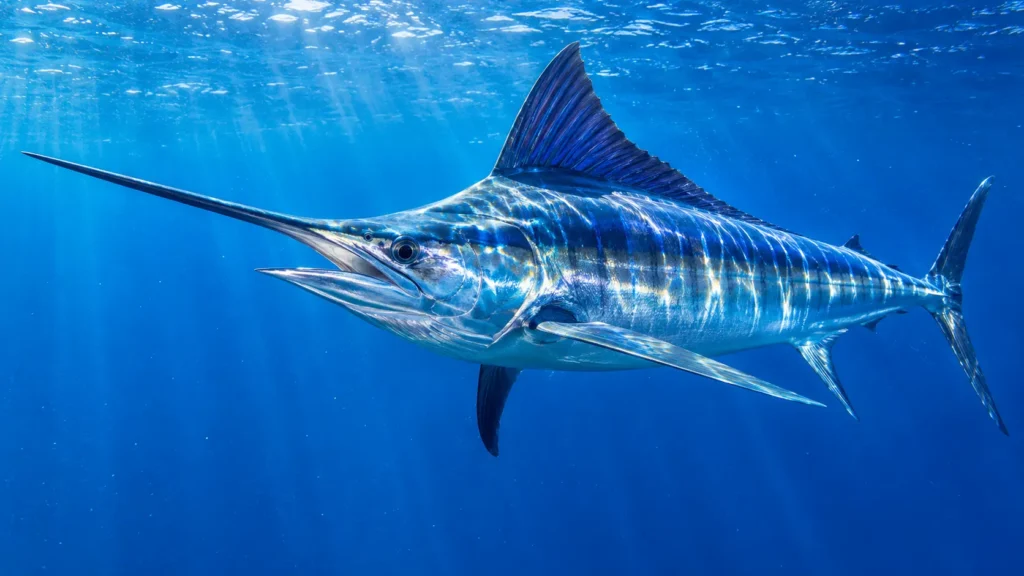
Is marlin good to eat, or should you release this powerful ocean predator when you catch one? Marlin is edible and flavorful, with firm, steak-like meat—but it is high in mercury. Marlin might look intimidating, but its firm, meaty flesh appeals to many seafood lovers. Before you cook one, you should understand its flavor, nutritional value, mercury levels, and food safety concerns.
But taste and cooking methods aren’t the whole story. We’ll explore what marlin tastes like, its nutritional benefits, potential health risks, and the best ways to prepare it. Let’s dive in and find out whether marlin deserves a place on your dinner plate.
Learn what marlin tastes like, how to cook it, who should avoid it, and safer alternatives.. You can grill, bake, broil, or sear fresh marlin steaks. Still, marlin contains high mercury levels, so the FDA advises pregnant women, breastfeeding mothers, and young children to avoid it.
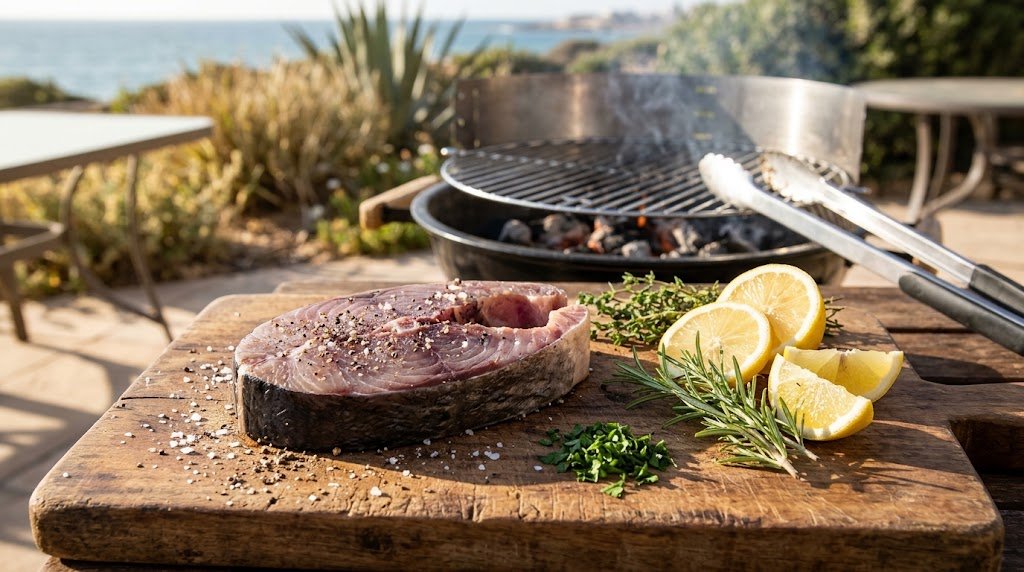
Is Marlin Good to Eat or NOT?
Is marlin good to eat? Yes—marlin is good to eat in the sense that it is edible, nutritious, and can taste excellent when fresh and cooked properly. Its firm, meaty texture and mildly sweet flavor make it appealing to people who enjoy swordfish or tuna.
The important caveat is safety. The FDA and EPA place marlin in their “Choices to Avoid” category because it carries some of the highest mercury levels found in seafood; FDA technical data reports an average of 0.49 ppm mercury in marlin. That makes marlin a poor choice for frequent meals, especially for pregnant people, breastfeeding parents, and young children.
So, eating marlin occasionally is different from making it a regular part of your diet. If you catch one offshore or receive a portion from a charter boat, enjoy a small serving, handle it carefully, and choose lower-mercury fish—such as salmon, sardines, or canned light tuna—for your weekly seafood meals.
What Does Marlin Taste Like?
Marlin has a clean, savory flavor with a mild sweetness. It does not taste overly oily, and most people describe it as more “steak-like” than “fishy.”
NOAA describes striped marlin as having a distinctive flavor similar to swordfish, but more pronounced, and calls it the finest-eating marlin species. Blue marlin and black marlin can taste excellent too, but flavor changes with the fish’s diet, size, handling, and how quickly it is iced after the catch. fisheries.noaa
Is Marlin Mild, Strong, or Fishy?
Marlin is usually mild to moderately flavored, not strongly fishy. Fresh marlin should smell like clean ocean water, not ammonia or a sharp “fishy” odor.
A fish caught after a long fight, left on deck in warm weather, or processed slowly can develop stronger flavors. Anglers who plan to retain a marlin generally bleed it promptly, ice it heavily, and get it to the dock or vessel cooler quickly.
What Is the Texture of Marlin Meat?
Marlin has a firm, dense, meaty texture. It holds together well on a grill, which is why cooks often treat marlin steaks like swordfish steaks.
Because it is lean, marlin can dry out if overcooked. Cook it until the center is just opaque, then remove it from heat; carryover heat will finish the job.
What Does Marlin Meat Look Like?
Fresh marlin meat can range from pale pink to deep red, depending on the species and the cut. When cooked, it turns opaque white to light tan.
High-quality marlin should look moist, glossy, and evenly colored—not brown, gray, slimy, or dried out at the edges.
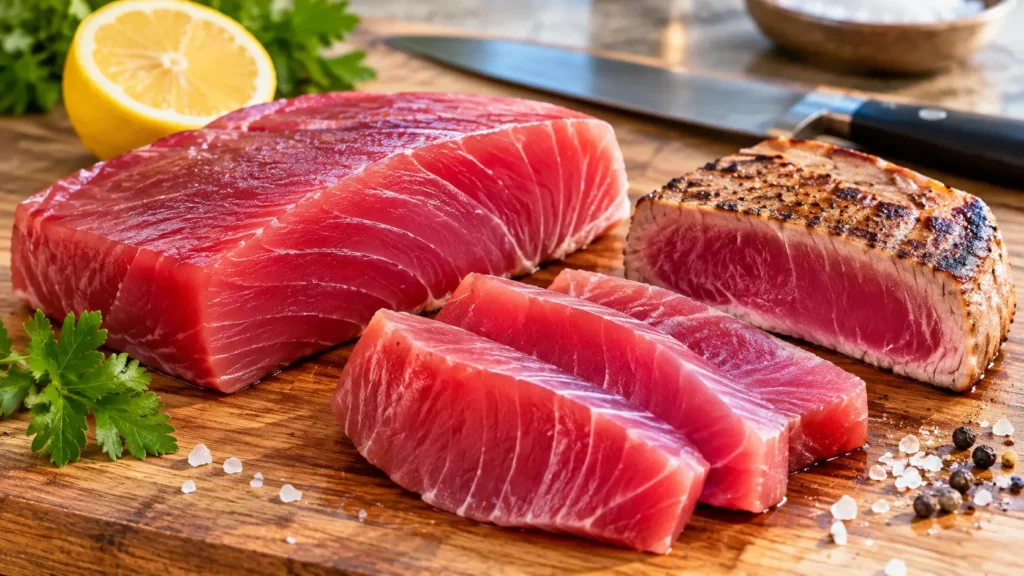
White, Pink, or Red Marlin Meat: What’s the Difference?
| Meat color | What it usually means | Eating experience |
|---|---|---|
| White to pale pink | Common in some cuts and species | Mild flavor, firm texture |
| Pink to rose | Often fresh muscle tissue | Clean, slightly sweet taste |
| Deep red | More myoglobin-rich muscle; common in active offshore species | Stronger flavor, meatier bite |
Color alone does not prove freshness. Smell, texture, temperature, and handling matter more than whether the fillet is white, pink, or red.
Marlin can be nutritious because it provides high-quality protein and beneficial marine fats. Like tuna, swordfish, and other large ocean fish, it supplies nutrients that support muscle maintenance, energy, and overall health.
Protein, Omega-3 Fatty Acids, and Essential Nutrients
A typical serving of marlin offers:
- Lean protein for muscle repair and satiety
- Omega-3 fatty acids, which support heart and brain health
- Vitamin B12, important for red blood cells and nerve function
- Selenium, an essential mineral with antioxidant roles
- Niacin and vitamin B6, which help the body convert food into energy
The tournament catch is that these benefits come with a mercury trade-off. Cooking does not remove mercury because methylmercury is distributed throughout the fish tissue, not just the skin or fat.
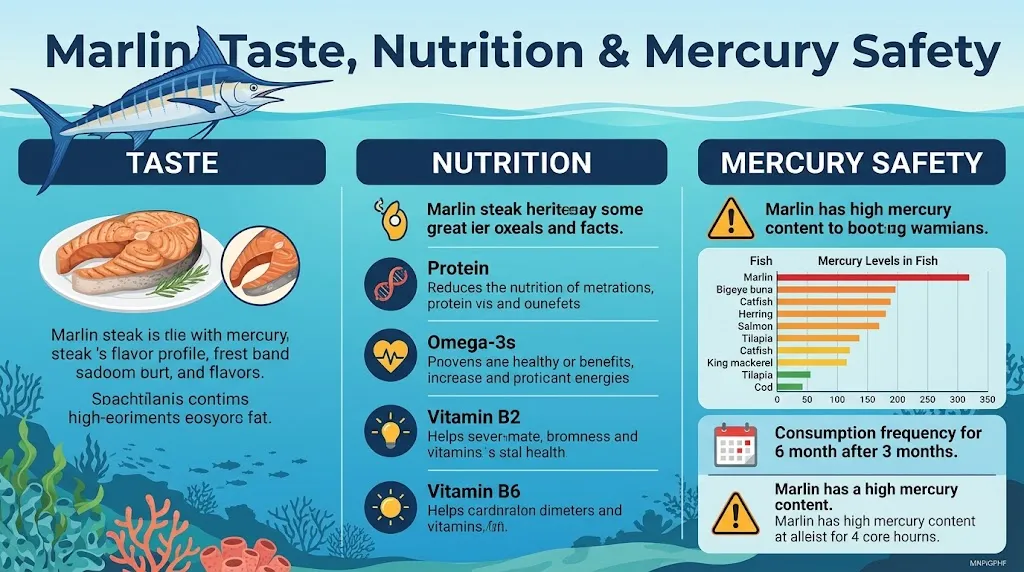
Is Marlin Safe to Eat? Mercury Levels and Health Risks
Marlin is safe for many healthy adults as an occasional food, but it is not a fish to eat often. The FDA classifies marlin as a “Choice to Avoid” because of its high mercury concentration.
Why Marlin Contains High Levels of Mercury
Marlin are large, long-lived predators near the top of the offshore food web. They eat smaller fish—often including mackerel, squid, and smaller tuna-like species—and accumulate methylmercury over time.
This process is called bioaccumulation. The bigger and older the fish, the more time it has had to build up mercury in its muscle tissue. That is why marlin, shark, swordfish, king mackerel, orange roughy, and bigeye tuna appear on the FDA’s highest-mercury list
Who Should Avoid Eating Marlin?
The FDA and EPA advise the following groups to avoid marlin:
- People who are pregnant
- People who may become pregnant
- People who are breastfeeding
- Children ages 1 to 11
- People who eat seafood frequently and want to keep mercury exposure low
For these groups, the agencies recommend 2 to 3 weekly servings of lower-mercury fish instead. If you eat fish caught by family or friends, check local fish advisories; if no advice exists, the FDA suggests limiting that fish to one serving that week.
What Is the Best Way to Cook Marlin?
The best way to cook marlin is hot and fast: grill it, pan-sear it, or bake it briefly. Its firm texture works well with high heat, but its low fat content means it dries out easily.
Aim for an internal temperature of about 130–135°F for a moist, steak-like result. Let the steak rest for a few minutes before serving.
Grilling Marlin Steaks
Grilling is the classic method, especially in Hawaii and other Pacific fishing communities where fresh marlin is more commonly eaten.
- Pat the marlin steak dry.
- Brush it lightly with olive oil or avocado oil.
- Season simply with salt, black pepper, lemon, and garlic.
- Grill over medium-high heat for about 3–4 minutes per side, depending on thickness.
- Rest for 3 minutes, then finish with lime, herbs, or a light butter sauce.
Baking and Pan-Searing Marlin
For baking, heat the oven to 400°F, place the marlin in a lightly oiled dish, and bake for roughly 10–12 minutes for a 1-inch steak. Add a squeeze of citrus after cooking.
For pan-searing, use a hot cast-iron skillet, sear each side for 2–3 minutes, and baste with butter, garlic, and fresh herbs during the final minute.
Cooking Marlin Without Drying It Out
- Do not cook thin fillets as long as thick steaks.
- Use a marinade with oil, citrus, or yogurt to add moisture.
- Pull the fish from heat while the center is still slightly translucent.
- Avoid boiling or long braising, which can make lean marlin chalky.
- Serve it with a sauce—mango salsa, chimichurri, teriyaki, or lemon-caper butter.
What Are the Best Seasonings and Marinades for Marlin?
Marlin pairs well with bold but simple flavors. Its meaty texture stands up to smoke, spice, citrus, and tropical ingredients.
Try these combinations:
- Hawaiian-style: Soy sauce, ginger, garlic, brown sugar, sesame oil, and green onion
- Citrus-herb: Lime, olive oil, cilantro, garlic, cumin, and chili
- Mediterranean: Lemon, oregano, olive oil, garlic, and black pepper
- Smoky grill rub: Paprika, brown sugar, black pepper, garlic powder, and a little cayenne
- Tropical salsa: Mango, pineapple, red onion, jalapeño, lime, and cilantro
Marinate for 20–40 minutes, not overnight. Acidic marinades can change the surface texture if left too long.
What Does Marlin Taste Like Compared to Swordfish and Tuna?
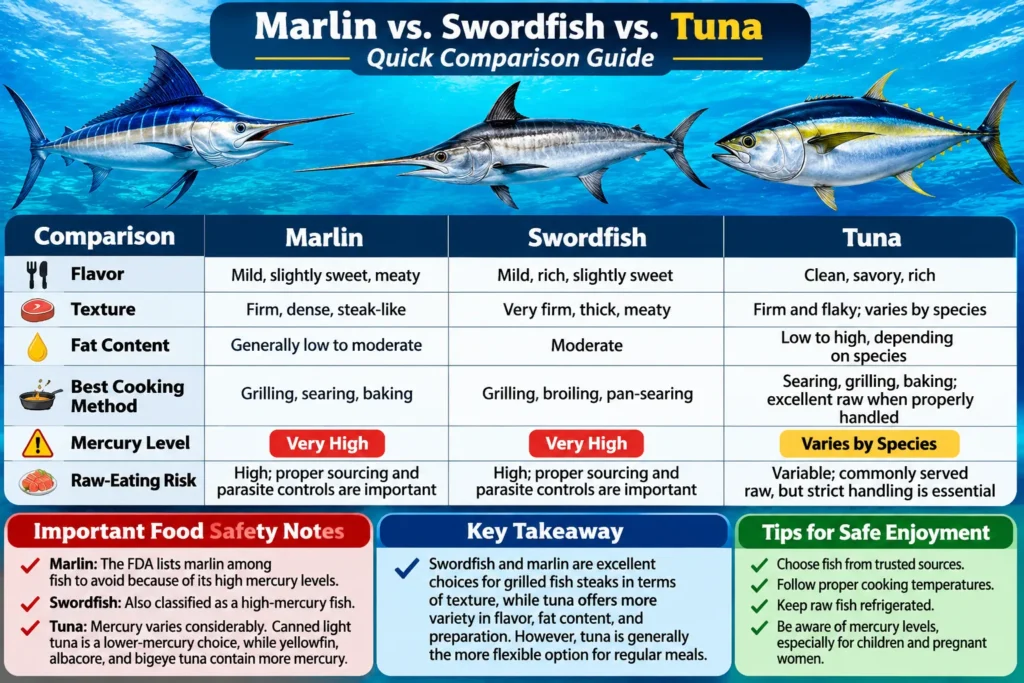
Marlin sits between swordfish and tuna in flavor and texture.
| Fish | Flavor | Texture | Best cooking style |
|---|---|---|---|
| Marlin | Clean, mildly sweet, slightly more pronounced than swordfish | Firm, dense, steak-like | Grilling, searing, smoking |
| Swordfish | Mild, buttery, slightly sweet | Very firm and meaty | Grilling, broiling, kebabs |
| Tuna | Clean, savory; yellowfin is milder than bluefin | Firm but often more tender | Searing, poke, grilling |
If you like swordfish, you will probably enjoy marlin. If you prefer mild white fish such as cod or flounder, marlin may taste richer and meatier than expected.
Can You Eat Raw Marlin or Marlin Sashimi?
Technically, some people eat raw marlin in dishes such as sashimi, poke, or ceviche—particularly in Hawaii and parts of the Pacific. But raw marlin carries more food-safety risk than cooked marlin.
Raw fish can contain parasites and bacteria. If you choose to eat it raw, use sushi-grade fish from a reputable source, keep it properly chilled, and follow local guidance. The FDA specifically advises pregnant people to avoid raw fish.fda
For most home cooks, grilled or seared marlin is the safer and more forgiving option.
Is Marlin Worth Keeping After Catching It? (Final Verdict)
For a recreational fisherman, the answer depends on the species, local rules, fish condition, and your personal ethics.
Many billfish anglers practice catch and release, especially with Atlantic blue marlin, because these fish are prized sport fish and important to billfish conservation. A long fight can increase post-release mortality, so careful handling, circle hooks, quick release, and minimizing time out of the water matter. NOAA and fisheries managers emphasize sustainable harvest and healthy stock levels in billfish fisheries. fisheries.noaa
If you legally retain a marlin, treat it as food—not a trophy to waste. Bleed and ice it quickly, process it cleanly, share portions, and eat it in moderation because of mercury. If you do not plan to eat it or donate it responsibly, releasing the fish is usually the better choice.
FAQs
Can you eat marlin?
Yes. People eat marlin, especially striped marlin and blue marlin in some Pacific regions. It is edible and tasty, but high in mercury.
Do people eat marlin?
Yes. Recreational anglers, charter crews, and some coastal communities eat marlin. Many sportfishing anglers still release spearing billfish to support conservation.
Is blue marlin good to eat?
Blue marlin can be good to eat when fresh and prepared well. It has a firm, meaty texture and a flavor somewhat like swordfish. Its mercury level remains a concern.
Is white marlin good to eat?
White marlin is edible, but it is less commonly kept than some other billfish. Many anglers release white marlin because of its value as a sport fish and conservation concerns.
Is striped marlin good to eat?
Yes. NOAA describes striped marlin as firm-textured, with a distinctive flavor similar to swordfish, and considers it the finest eating of all marlin species.fisheries.noaa
What does marlin eat?
Marlin eat squid, mackerel, small tuna, mahi, and other fish found in tropical and subtropical ocean waters. Their predator diet contributes to mercury accumulation.
Is marlin high in mercury?
Yes. FDA data lists marlin at an average mercury concentration of 0.49 ppm, above the threshold the agency uses for its “Choices to Avoid” category.fda
Is marlin fish edible?
Yes, marlin fish is edible. The better question is how often you should eat it; for most people, occasional consumption is more sensible than routine consumption.
Can you smoke marlin?
Yes. Smoked marlin is popular in some coastal regions. Use a light brine, smoke it gently, and avoid overcooking because the flesh is lean.
Is marlin better than swordfish?
Marlin and swordfish are similar. Swordfish is often milder and more buttery; striped marlin can have a more pronounced flavor. Both are high-mercury fish, so neither is ideal for frequent eating.
Is marlin sustainable?
Sustainability varies by species, region, and fishery. Some marlin populations face pressure from commercial fishing and bycatch. Check NOAA fisheries management guidance and local regulations before retaining a fish.
Should I release a marlin after catching it?
If you practice catch-and-release sportfishing, or if this big game fish is undersized, protected, or poorly conditioned after a long fight, release it. If retention is legal and you intend to eat it, handle it quickly and humanely to reduce waste.
How many types of marlin are there?
There are four main marlin species: blue marlin, black marlin, striped marlin, and white marlin. Blue and black marlin are the largest, while striped and white marlin are smaller but still prized offshore game fish.
What is the biggest billfish?
The blue marlin is generally considered the biggest billfish. Atlantic blue marlin can exceed 1,000 pounds, though most fish caught by anglers are much smaller. Black marlin can also reach very large sizes in the Pacific.
Conclusion
Is Marlin Good to Eat? It can be. Marlin offers a firm, satisfying texture, a clean flavor similar to swordfish, and useful protein and omega-3 fats. Cooked hot and fast—grilled, seared, baked, or lightly smoked—it can make a memorable meal after a successful offshore trip.
But marlin is not an everyday fish. Its high mercury level places it on the FDA’s “Choices to Avoid” list, particularly for pregnant people, breastfeeding parents, and children. The smart approach is simple: enjoy a small portion occasionally if you have legally harvested or responsibly sourced marlin, choose lower-mercury seafood more often, and release billfish when conservation, regulations, or fish condition call for it. That balance lets you appreciate marlin as both a remarkable ocean predator and an occasional table fish—without turning a special catch into a routine health risk.
You might also like