
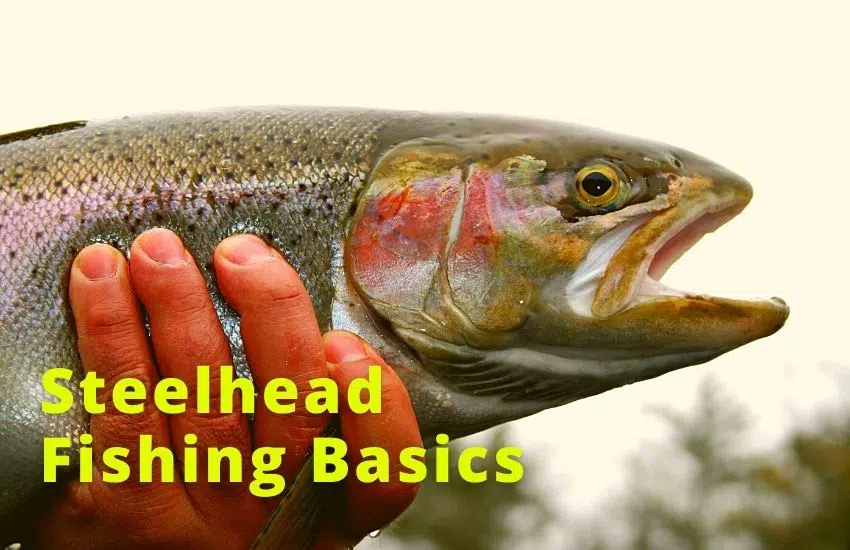
Steelhead trout fishing is an exciting and rewarding experience that challenges anglers to develop their skills, understand fish behavior, and adapt to changing river conditions. Known for their incredible strength, powerful runs, and spectacular jumps, steelhead are among the most sought-after freshwater game fish in North America. Whether we are fishing in a large river, a small tributary, or a coastal stream, catching these remarkable fish requires the right equipment, effective techniques, and a good understanding of their seasonal movements.
Unlike resident rainbow trout, steelhead are anadromous rainbow trout that migrate from freshwater to the ocean and return to rivers to spawn. These migrations create unique fishing opportunities throughout the year, depending on the region and the timing of the fish runs.
In this comprehensive guide, we will explore everything we need to know about steelhead trout fishing, including the best seasons, essential fishing gear, productive techniques, bait selection, and strategies for finding steelhead in different river conditions.
Essential basics about steelhead fishing, from choosing your gear, and the best bait for steelhead to reading water to catching fish.
What Is a Steelhead Trout?
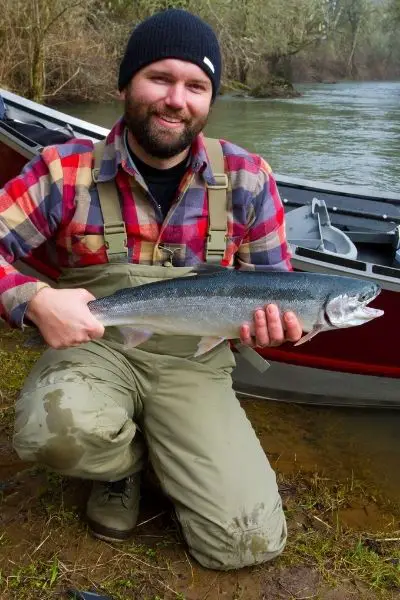
Steelhead are a migratory form of rainbow trout (Oncorhynchus mykiss). They are born in freshwater streams and rivers, where young fish spend their early lives before migrating to the ocean or large lakes. After spending time feeding and growing in these waters, they return to freshwater to reproduce.
Their ocean migrations allow them to grow considerably larger than many resident rainbow trout. Adult steelhead commonly weigh between 4 and 12 pounds, although some individuals can exceed 20 pounds.
Steelhead are easily recognized by their streamlined bodies, silvery coloration, and dark spots along their backs and tails. Their appearance can change as they move upstream. Freshly arrived fish often have bright silver sides, while fish that have spent more time in freshwater may develop darker coloration and a pink or reddish stripe.
One of the most fascinating characteristics of steelhead is their fighting ability. When hooked, they frequently make long, powerful runs and leap out of the water. Their strength and unpredictable movements make them challenging opponents, even for experienced anglers.
Best Time of Year for Steelhead Trout Fishing
Understanding steelhead migration patterns is essential for planning a successful fishing trip. The best time to fish depends on the river system, regional climate, and whether we are targeting summer-run or winter-run steelhead.
Winter Steelhead Fishing
Winter steelhead fishing is popular in many Pacific Northwest rivers, particularly in Oregon and Washington. These fish typically enter freshwater during the colder months and may continue migrating upstream through early spring.
Winter steelhead fishing can be challenging because cold water often makes fish less active. However, these conditions can also create excellent opportunities for anglers who understand how steelhead behave in cold rivers.
During winter, steelhead frequently hold in deeper pools, slower runs, and areas protected from strong currents. Fishing slowly and presenting bait or lures close to the bottom can increase our chances of getting a bite.
Productive winter techniques include:
- Drift fishing: Presenting bait or a lure naturally through a river current.
- Float fishing: Suspending bait beneath a float and allowing it to drift through likely holding areas.
- Plunking: Fishing stationary bait in areas where current carries scent and bait downstream.
- Fly fishing: Using weighted flies to reach steelhead holding near the riverbed.
Winter steelhead fishing is especially productive after moderate rainfall when rivers become slightly elevated and visibility remains suitable for fishing.
Summer Steelhead Fishing
Summer steelhead typically enter freshwater during warmer months and can migrate considerable distances upstream before spawning.
Unlike many winter-run fish, summer steelhead may enter rivers when water levels are relatively low and temperatures are higher. They often hold in deeper pools, shaded runs, and areas with adequate oxygen.
Summer steelhead can be particularly challenging because clear water and low flows make them more cautious. Anglers may need to use lighter leaders, smaller lures, and more natural presentations.
Early mornings and late evenings can provide productive fishing opportunities during warmer weather. Fishing shaded areas and deeper pools can also help us locate fish seeking cooler water.
Fall Steelhead Fishing
Fall is another productive season for steelhead fishing in many river systems. Rainfall can raise river levels and trigger migration from coastal waters into freshwater.
As rivers rise, steelhead may move upstream and spread into new holding areas. This movement creates opportunities to fish runs, pools, and river bends that may have held fewer fish during low-water conditions.
The most productive approach often depends on water clarity. In clear conditions, natural presentations and lighter tackle can be effective. In slightly colored water, brighter lures and larger baits may help steelhead locate our presentations.
Best Places to Find Steelhead in Rivers
Finding steelhead is one of the most important parts of successful fishing. These fish do not occupy every section of a river equally. Instead, they select areas that provide suitable current, depth, oxygen, and resting opportunities.
Learning to identify productive water helps us spend more time fishing where steelhead are likely to hold.
Deep Pools
Deep pools are classic steelhead holding areas, particularly during cold weather and periods of low water.
Steelhead often use these locations to rest between migration movements. The slower current allows them to conserve energy while remaining close to faster water where food is available.
When fishing deep pools, we should concentrate on the deeper sections, current seams, and transitions between fast and slow water.
Weighted drift-fishing rigs, jigs beneath floats, and sinking fly lines can help us reach fish holding near the bottom.
River Runs
Runs are relatively long stretches of river with consistent current and moderate depth. They can provide excellent steelhead habitat, especially when they contain gravel bottoms and nearby deeper water.
Steelhead often travel through runs while migrating upstream. Some fish also stop in these areas when current speed and depth provide suitable holding conditions.
Float fishing and swinging flies are popular techniques for covering runs effectively.
Current Seams
Current seams are boundaries where faster and slower water meet. These areas can be particularly productive because they allow steelhead to hold in manageable current while remaining near moving water.
Look for seams around rocks, boulders, river bends, and the edges of deep pools.
Presenting bait or lures along these boundaries can help us reach fish without disturbing their holding positions.
Tailouts
Tailouts are the shallow, gradually narrowing sections at the downstream end of pools. They often contain gravel and moderate current, making them important areas for migrating steelhead.
Fish may move through tailouts as they travel upstream, particularly when water conditions encourage migration.
Because tailouts are often shallow and clear, careful casting and low-profile presentations can make a significant difference.
Essential Steelhead Fishing Gear
Choosing the right fishing equipment improves casting accuracy, presentation, and fish control. Steelhead are powerful fish, so our gear must be strong enough to handle long runs while remaining sensitive enough to detect subtle bites.
Steelhead Fishing Rods
A suitable steelhead rod depends on the fishing technique and the size of the river.
For conventional fishing, a medium-light to medium-power spinning or casting rod between 8 and 10 feet is a common choice.
Longer rods provide several advantages, including improved line control, longer casts, and better management of drifting presentations.
For float fishing, longer rods are especially useful because they allow us to control the float over extended drifts.
Fly anglers generally select rods according to river size, fly type, and fishing method. Single-handed rods are useful for smaller rivers, while two-handed spey rods can help cover larger rivers and broad runs.
Fishing Reels
A reliable reel with a smooth drag system is essential when targeting steelhead.
Steelhead can make powerful runs immediately after being hooked. A smooth drag helps prevent sudden pressure changes that could break the leader or pull the hook free.
Spinning reels in the 2500 to 4000 size range are commonly suitable for many conventional steelhead applications. Larger rivers or heavier setups may require different reel sizes.
Fly anglers should choose reels with sufficient backing capacity and dependable drag systems.
Fishing Line and Leaders
The appropriate fishing line depends on the technique, water clarity, and size of the fish.
For conventional steelhead fishing, braided main line offers excellent sensitivity and low stretch. Monofilament is another popular option because it provides some stretch and can be useful for natural drift presentations.
Fluorocarbon leaders are often used because they are relatively abrasion-resistant and less visible underwater than many other line materials.
A typical leader may range from 6 to 12 pounds for conventional fishing, although heavier leaders may be appropriate around obstacles or when targeting larger fish.
Always match the line and leader to the fishing conditions and local regulations.
Best Steelhead Fishing Techniques
Steelhead can be caught using several techniques. The most effective method depends on water depth, current speed, visibility, and fish behavior.
1. Float Fishing
Float fishing is one of the most versatile methods for catching steelhead. It allows us to suspend bait or a jig at a controlled depth while presenting it naturally in the current.
A typical float-fishing setup includes:
- A suitable fishing rod and reel.
- A sliding or fixed float.
- Split-shot weights or another appropriate weight system.
- A leader and hook.
- Bait or a steelhead jig.
The float should travel naturally with the current. Ideally, it moves at approximately the same speed as the surrounding water rather than dragging unnaturally.
Adjusting the depth is essential. Steelhead frequently hold near the bottom, so we should set the float to keep the bait close to their holding depth without constantly snagging the riverbed.
When the float pauses, dips, or disappears, we should respond with a controlled hook set.
2. Drift Fishing
Drift fishing involves presenting bait or a lure naturally through the current while allowing it to move downstream.
This technique is particularly useful in rivers with moderate current and rocky bottoms.
Common drift-fishing baits include roe, artificial eggs, and worms, where permitted.
To drift fish effectively, cast slightly upstream and allow the bait to travel through the target area. Maintain enough contact with the line to detect bites without pulling the bait unnaturally.
The weight should be sufficient to keep the presentation near the bottom while allowing it to move naturally.
3. Spoon Fishing
Spoons are effective steelhead lures that produce flashes and vibrations as they move through the water.
They are particularly useful when fishing deeper runs, pools, and areas with moderate current.
Spoons come in different sizes, shapes, and colors. Silver, gold, copper, and painted finishes are common options.
In clear water, natural metallic colors can provide a subtle presentation. In stained water, brighter finishes may help fish locate the lure.
Cast across or slightly downstream and retrieve the spoon at a controlled speed. The goal is to allow it to swing through the current while maintaining an attractive wobbling action.
4. Spinner Fishing
Spinners are another popular option for steelhead fishing. Their rotating blades create vibration and flashes that can attract fish.
Inline spinners are available in different blade shapes, sizes, and colors.
A spinner should rotate consistently without moving too quickly through the target area. In stronger currents, we may need to adjust the weight or retrieve speed to maintain the desired depth.
Spinners can be particularly useful when covering water and searching for active steelhead.
5. Fly Fishing for Steelhead
Fly fishing offers a specialized approach to targeting steelhead. It requires careful attention to current, fly presentation, and line control.
Popular steelhead flies include:
- Egg patterns.
- Woolly Buggers.
- Intruder-style flies.
- Leech patterns.
- Spey flies.
- Traditional wet flies.
Fly selection depends on water clarity, temperature, fish behavior, and local insect or prey availability.
Swinging flies is a traditional steelhead technique. The angler casts across the river and allows the fly to move gradually through the current in a controlled arc.
Nymphing can also be effective, especially when steelhead are holding in deeper water or feeding near the bottom.
Best Bait for Steelhead Trout
Selecting the right bait can make a significant difference, particularly when fish are not actively chasing lures.
Salmon Eggs and Roe
Salmon eggs and roe are widely used for steelhead fishing. Their scent and natural appearance can attract fish in a variety of river conditions.
Fresh roe is commonly tied into small mesh bags to make it easier to present on a hook.
The size and color of the presentation should be adjusted according to water clarity and fishing conditions.
Nightcrawlers
Nightcrawlers are versatile baits that can be effective in several types of steelhead water.
Their natural movement can attract fish, especially when presented through moderate currents.
When fishing with worms, use a hook size appropriate for the bait and avoid using excessive weight that makes the presentation unnatural.
Artificial Eggs
Artificial eggs provide a convenient alternative to natural roe. They are available in various colors, sizes, and materials.
Some artificial eggs are scented, while others rely primarily on their appearance and movement.
They can be used with float-fishing and drift-fishing setups, depending on local regulations.
How Water Conditions Affect Steelhead Fishing
Water conditions play a major role in steelhead behavior. Understanding how water temperature, clarity, and flow affect fish movement helps us select suitable locations and techniques.
Water Temperature
Steelhead activity is strongly influenced by water temperature.
Cold water generally reduces their metabolic activity, while excessively warm water can cause physiological stress and reduce their willingness to move or feed.
During colder periods, slow presentations near the bottom can be productive. As temperatures become more favorable, fish may become more active and respond to a wider variety of presentations.
When water temperatures are unusually high, anglers should consider avoiding fishing, particularly where catch-and-release mortality is a concern.
Water Clarity
Water clarity influences how steelhead detect bait and lures.
In clear water, fish can see presentations more easily, making natural colors and lighter leaders useful.
In stained water, larger or more visible presentations may help steelhead locate bait.
Extremely muddy water can make fishing difficult because visibility is limited and fish may struggle to detect presentations.
River Flow
River flow affects steelhead migration and holding behavior.
Moderately elevated flows can encourage fish to move upstream and provide additional cover from predators.
However, extremely high flows can make fishing dangerous and reduce visibility.
When water levels rise after rainfall, focus on accessible areas with manageable currents and safe riverbanks.
Always check local river conditions before heading out.
Tips for Catching More Steelhead
Consistent success requires observation, patience, and the ability to adapt to changing conditions.
1. Cover water systematically. Rather than repeatedly fishing the same small area, work through productive runs and pools methodically.
2. Adjust your presentation depth. If you are not getting bites, experiment with the depth of your bait or lure. Steelhead often hold close to the riverbed.
3. Fish during migration periods. Understanding the timing of local steelhead runs can help you select productive fishing dates.
4. Avoid excessive disturbance. Steelhead can become cautious in clear, shallow water. Approach quietly and avoid casting shadows over likely holding areas.
5. Pay attention to current seams. These areas offer steelhead opportunities to rest while remaining close to moving water.
6. Use sharp hooks. Sharp hooks improve penetration and can reduce the chance of losing fish during a fight.
7. Adapt to changing conditions. If water levels, temperatures, or clarity change, adjust your fishing location, tackle, and presentation accordingly.
How to Fight and Land a Steelhead
Once a steelhead takes the bait, maintaining steady pressure is essential.
After setting the hook, keep the rod bent and allow the reel’s drag system to absorb powerful runs. Avoid tightening the drag excessively, as sudden movements can break the leader or pull the hook free.
When a steelhead jumps, maintaining a controlled rod angle and steady tension can help prevent the fish from throwing the hook.
If the fish moves downstream, follow it when possible while keeping enough pressure to maintain control.
Use a landing net suitable for the fish’s size, preferably one with rubberized mesh. If you intend to release the fish, minimize handling and keep it in the water whenever possible.
Steelhead Fishing Regulations and Conservation
Steelhead populations vary considerably between river systems. Some populations are abundant, while others are threatened or endangered.
Fishing regulations may specify seasons, legal fishing methods, minimum or maximum size limits, daily catch limits, and mandatory release requirements.
Before fishing, check the regulations for the specific river and date. Some rivers prohibit bait, require barbless hooks, or restrict fishing to designated areas.
Catch-and-release practices can help reduce unnecessary harm to fish. Use appropriate tackle to minimize fight duration, avoid touching the fish with dry hands, and remove the hook carefully when possible.
If a fish is deeply hooked or badly exhausted, follow local conservation guidance and avoid unnecessary handling.
Frequently Asked Questions About Steelhead Trout Fishing
What is the best time of day to catch steelhead?
Early morning and late afternoon can provide productive fishing opportunities, but steelhead can be caught throughout the day. Water temperature, river conditions, migration activity, and fishing pressure often matter more than the exact time.
What is the best bait for steelhead?
Salmon roe, artificial eggs, and nightcrawlers are popular options. The most effective bait depends on water clarity, fish activity, and local conditions.
What size rod is best for steelhead fishing?
An 8- to 10-foot medium-light or medium-power rod is suitable for many conventional steelhead applications. Longer rods can be useful for float fishing, while fly anglers select rods according to their preferred casting method and river size.
Are steelhead difficult to catch?
Steelhead can be challenging because they migrate, respond to changing environmental conditions, and may become selective in heavily fished rivers. Their powerful runs and jumps also make landing them difficult.
Can you catch steelhead in summer?
Yes. Summer-run steelhead enter many rivers during warmer months. They can be caught in deeper pools, shaded runs, and other areas with suitable water temperatures and oxygen levels.
What is the difference between steelhead and rainbow trout?
Steelhead and rainbow trout are the same species. Steelhead are the migratory form that spends part of its life in the ocean or large lakes before returning to freshwater. Resident rainbow trout generally remain in freshwater throughout their lives.
Final Thoughts on Steelhead Trout Fishing
Steelhead trout fishing combines technical skill, patience, and an understanding of fish behavior. From selecting the right rod and reel to identifying productive river locations, every part of the fishing process can influence the outcome.
By learning seasonal migration patterns, understanding river conditions, and choosing appropriate techniques, we can improve our ability to locate and catch steelhead throughout the year.
Whether we prefer float fishing, drifting bait, casting spinners, or swinging flies, the key is to adapt our approach to the water and the fish. With preparation, careful observation, and responsible fishing practices, every steelhead trip can become a valuable learning experience.
You might also love reading: