
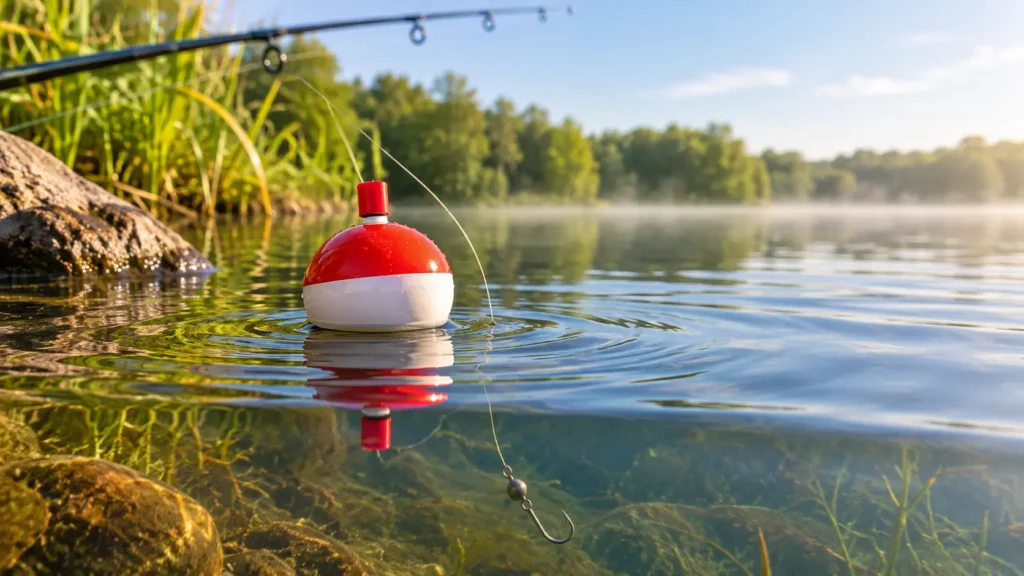
Should i use a bobber for bass fishing? You do not need a bobber for bass fishing, but one can help you catch bass in the right situation. A bobber, or float, keeps your bait at a set depth and shows you when a bass takes a bite. It works best with live bait, shallow weed pockets, docks, and fish suspended off the bottom.
Most bass anglers fish without a bobber because moving lures such as crankbaits, spinnerbaits, jigs, and soft plastics cover more water and trigger reaction strikes. But bobber fishing for bass is far from outdated.
When you need a bait to sit still in one spot, a properly balanced bobber rig can put a worm, minnow, or small jig right in front of a fish that refuses to chase.

Do You Need a Bobber for Bass Fishing?
You do not need to use bobbers when bass fishing, but you should use one when your goal is to suspend bait at a precise depth. Bass fishing with a bobber makes sense when fish hold under docks, around weed edges, near standing timber, or above deep structure.
A bobber does three jobs:
- It suspends your bait in the water column.
- It adds casting weight to a light hook and bait.
- It acts as a strike indicator, moving, tilting, or disappearing when a bass bites.
Think of a bobber as a tool, not a requirement. If bass are feeding aggressively, a jig, crankbait, or Texas-rigged worm will usually produce more opportunities. If bass are neutral or holding in one small area, a float presentation can keep the bait in the strike zone longer.
Can You Catch Bass Without a Bobber?
Yes. You can catch bass without a bobber, and most experienced anglers do. Fishing for bass without a bobber lets you work artificial lures with more control, speed, and contact with cover.
C
ommon bass fishing rigs and methods that do not need a float include:
- Texas-rigged worm: Good for weeds, wood, and brush.
- Jig and craw: Strong around docks, rocks, laydowns, and deep cover.
- Drop shot: Keeps a bait off bottom while the weight stays on the lake floor.
- Ned rig: Excellent for pressured bass and clear water.
- Crankbait or spinnerbait: Best for covering water and finding active fish.
- Free-lined live bait: A hook, split shot, and live bait with no float.
A bobber can even get in the way when you want a lure to sink, drag across bottom, or move with a steady retrieve. Artificial lures usually work better without one because the float limits lure action and makes long casts awkward. reddit
When Should You Use a Bobber for Bass Fishing?
Use a bobber when bass are holding at a known depth and you want your bait to stay there. Bobber fishing for bass shines when fish will not chase a fast-moving lure.
– Fishing Shallow Water
A bobber rig works well around shoreline cover, lily pads, laydowns, shallow docks, and weed pockets. Bass often sit under vegetation and look upward for an easy meal.
For shallow water, set your bait 1–2 feet below the surface. Cast into open pockets beside grass or wood, let the bait settle, and give it a small twitch every 20–30 seconds. A weedless soft-plastic worm under a float can drop into places where a traditional cast would snag. knots
– Targeting Suspended Bass
Suspended bass are some of the best candidates for a bobber. They may hold over a creek channel, beside a bluff, above a brush pile, or along the edge of a weed line without feeding on bottom.
Slip bobber bass fishing is especially useful here. The float slides down the line during the cast, then stops at a small knot or bead set to your chosen depth. This lets you fish deeper than a fixed bobber can handle while still casting comfortably.
A float-and-fly setup is a proven example: a small jig hangs below a float and stays in front of bass suspended over baitfish. A balanced float also reveals subtle strikes, including when a fish lifts the bait and the bobber tips upright or lies on its side. bassmaster
– Fishing With Live Bait
Live bait and bobbers are a natural match. A nightcrawler, minnow, leech, or shiner under a float looks natural because it can move without dragging across bottom.
Use a bobber with live bait when:
- Bass hold near docks or shade lines.
- Bluegill and small baitfish are active nearby.
- You are fishing from shore and need casting distance.
- Wind makes it hard to detect a light bite.
- You want to keep the bait above snags.
Split shot placed above the hook helps the float stand upright and carry the bait to the desired depth. Keep the weight far enough above the hook that the bait can move naturally. siyoutube
When Should You Avoid Using a Bobber for Bass?
Avoid a bobber when bass are feeding on bottom, chasing baitfish, or holding tight to heavy cover. The float adds drag and can reduce the natural action of your lure.
Skip the bobber when:
- You are flipping or pitching into thick vegetation.
- You need to drag a jig or worm across rocks or bottom.
- Bass are chasing shad near the surface.
- You are fishing a crankbait, spinnerbait, swimbait, or topwater lure.
- Wind or current pushes the float and pulls your bait out of the strike zone.
- You need to make long, accurate casts to a small target.
A bobber also becomes less useful once fish move deep. If bass hold 25 feet down, a slip bobber can reach them, but a drop shot, jig, or Carolina rig often gives better control and sensitivity.
Best Types of Bobbers for Bass Fishing
The best bobber for bass fishing depends on depth, bait size, wind, and cover. Choose the smallest float that will still stand upright with your bait and weight.
– Slip Bobbers
A slip bobber is the most versatile choice for bass. It slides freely on the line until it reaches an adjustable stop, so you can change depth without cutting or retying your rig.
Use a slip bobber when fishing deeper than about 3–4 feet, especially around docks, weed edges, points, and suspended fish. The standard setup uses a bobber stop, bead, float, split shot, and hook or jig.
– Fixed Bobbers
Fixed bobbers attach firmly to the line and work best in shallow water. They are simple, sensitive, and easy for beginners to use.
Choose a fixed float when fishing water shallower than your rod length. They are excellent for shoreline bass, shallow docks, and pockets in vegetation. Their limitation is casting: a fixed bobber set too deep becomes difficult to cast accurately.
– Spring and Clip-On Bobbers
Spring bobbers and clip-on floats are quick to attach and remove. They are good for beginners, kids, panfish, and casual live-bait fishing.
For bass, use a larger version only when fishing a bigger worm or minnow in calm, shallow water. Small red-and-white clip-on bobbers are better suited to bluegill than largemouth bass because bass often need a more stable, balanced presentation.
Best Bass Fishing Baits to Use With a Bobber
Live bait usually produces the most consistent results under a float, but certain artificial baits work too.
| Bait | Best use | Rigging tip |
|---|---|---|
| Nightcrawler | Shoreline cover, docks, shallow weeds | Hook once through the collar; add a small split shot |
| Live minnow | Suspended bass, deep weed lines, docks | Hook through the lips or back; use enough weight to stand the float upright |
| Leech | Clear water and finicky bass | Use a small hook and light split shot |
| Wacky-rigged stick bait | Docks, spawning flats, calm water | Hook the bait through the middle and suspend it under the float |
| Small jig or fly | Suspended bass, float-and-fly fishing | Balance the float so the jig hangs naturally |
| Soft-plastic worm | Weed pockets and shallow cover | Use a weedless hook when fishing heavy cover |
A wacky worm under a float is a particularly effective bobber rig for bass. The bait falls with a slow, quivering action, and the float keeps it in the strike zone instead of letting it sink into cover.in-fisherman
How to Set Up a Bobber for Bass Fishing
Here is a simple bobber setup for bass that works with live bait or a small artificial bait.
- Tie on your main line. Use 8–12 lb monofilament or fluorocarbon for most bobber presentations.
- Add a bobber stop. Slide it onto the line at the depth you want to fish.
- Thread on a small bead. The bead stops the float from slipping past the knot.
- Add the slip bobber. Run the line through the float’s center hole.
- Tie on a hook or small jig. A size 1/0 bait hook works well for worms and minnows.
- Add split shot. Place one or two small split shots 8–18 inches above the hook.
- Bait the hook. Use a worm, minnow, leech, or small artificial bait.
- Cast and let it settle. The float should stand upright. If it lies flat, add weight or reduce the depth.
For a fixed-bobber version, clip the float onto the line at the desired depth, tie on a hook, add split shot, and bait up. It is faster to rig but less adjustable.
How Deep Should Your Bait Be Under a Bobber?
Start by matching the bait depth to where bass are holding—not simply to the bottom.
- Shallow weeds or shoreline cover: 1–2 feet below the surface.
- Docks and shade lines: 2–4 feet down.
- Weed edges: Just above the top of the grass.
- Brush piles or timber: 1–2 feet above the cover.
- Suspended bass: Set the bait slightly above the depth where you see fish on your electronics.
- Deep water: Start a foot or two off bottom, then adjust until you get bites.
A good rule is to begin in the middle of the water column. If you see baitfish at 8 feet, place your bait around 6–7 feet. If the float never moves, adjust 1–2 feet at a time. The right depth is the one that produces a bite, not the one that looks best on paper.
Bobber Fishing vs. Bottom Fishing for Bass: What’s Better?
Neither method is better all the time. Bobber fishing controls depth; bottom fishing controls contact with the lake floor.
| Factor | Bobber fishing | Bottom fishing |
|---|---|---|
| Best condition | Suspended or shallow bass | Bass holding on or near bottom |
| Best bait | Live bait, wacky worm, small jig | Jig, Texas rig, Carolina rig, drop shot |
| Strike detection | Visual float movement | Line movement, rod tip, or feel |
| Cover | Weed pockets, docks, timber | Rocks, brush, sand, deep structure |
| Main advantage | Keeps bait in one depth zone | Stays in contact with bottom and cover |
| Main drawback | Wind drift and limited lure action | Can snag and misses suspended fish |
Use a bobber when fish are looking up or holding at a specific depth. Use bottom fishing when bass relate to rocks, mud, brush, or other structure on the lake floor. Many anglers catch more bass by switching between the two until they find the active depth.
Frequently Asked Questions About Bass Fishing with a Bobber
Do professional bass anglers use bobbers?
Yes, but not as their main method. Professional anglers may use a float in specialized situations, such as float-and-fly fishing for suspended smallmouth or largemouth bass in cold water. A bobber is simply another tool for presenting a bait at a precise depth.
What size bobber is best for bass fishing?
Use the smallest bobber that will support your bait and split shot. For a worm or small minnow, a 1- to 1.5-inch float is often enough. For a larger minnow or a jig, use a bigger slip bobber so the rig stays upright and casts well.
Can you use a bobber with artificial lures?
Yes. A bobber works with a wacky-rigged stick bait, small jig, soft-plastic worm, or fly-style jig. Avoid using one with crankbaits, spinnerbaits, topwater lures, or most moving baits because the float restricts their action.
Is a slip bobber better than a fixed bobber for bass?
A slip bobber is better for most bass applications because it lets you adjust depth and cast more easily. A fixed bobber is better only for very shallow water, usually less than 3–4 feet deep.
Can you catch bass from shore with a bobber?
Yes. Shore anglers often benefit from a bobber because it adds casting weight and keeps live bait away from snags. Target docks, weed edges, fallen trees, and pockets in vegetation.
What should I do when the bobber moves but does not go under?
Wait a moment before setting the hook. Small bluegill or bait-stealing fish may be nibbling. If the float repeatedly dips without going under, try a smaller bait, a sharper hook, or a more compact piece of worm.
What’s the 90/10 rule in fishing?
The 90/10 rule means about 90% of feeding fish concentrate in just 10% of the water. Focus on high-percentage spots—points, drops, weed edges, docks, current seams, and areas with baitfish—instead of blind-casting unproductive water.
What is the #1 best bait for bass?
There is no single best bait, but a Texas-rigged soft-plastic worm is the closest all-around choice. It catches bass year-round in weeds, wood, rocks, and open water. Match it to local forage—green pumpkin, watermelon red, or black-blue—and fish it slowly around cover
Conclusion: Do You Need a Bobber for Bass Fishing?
You do not need a bobber for bass fishing, but it can be the right choice when bass hold at one depth and refuse to chase a moving lure. Use a bobber with live bait, a wacky worm, or a small jig around docks, weeds, timber, and suspended fish. Choose a slip bobber for adjustable depth and a fixed bobber for shallow water.
The best approach is simple: start with the lure or rig that matches the conditions. If bass are active, cover water with a jig, crankbait, or soft plastic. If they are holding still, use a bobber to keep your bait in the strike zone. A float will not replace good bass fishing fundamentals, but it can turn a slow day into a productive one when you put the right bait at the right depth.
You might also like: