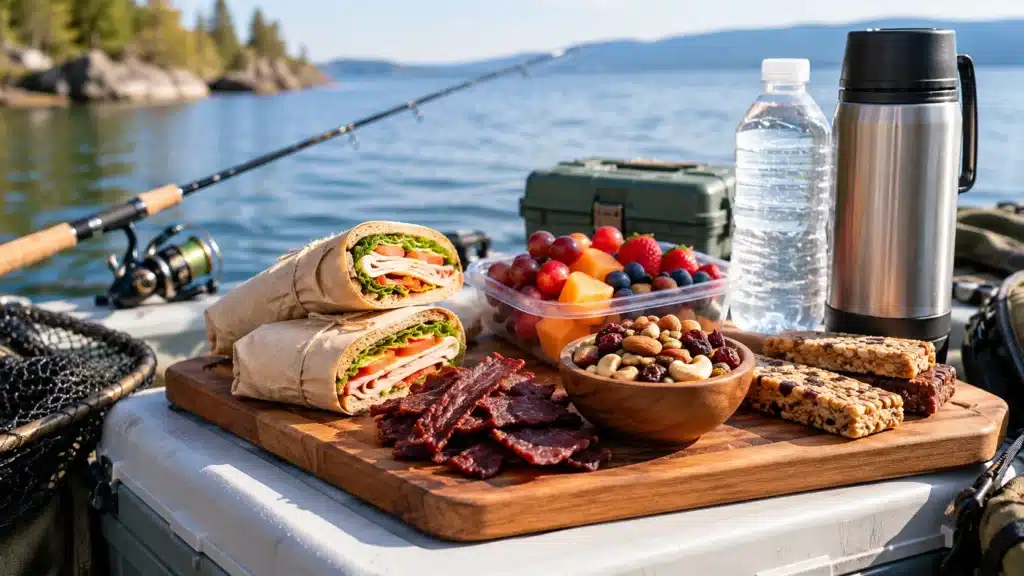
What to eat while fishing comes down to simple, portable foods that give you steady energy without making a mess on the boat or shore: trail mix, jerky, fruit, sandwiches, wraps, protein bars, crackers, and plenty of water. The best fishing food is easy to eat with one hand, survives heat, and keeps you focused when the bite turns on.
A good fishing trip menu does not need to be fancy. You need snacks for quick energy, a filling fishing lunch, enough fluids for the conditions, and a cooler plan that keeps perishable food safe.
This guide gives you 15 practical and tasty food ideas, a fishing trip food list, hot-weather tips, 6tips fishing cafeteria, and options for motion sickness and multi-day trips.
What to Eat While Fishing: 15 Easy Food Ideas
What food to take on fishing trip? The best foods for fishing are lightweight, non-greasy, and packed with a mix of carbs, protein, and salt. Choose foods you can grab quickly between casts, store safely in a cooler or dry bag, and clean up without much effort.
Here is a practical fishing food list:
- Trail mix — Nuts, dried fruit, pretzels, and chocolate chips provide fast energy and healthy fats.
- Beef jerky or turkey jerky — High in protein, shelf-stable, and easy to pack.
- Peanut butter and jelly sandwiches — Cheap, filling, and familiar.
- Tortilla wraps — Less likely to get crushed than bread; fill them with turkey, cheese, hummus, or tuna.
- Protein bars or granola bars — A reliable backup when you cannot stop to eat.
- Fresh fruit — Apples, oranges, grapes, bananas, and clementines hydrate and digest easily.
- Crackers with peanut butter or cheese — A simple fishing trip snack that works well on a boat.
- Tuna or chicken pouches — No can opener needed; pair with crackers or bread.
- Hard-boiled eggs — Protein-rich, though they need cooler storage.
- Pasta salad — A solid fishing lunch for shore lunches or camp cooking.
- Bagels with nut butter — More durable than sliced bread and satisfying before dawn.
- Cheese sticks or cheese cubes — Good with crackers, fruit, or jerky; keep them cold.
- Vegetable sticks and hummus — Carrots, celery, cucumbers, and bell peppers add crunch without heavy grease.
- Instant oatmeal or breakfast bars — Ideal for early-morning fishing when you do not want a heavy meal.
- Water, electrolyte drinks, and ginger chews — Not a meal, but essential for long days in the sun.
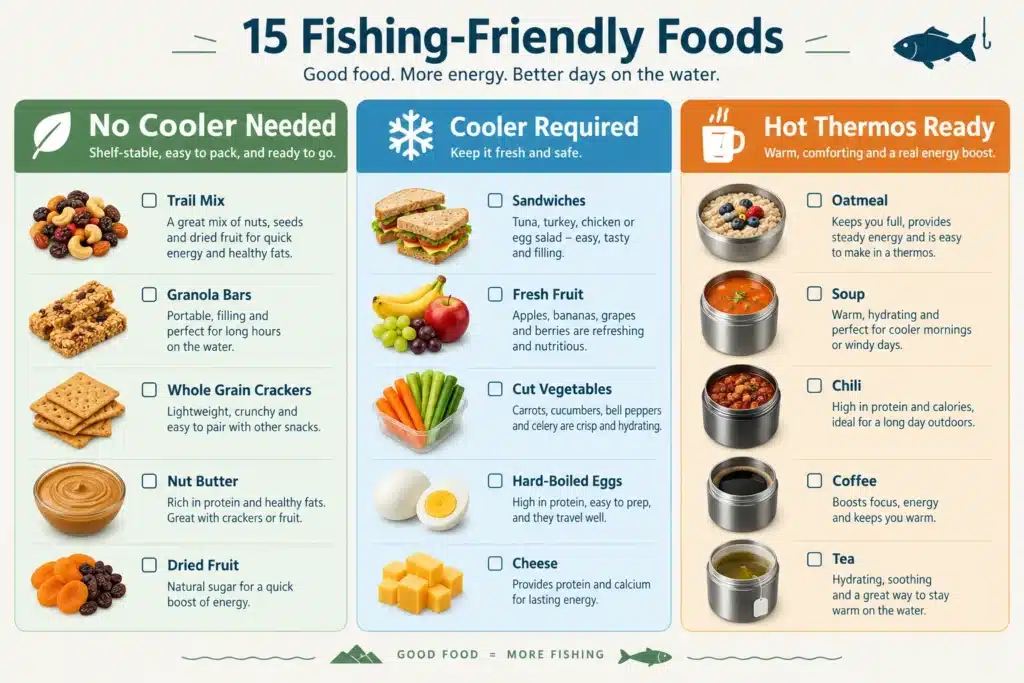
A useful rule: pack one “eat now” snack in a reachable pocket or tackle tray, then keep the rest sealed in your food cooler. This prevents constant cooler openings and keeps cold food cold longer. usda
Best Snacks to Bring on a Fishing Trip
What is the best snacks to take fishing? The best snacks for a fishing trip are small, tidy, and ready to eat. Avoid foods that require two hands, create crumbs near your reel, or spoil quickly in direct sun.
– Trail Mix, Nuts, and Dried Fruit
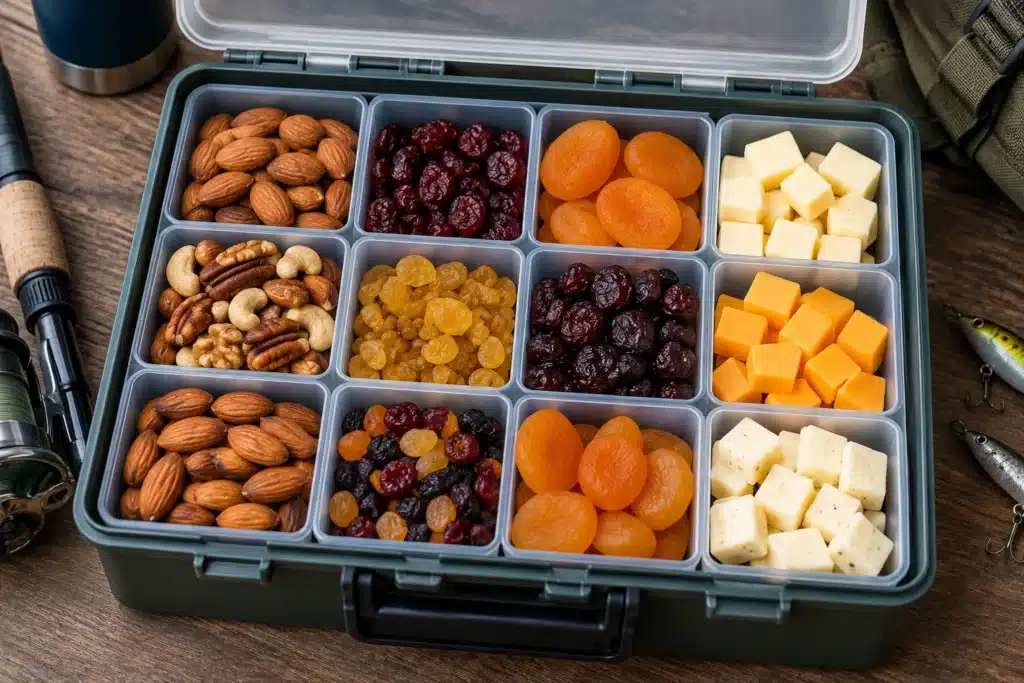
Trail mix is one of the best fishing snack ideas because it combines quick carbohydrates with fats and protein. Make your own with almonds, peanuts, raisins, dried cranberries, pretzels, and a small amount of dark chocolate.
Portion it into resealable bags before you leave. A large shared bag invites sand, fish slime, and wet hands, while individual portions stay cleaner.
– Protein Bars and Beef Jerky
Protein bars and jerky are ideal when you need food that can sit in a backpack or boat compartment. Jerky delivers salt and protein, which helps after hours of sweating, rowing, wading, or fighting fish.
Choose lower-sugar bars if you want steady energy. Keep one or two bars in your life jacket pocket, tackle bag, or truck console as an emergency backup.
– Fresh Fruit and Easy Grab-and-Go Snacks
Apples, oranges, grapes, and clementines travel well. Bananas are convenient too, but they bruise easily, so pack them in a rigid container if you are running a boat.
For a no-mess option, bring pre-cut fruit in a sealed container and keep it chilled. Watermelon, pineapple, and berries are refreshing in hot weather, but they need reliable ice.
Easy and Quick Meals for Fishing Trips
For a full day on the water, plan one real meal plus several small snacks. A heavy fishing lunch can make you sluggish, while no lunch at all can leave you tired, irritable, and less alert near the water.
Sandwiches and Wraps
Sandwiches and wraps remain the best food to take fishing because they are familiar, filling, and easy to customize. Turkey, ham, roast beef, tuna, egg salad, hummus, and cheese all work well.
Wraps often hold up better than soft bread, especially in a cooler. Skip watery tomatoes and heavy dressings if you will be out all day; they can make bread soggy and create cleanup problems.
Peanut Butter and Jelly Sandwiches
Peanut butter and jelly is a classic for good reason. It needs no refrigeration for a short trip, provides lasting energy, and works for kids and adults alike.
For less mess, make PB&J crackers or use a tortilla instead of bread. Pack them in a hard-sided container so they do not get flattened under tackle boxes.
No-Cook Lunch Ideas for Fishing
No-cook meals that are good for fishinging are best for charters, kayaks, canoes, and boats without a galley. Good fishing camp lunch ideas include:
- Tuna packages with crackers
- Deli meat and cheese wraps
- Hummus with pita and vegetables
- Pasta salad with chicken fingers or chickpeas
- Cottage cheese cups with fruit
- Pre-made burritos, kept cold if they contain meat or dairy
These options let you eat without relying on a stove, grill, or charter crew. Charter guidance commonly recommends light, no-cook foods because they are easier to manage on the water. finandflycharters
Healthy Foods That Keep You Energized While Fishing
Fighting a heavy redfish or reeling in deep-water bottom fish burns serious calories. Reaching for sugary sodas or greasy fast food often leads to an energy crash right when the afternoon bite picks up. Focus on high-protein, slow-burning complex carbs to maintain high focus all day.
Foods rich in potassium—like bananas or dried apricots—prevent muscle cramps during long hours spent standing on hard boat decks. Complex carbs like whole-grain wraps provide sustained energy without spiking your blood sugar.
Fishing eating should support focus, balance, and endurance. The best foods for a fishing trip combine slow-release carbohydrates with protein and a little salt.
| Food | Why it works | Best use |
|---|---|---|
| Oatmeal | Slow-burning carbs for early energy | Morning fishing |
| Nuts and seeds | Protein, fats, and staying power | All-day snacking |
| Fruit | Hydration and quick natural sugar | Hot weather |
| Jerky or tuna | Protein without refrigeration concerns | Long trips |
| Whole-grain wraps | Filling but not overly heavy | Fishing lunch |
| Electrolyte drinks | Replace salt lost through sweat | Hot, active days |
Avoid relying only on candy and soda. They give a fast lift, but the crash can hit right when you need patience and focus.
Best Breakfast Foods for Early Morning Fishing
Early mornings often start before your appetite wakes up. Eat something small before launch, then bring a second breakfast for later.
Good fishing breakfast options include:
- Bagel with peanut butter
- Instant oatmeal cup
- Granola with shelf-stable milk
- Banana and protein bar
- Breakfast burrito wrapped in foil, kept hot or cold appropriately
- Hard-boiled eggs with crackers
- Yogurt drink, if you can keep it cold
If you are prone to seasickness, keep breakfast bland and light. Crackers, toast, a banana, or a small peanut butter sandwich are easier on the stomach than fried or greasy food. motion-sickness-guru
What to Drink While Fishing to Stay Hydrated
Water should be your main drink on any fishing trip. Dehydration can cause fatigue, slower reactions, headaches, and poor judgment, all of which matter more when you are handling hooks, boats, or changing conditions.
For moderate activity, a practical starting point is about 16–20 ounces of fluid per hour, with more needed in heat, sun, wind, or during hard physical effort. yeti
Good drink choices include:
- Plain water
- Water with electrolyte tablets or powder
- Sports drinks for long, sweaty sessions
- Coconut water
- Iced tea or diluted juice, if you also drink enough water
Keep drinks in a separate cooler from food. Beverage coolers get opened often, which warms the contents and shortens how long your food stays safely cold.usda+1
Best Foods to Eat While Fishing in Hot Weather
Hot-weather fishing calls for hydrating foods and lighter meals. Heavy, greasy food sits in your stomach and can make heat exhaustion feel worse.
The best food for fishing trip in hot weather includes:
- Watermelon, oranges, grapes, and melon
- Cucumber, celery, and bell pepper sticks
- Cold pasta salad with chicken or beans
- Turkey or chicken wraps
- Electrolyte drinks
- Salted nuts or pretzels, in reasonable portions
Eat smaller amounts more often instead of one large meal. This keeps energy steadier and reduces the chance of nausea when the boat is rocking.
What Foods Should You Avoid While Fishing?
Some foods create more trouble than they are worth on the water.
Avoid or limit:
- Greasy fast food — It can make you sluggish and worsens nausea.
- Mayonnaise-heavy salads left unrefrigerated — These are perishable and require strict cooling.
- Soggy sandwiches — Watery vegetables and sauces turn bread into a mess.
- Crumbly snacks near electronics — Chips and cookies can end up in reels, rod handles, and boat crevices.
- Alcohol — It dehydrates you and impairs judgment around water.
- Strong-smelling foods — Tuna, eggs, and certain cheeses can be unpleasant in a small boat or charter.
- Excessive caffeine — A little may help, but too much can increase dehydration and jitters.
If you get seasick, avoid fried food, spicy meals, rich dairy, and very sweet snacks. Small amounts of bland food, such as crackers or pretzels, are usually easier to tolerate.
How to Pack and Store Food Safely on a Fishing Trip
Food safety matters just as much on a fishing trip as it does at home. Bacteria multiply quickly between 40°F and 140°F, so perishable food needs to stay below 40°F.usda+1
What to Keep in a Fishing Cooler
Keep these items in a cooler with ice or frozen gel packs:
- Deli meat and cheese
- Cut fruit and vegetables
- Yogurt, milk, and protein shakes
- Egg salad, tuna salad, or chicken salad
- Cooked leftovers
- Raw meat or seafood you plan to cook later
Use watertight containers so melting ice does not soak your food. If you bring raw meat, keep it sealed and separate from ready-to-eat food to prevent cross-contamination.
How to Keep Food Fresh in Hot Weather
Follow these simple rules:
- Chill food before you pack it; do not use the cooler to cool warm food down.
- Use two cold sources, such as ice plus frozen gel packs or frozen water bottles.
- Pack the cooler full; a full cooler stays cold longer than a half-empty one.usda+1
- Keep the cooler shaded and out of the sun. usda
- Store drinks in a separate cooler so the food cooler stays closed.
- Put perishables back in the cooler within two hours, or within one hour when temperatures exceed 90°F.usda+1
- Bring a small appliance thermometer if you are packing meat, dairy, eggs, or prepared meals.usda
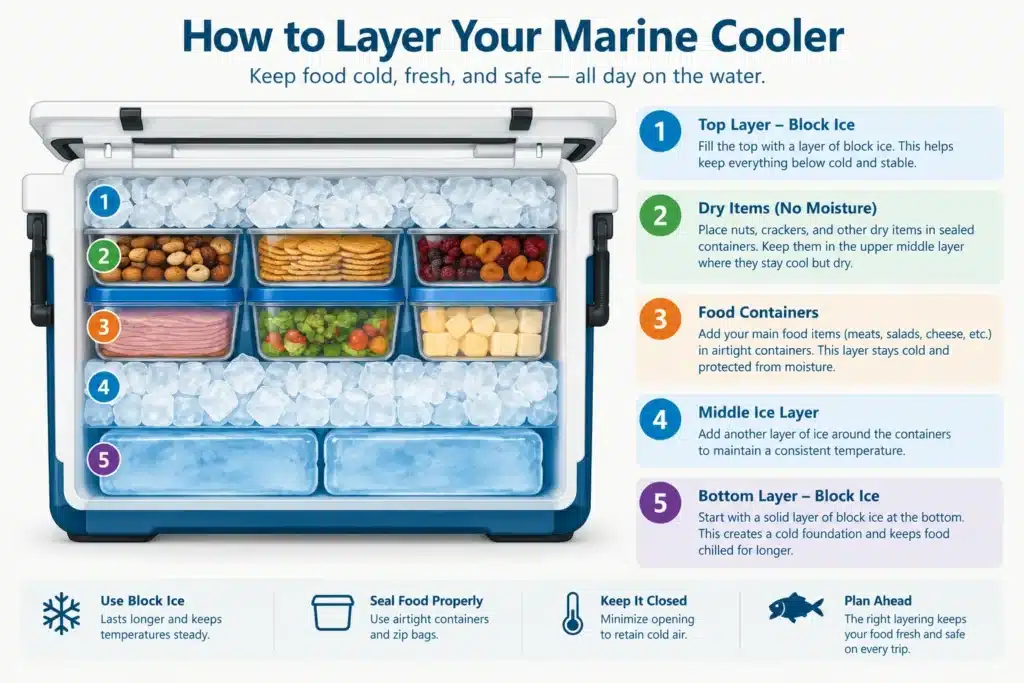
Place all perishable food inside watertight lock-top containers or heavy-duty freezer bags. Elevate sandwiches on top of an internal cooler rack so they stay above any melting ice water. Keep the cooler locked tight in the shade under a Bimini top or boat seat.
What to Eat While Fishing Overnight or on a Multi-Day Trip
A multi-day trips needs more planning than a day outing. Build your fishing trip menu around foods that stay safe, require little preparation, and can be cooked easily at camp.
Fishing Trip Dinner Ideas:
Easy fishing camp dinner ideas include:
- Foil-packet potatoes, sausage, and vegetables
- One-pot pasta with jarred sauce and canned chicken
- Rice and beans with tortillas
- Campfire chili
- Grilled or pan-fried fish, if regulations allow and you can clean and cook it safely
- Instant ramen upgraded with eggs, vegetables, or canned meat
- Pre-made frozen chili or stew, thawed safely in a cooler
Freshly caught fish can make a memorable meal, but only keep and prepare it if it is legal, properly handled, and cooked thoroughly. Many anglers also enjoy simple camp staples such as hot dogs, sausages, and foil-packet meals because they are inexpensive and easy to cook outdoors. halloffameoutdoorco
4 Guys, 7 Days Fishing Trip Food Challenge:
For a group trip, plan food by day rather than bringing random groceries. A simple system works well:
- Day 1: Fresh sandwiches, fruit, and perishable snacks.
- Days 2–3: Cooked dinners, pasta salad, wraps, and cooler-stable foods.
- Days 4–7: Shelf-stable meals, rice, pasta, canned beans, tuna pouches, oatmeal, and dehydrated meals.
Assign one person to manage the food cooler, another to handle camp cooking, and another to track water and trash. This prevents the common problem of everyone bringing snacks but nobody bringing a real meal.
Food for a Fishing Charter
For a fishing charter, bring compact, low-odor, no-cook food unless the captain says otherwise. A great lunch for offshore fisherman is usually a wrap, crackers, fruit, jerky, and water—not a large greasy meal.
Good charter foods include:
- Turkey and cheese wrap
- Crackers with peanut butter
- Tuna pouch and bread
- Grapes or apple slices
- Protein bar
- Ginger chews, PBJ and candy bar
- Water and an electrolyte drink
Ask the charter operator before bringing a large cooler. Some boats have limited space, and many provide food or drinks.
Snacks for Deep-Sea Fishing With Motion Sickness
If you get motion sickness, do not go out on an empty stomach. Eat a small, bland meal before boarding and keep light snacks available during the trip.motion-sickness-guru
Good choices include:
- Saltine crackers
- Plain pretzels
- Dry toast or plain bagel
- Bananas
- Ginger chews or ginger tea
- Applesauce pouches
- Small amounts of water, sipped often
Avoid greasy food, spicy food, alcohol, and large meals. If nausea starts, stop eating heavy foods, focus on the horizon, stay in fresh air when possible, and follow the advice of your captain or medical provider.
FAQs About What to Eat While Fishing
What to eat during fishing?
Eat easy snacks such as trail mix, jerky, fruit, crackers, protein bars, sandwiches and snacks. For a full day, add a wrap, pasta salad, or other simple fishing lunch.
What snacks to take on a deep-sea fishing trip if you have motion sickness?
Bring saltines, pretzels, plain crackers, ginger chews, bananas, applesauce, and water. Eat small amounts often and avoid greasy, spicy, or very sweet foods.
What is the best food to take fishing?
Peanut butter sandwiches, jerky, trail mix, fruit, wraps, and protein bars are among the best foods to bring fishing because they are portable and filling.
What should I pack for a fishing trip food list?
What is the best food to bring on a fishing trip? Pack water, electrolyte drinks, two or three snacks, one filling lunch, wet wipes, trash bags, utensils, and a cooler with ice for perishables.
What is a good fishing lunch?
A turkey wrap, PB&J sandwich, tuna pouch with crackers, pasta salad, or hummus with pita are all good fishing lunch options.
How much water should I drink while fishing?
A practical starting point is 16–20 ounces per hour during moderate activity, with more during heat, sun exposure, or hard exertion.yeti
Can I eat fish I catch while fishing?
Only if it is legal to keep, properly identified, cleaned safely, and cooked thoroughly. Check local regulations and any health advisories for the waterbody.
What food stays good without a cooler?
Jerky, nuts, trail mix, protein bars, crackers, peanut butter, dried fruit, canned tuna or chicken, and whole fruit generally do not require refrigeration.
What should kids eat while fishing?
Give kids simple foods they already like: fruit, crackers, cheese sticks, PB&J, granola bars, and plenty of water. Keep portions small so they can eat between activities.
How do I keep food cold on a fishing trip?
Use a quality cooler with ice or gel packs, keep it shaded, pack it full, limit openings, and separate drinks from food. Keep perishables at 40°F or below.usda+1
Conclusion
Knowing what to eat while fishing makes a long day on the water safer, more comfortable, and far more enjoyable. The best approach is simple: bring steady-energy snacks, one practical fishing lunch, enough water, and a cooler plan that protects perishable food. Trail mix, jerky, fruit, wraps, PB&J, pasta salad, and protein bars cover almost every type of trip, from a quiet morning on a lake to an offshore charter.
Match your food fishing to the conditions. Choose light, hydrating foods in hot weather, bland snacks if you are prone to seasickness, and shelf-stable meals for multi-day camping trips. Most importantly, keep perishable food below 40°F and avoid leaving it in the sun. With a little preparation, you will spend less time dealing with hunger and more time doing what you came
You might also love:
- Kids Fishing: 10 Proven Ways On How To Introduce Kids To Fishing
- Steelhead Fishing For Beginners: 21 Basics Every Angler (Should Know)
- When To Fish Topwater For Bass? (9 Rules You Should Know)
- All You Need To Know About Shark Fishing In Florida (Complete Guide)
- How Long Does It Take To Get An Online Fishing License? (Explained)
- Slingshot Fishing: 19+ Things Every Angler (Need-To-Know)
- 10 Reasons Drone Fishing Is Better Than Traditional Methods (Explained)
- Crossbow Fishing: What Every Bow Angler Should Know (23+ Important Things)