
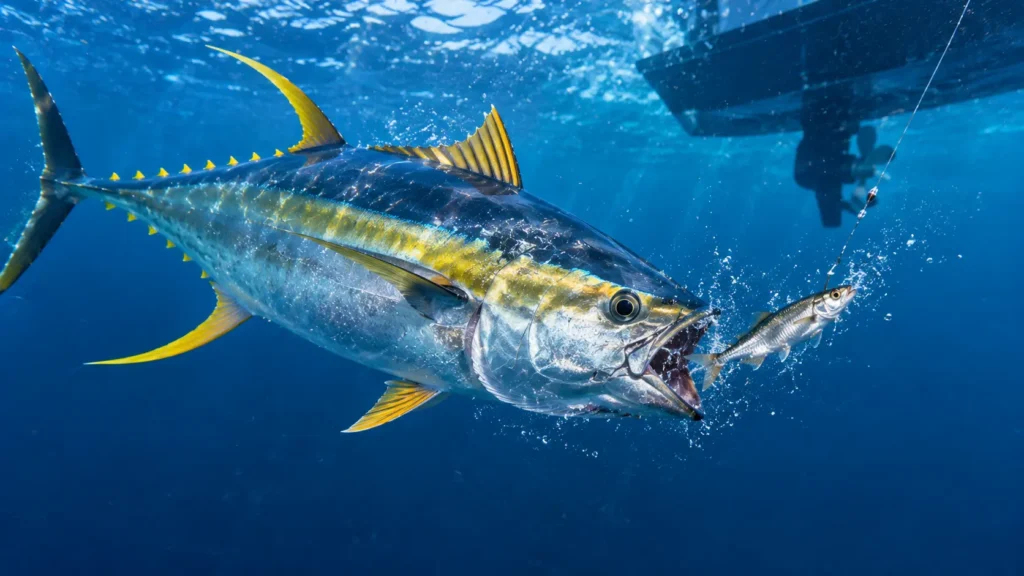
What bait to use for yellowfin tuna? The best bait to use for yellowfin tuna is live Pacific sardines or anchovies on the West Coast, and skirted ballyhoo or live goggle eyes in the Atlantic and Gulf.
Yellowfin tuna are fast, aggressive hunters that feed heavily on small baitfish, squid, and crustaceans. Choosing the right option depends on whether you are trolling open water, chunking over underwater structure, or casting into surface frenzies.
This catching fish guide breaks down nine proven options across three categories—live bait, cut bait, and artificial lures—and tells you exactly when each one wins.
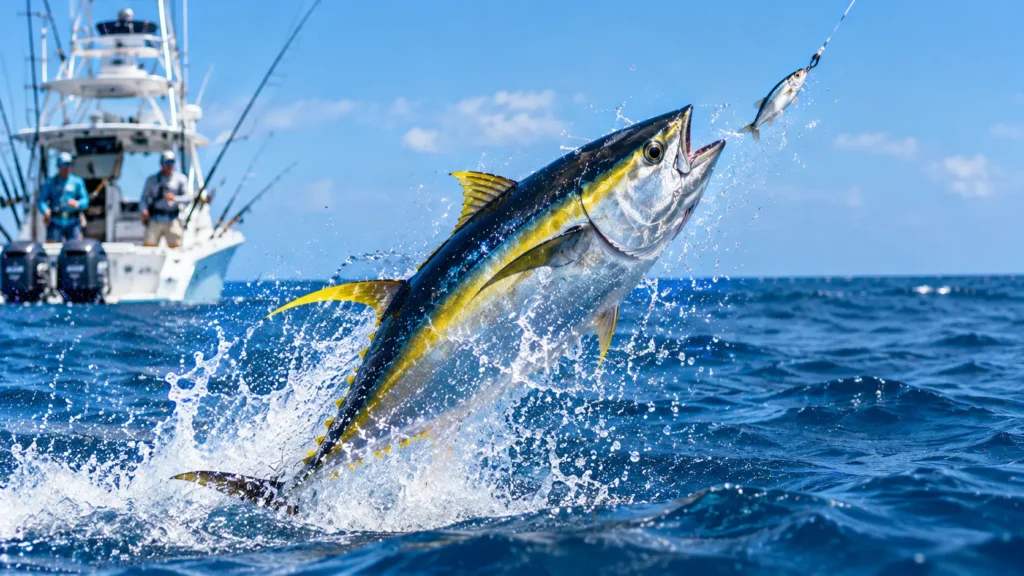
What Is the Best Bait to Use for Yellowfin Tuna?
Live sardines, anchovies, and mackerel are the most consistent yellowfin producers because they trigger the same feeding response tuna already have wired into their brains. Yellowfin, Bluefin, and blackfin tuna species are sight-feeders with excellent vision, and a healthy baitfish swimming naturally on a fluorocarbon leader looks like food, not tackle.
Yellowfin tuna adjust their feeding habits based on bait availability, water clarity, and depth. Matching local forage—often called “matching the hatch”—is key to getting bites.
| Bait Category | Best Option | Target Depth | Ideal Technique |
| Live Bait | Sardines, Anchovies, Goggle Eyes | 0 – 50 feet | Drifting, Slow Trolling, Kite Fishing |
| Cut Bait | Butterfish, Sardine Chunks, Squid | 20 – 150 feet | Chunking, Drifting in Chum Slick |
| Trolling Bait | Skirted Ballyhoo, Cedar Plugs | 0 – 15 feet | High-Speed Trolling (6–8 knots) |
| Artificial Lures | Metal Jigs, Poppers, Spreader Bars | 0 – 250+ feet | Vertical Jigging, Topwater Casting |
The nuance: sardines and anchovies win for school-sized fish and surface feeders. Mackerel and ballyhoo win for larger fish and trolled presentations. Squid and cut bait win when fish are holding deep or when live bait is unavailable. Cedar plugs, poppers, and metal jigs win when tuna are keyed on a specific forage size or refusing natural baits.
The single biggest mistake anglers make is treating bait as a static choice. Yellowfin feed on different baitfish at different times of the year, and “matching the hatch” is the difference between a bent reel, rod and a dead spread.
Live bait vs. Cut vs. Artificial Yellowfin Tuna baits – A quick decision guide
| Condition | Best choice | Why |
|---|---|---|
| Tuna busting small bait on surface | Live sardines/anchovies, small poppers | Matches forage size; natural action |
| Tuna holding midwater on sonar | Live mackerel, butterfly jigs | Gets down fast; natural profile |
| Fish spooky or pressured | Live bait fish on 60–80 lb fluoro | Natural presentation beats hardware |
| Current ripping, fish spread out | Chunked butterfish or sardines | Builds a slick; holds fish behind boat |
| Covering water to find fish | Cedar plug, skirted lure, ballyhoo | Speed + flash + durability |
| Fish deep, 150–300 ft | Metal jig 200–300 g | Sinks fast; flutters on drop |
9 Best Trolling for Yellowfin Tuna Baits and Lures
The best bait for yellowfin and bluefin tuna depends on three variables: what the fish are eating, where they’re holding, and how you’re presenting. The nine options below cover every realistic scenario you’ll face offshore.
1. Live Sardines and Anchovies for Yellowfin Tuna
Sardines and anchovies are the gold standard for yellowfin live bait. They’re the right size for schoolie fish, they swim frantically when hooked through the collar, and they match the bait balls tuna herd to the surface.
Rig them through the back behind the dorsal fin or collar-hook them on the back side of the gills. Collar hooking keeps the bait upright and swimming naturally, which triggers more bites than nose hooking when fish are wary. Use a 1/0 to 3/0 circle hook for sardines, stepping up to 4/0 for larger anchovies.
The limitation: sardines and anchovies die fast in warm, poorly oxygenated livewells. Keep them cool, don’t crowd them, and change water frequently.
2. Mackerel, Ballyhoo, and Other Baitfish
When yellowfin are keyed on larger forage, mackerel and ballyhoo become the best bait for yellowfin tuna. Pacific mackerel work well for larger fish, and big yellowfin will eat live skipjack in the 2–5 lb class. Ballyhoo rigged with a skirt or sea witch is a classic trolling bait that tracks straight and produces a lifelike swimming action at 5–8 knots.
Live mackerel should be bridle-rigged or collar-hooked on a 5/0–7/0 circle hook with a 60–80 lb fluorocarbon leader. Slow-troll them around temperature breaks and structure, or drift them in a chum slick when fish are holding midwater.
3. Squid and Chunk Bait for Yellowfin Tuna
Squid is the sleeper bait for yellowfin. Research on pelagic longline gear has found yellowfin are caught most frequently on squid compared to mackerel or sardine, especially at intermediate depths. Whole squid drifted or slow-trolled presents a substantial meal that larger fish don’t pass up. Strip squid into thin ribbons for chumming, or pin a whole small squid on a 7/0 circle hook for a durable, scent-heavy offering.
Cut bait—specifically chunking—is the go-to when live bait is scarce. Butterfish and sardines cut into 1-inch cubes create a steady chum line that pulls tuna from hundreds of yards away. The tuna chunking bait trick that catches more fish: mix hooked chunks in with unhooked freebies so fish can’t tell which pieces have metal in them. Use 7/0–9/0 circle hooks and let the chunk drift back naturally with plenty of slack line.
4. Best Trolling Lures: Cedar Plugs, Poppers, and Metal Jigs
– Cedar plugs
The cedar plug is the least impressive-looking lure in the box and one of the most effective yellowfin trolling bait options ever made. Trolled at 5–7 knots on the shotgun or flat line, a plain cedar plug produces a tight wobble and bubble trail that yellowfin can’t resist. Cedar plugs excel for small to mid-sized yellowfin in the 20–50 lb class, and they’re nearly impossible to run wrong.
– Poppers and stickbaits
When yellowfin are foaming on the surface, poppers and stickbaits are the most exciting yellowfin fishing lures you can throw. Large chuggers and stickbaits retrieved quickly mimic fleeing baitfish and trigger explosive reaction strikes. Work a popper with a pop-pop-pause rhythm; work a stickbait with a fast, darting retrieve just under the surface. The most common mistake is working them too fast—when fish are fussy, slow down and let the lure dart naturally.
– Metal jigs
Speed jigs and butterfly jigs are the answer when tuna are marking deep on the sounder. Jigs in the 100–300 gram range worked with an erratic, fast retrieve draw strikes from fish holding 150–300 feet down. Flat-fall jigs mimic a wounded baitfish fluttering down, and glow-finish versions outperform flashy ones in low light. Drop a 200-gram butterfly jig or a Daiwa SK knife jig when the screen shows fish stacked below the thermocline.
Best Yellowfin Baits for Offshore Fishing
Offshore fishing adds variables that inshore trips don’t: bigger swells, longer runs, and less forgiving bait management. The best baits for offshore yellowfin tuna fishing are the ones that stay alive or stay rigged through rough water and long transit times.
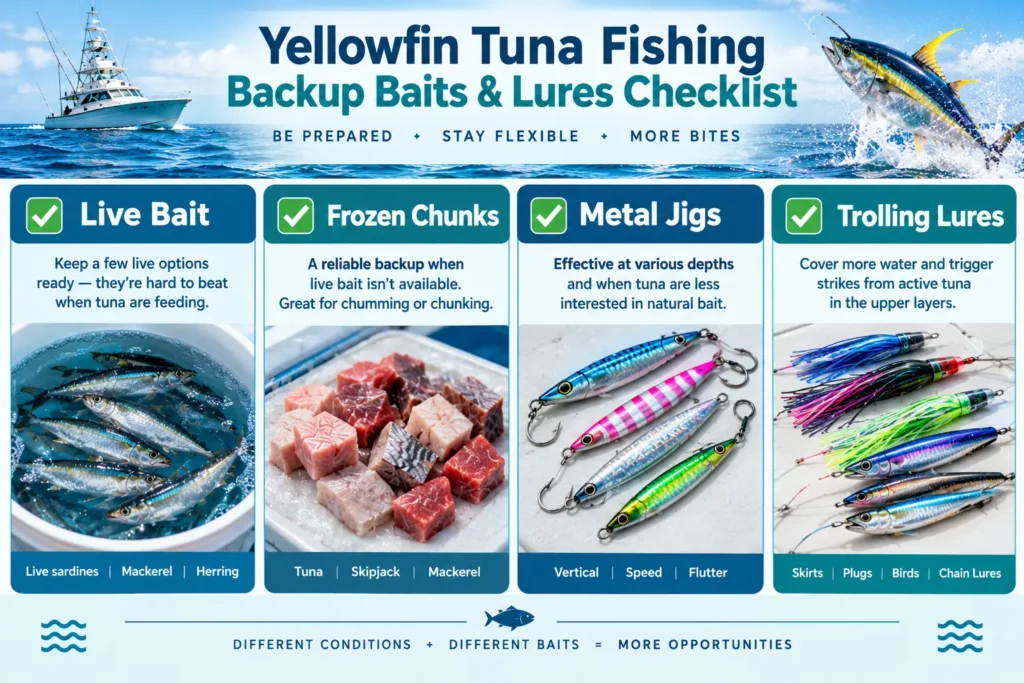
Live bait wells need constant flow and shade; sardines and anchovies will roll if the pump fails or the sun bakes the tank. For offshore trolling, cedar plugs and skirted ballyhoo are workhorses because they track straight at 6–8 knots and survive repeated knockdowns.
When you’re chunking offshore, butterfish is the most durable cut bait—it stays on the hook through long drifts and releases a steady oil slick. Pack a mix of live bait for close-in work, frozen chunks for slick building, and a few metal jigs for deep marks. Offshore trips reward redundancy: if one bait type dies, you need a backup that still swims or still tracks.
How to Choose the Right Bait for Your Fishing Method and get bit?
Live-bait fishing wins when you can get healthy baits and fish are holding midwater to surface. Drift or slow-troll them on fluoro leaders and keep the bait moving naturally.
Chunking wins when fish are spread out, the current is manageable, and you need to build a slick. Anchor or drift over structure and feed a steady stream of cut bait downcurrent.
Chumming with live bait keeps fish around the boat when they’re finicky. Toss a few live baits overboard every minute or so to create competition.
Trolling covers water and finds fish. Run a spread of cedar plugs, skirted lures, and ballyhoo at 5–8 knots, and keep the boat in gear for 30 seconds after a hookup to draw double and triple strikes from the school.
Casting to surface feeders is the most visual game. Keep a popper or stickbait rigged and ready; when tuna push bait to the top, cast beyond the school and retrieve through the foam.
How to Rig Bait for Yellowfin Tuna?
Hook placement matters more than most anglers realize. Collar hooking—through the back side of the gills, on top of the fish—keeps live bait upright and swimming naturally. Nose hooking keeps bait on the surface and produces dramatic topwater bites, but it’s less consistent. Match hook size to bait size: bigger, stronger baits get larger hooks; small sardines get 1/0–3/0 circle hooks.
Leader selection is a balance between stealth and abrasion resistance. Yellowfin have excellent eyesight, so fluorocarbon is non-negotiable. For live bait, 60–80 lb fluoro handles most fish without spooking them; drop to 50 lb in clear, calm water when fish are pressured. For chunking, 60–80 lb fluoro is standard, and circle hooks are required in some Atlantic fisheries, so check regulations.
Keep bait fresh by changing livewell water frequently, avoiding overcrowding, and using a recirculation pump. Dead or sluggish bait catches far fewer fish than a frisky sardine.
What Bait Works Best for Yellowfin Tuna at Different Depths?
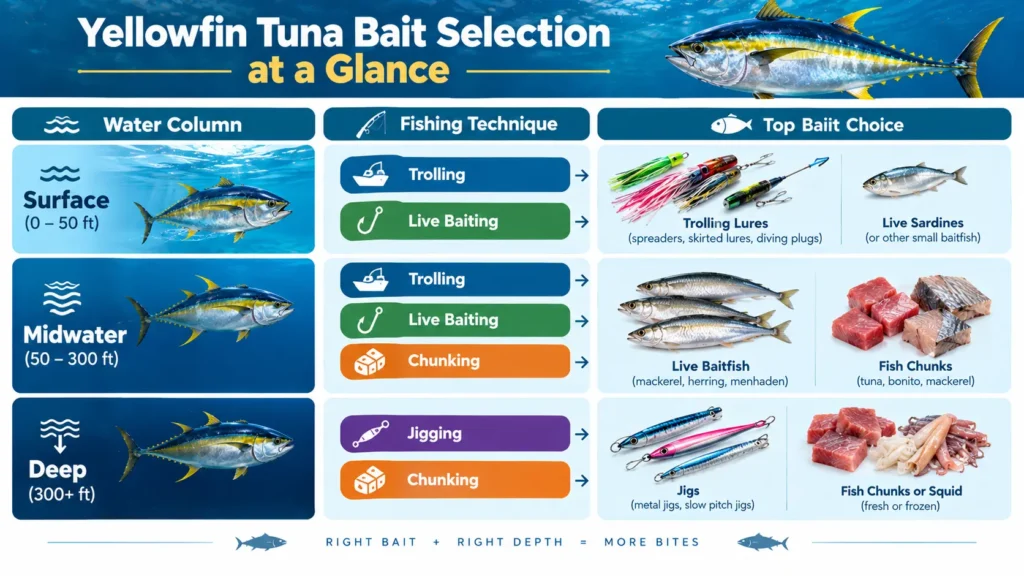
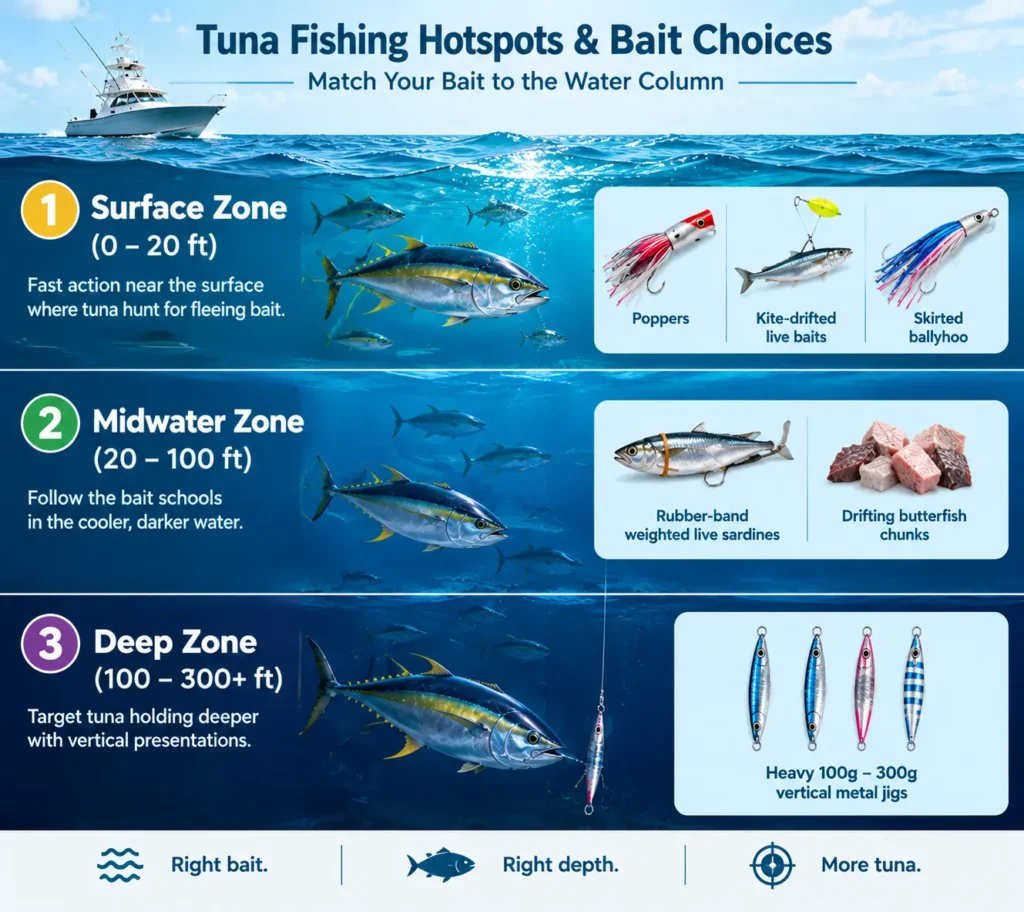
Surface (0–30 ft): Live sardines and anchovies free-lined or drifted; poppers and stickbaits cast to foamers. Nose-hooked baits stay up top where the fish are looking.
Midwater (30–100 ft): Live mackerel and ballyhoo slow-trolled or drifted on 60–80 lb fluoro; butterfly jigs and flat-fall jigs worked vertically. This is where squid becomes deadly on a slow drift.
Deep (100–300+ ft): Metal jigs in the 200–300 gram range, trolling speed-jigged or slow-pitched. Glow patterns and blue-sardine colors outperform in low light. Yellowfin catches in longline studies have been significantly higher in deeper hook layers, so don’t be afraid to send a jig down when the screen shows marks below.
Frequently Asked Questions About Best Baits for tuna trolling
What is the number-one bait for yellowfin tuna?
A live sardine or anchovy collar-hooked on a fluorocarbon leader is the single most consistent yellowfin bait across fisheries. It matches the size and behavior of the forage tuna naturally target, and it can be drifted, slow-trolled, or fished in a chum slick.
Do yellowfin tuna prefer live or dead bait?
Live bait almost always outperforms dead bait when fish are feeding near the surface or holding in current. Dead bait—chunks and whole squid—wins when fish are deep, when live bait is unavailable, or when you need to build a chum slick to pull fish to the boat.
Is squid good bait for yellowfin tuna?
Yes. Squid is an excellent yellowfin bait, especially for larger fish and deep presentations. Whole small squid drifted or slow-trolled present a substantial meal, and squid ribbons make durable chum. Some longline data shows yellowfin are caught more frequently on squid than on fish bait at intermediate depths.
What size bait should you use for yellowfin tuna?
Match bait size to the forage the fish are eating. Small schoolie yellowfin key on 2–4 inch sardines and anchovies. Larger fish take 6–10 inch mackerel, ballyhoo, and small skipjack. When tuna are locked onto micro-forage, downsize your bait and leader rather than upsizing—a small, natural offering beats a big, conspicuous one.
Conclusion: What Bait to Use for Yellowfin Tuna
Knowing what bait to use for yellowfin tuna comes down to reading the moment. A live sardine collar-hooked on 60 lb fluoro is the best starting point for most anglers, but it’s not the only answer. Chunked butterfish builds a slick that holds fish behind the boat. Squid tempts deep, wary fish that ignore fish bait. Cedar plugs and poppers cover water and trigger reaction strikes when trolling or casting. Metal jigs reach fish that sonar shows stacked 200 feet down.
The anglers who consistently catch yellowfin tuna aren’t the ones with the biggest bait collection—they’re the ones who watch what the flying fish are eating, match the size and action, and present it naturally. Carry live sardines, a pack of butterfish, a few cedar plugs, a couple of poppers, and a handful of butterfly jigs. That spread covers every depth and every mood a yellowfin will show you.