
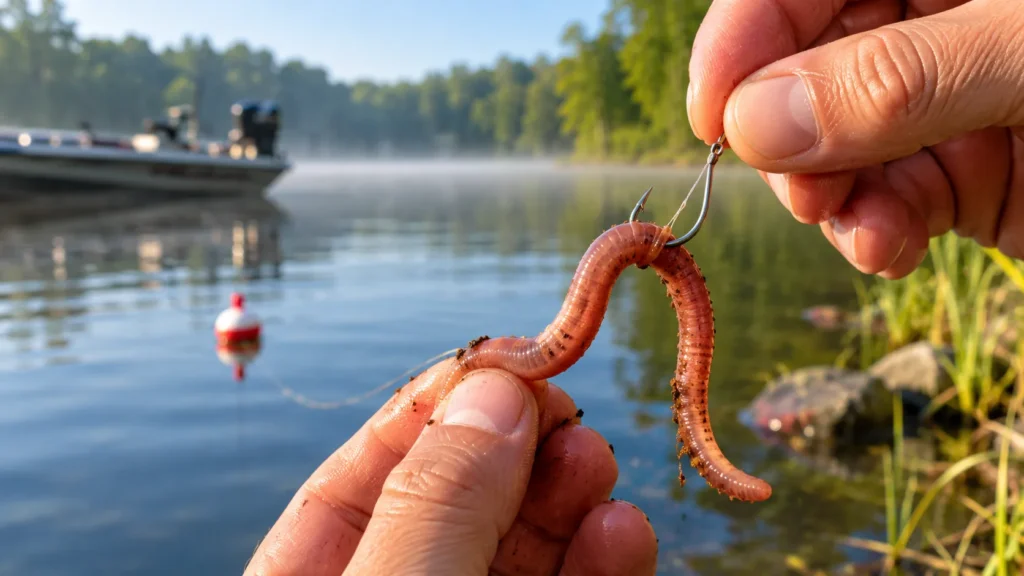
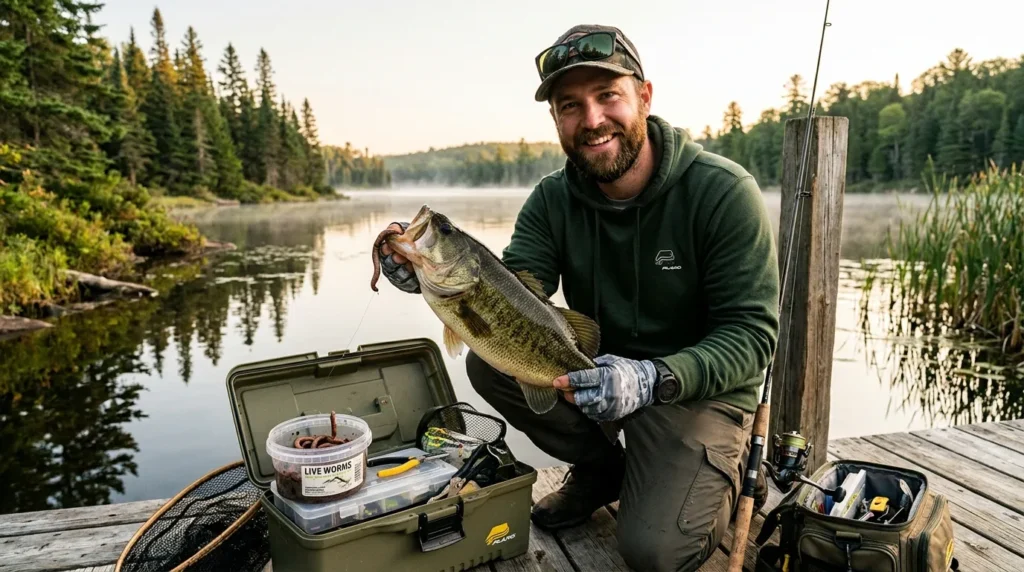
Can you catch bass with live worms? you can catch bass with live worms, and nightcrawlers are one of the simplest, most reliable baits for largemouth and smallmouth bass. Bass fishing with live worms works because a real worm combines natural scent, lifelike movement, and an easy meal that bass rarely ignore.
Catching bass with live worms is one of the simplest ways to attract hungry largemouth and smallmouth bass. But can a regular nightcrawler outperform expensive artificial lures? Live worms release natural scents and create lifelike movements that tempt bass, especially when fish ignore conventional presentations.
Live worms can catch bass throughout the year, particularly around weed beds, submerged structures, rocky banks, and shallow feeding areas. Nightcrawlers, red worms, and earthworms all offer effective options.
Want to catch more bass without spending a fortune on tackle? Let’s explore the best live worms, hook sizes, fishing rigs, bait presentation techniques, and seasonal tips to help you land more bass on your next fishing trip.
This Artificial Worm Style Might Be the Missing Piece in Your Tackle Box!
If you can’t find live worms, stock your tackle with proven artificial worms instead. The best options are the Yamamoto Senko for a weightless or wacky rig, YUM Dinger as a durable budget alternative, Zoom Trick Worm for Texas, Carolina, and Neko rigs, Zoom Ol’ Monster for a big ribbon-tail presentation.
Why Bass Fishing With Live Worms Is So Effective
Live worm bass fishing is an effective technique because it gives bass three strong signals at once: movement, scent, and a familiar food shape. A live worm does not need a perfect retrieve to catch fish, which makes it especially useful for beginners, bank fishing, and pond fishing.
Using worms for fishing is one of the easiest and most effective ways to catch freshwater and saltwater fish. But what makes this simple bait so attractive to fish? Worms produce natural scents and movements that trigger feeding instincts in species such as bass, bluegill, catfish, trout, and perch.
– Why Bass Are Attracted to Live Worms
Bass are opportunistic predators. They eat worms, leeches, insect larvae, crayfish, minnows, and almost any prey that looks vulnerable. A live worm on a hook sends out scent in the water and moves even when your rod is still.
That movement matters. A plastic worm can imitate prey, but a real nightcrawler curls, stretches, and twitches naturally. Those small movements can entice a bass that refuses a faster lure.
– How Natural Movement and Scent Trigger Strikes
Bass often ambush prey from cover. They may watch a bait for several seconds before sucking it in. A live worm gives them time to locate it by smell and vibration, then commit to the bite.
When a bass picks up a live worm, it often holds on longer than it does with an artificial lure. That extra moment gives you a better chance to feel the bite, take up slack, and set the hook cleanly.
– When Live Worms Outperform Artificial Lures
Live worms shine when bass are inactive, pressured, or holding tight to cover. Use them when:
- The water is cold or bass are sluggish.
- Fish will not chase a spinner, swimbait, crankbait, or fluke.
- You are fishing heavy cover where a slow, natural presentation works best.
- You are teaching a child or new angler to go fishing.
- You need a simple bait for pond fishing from shore.
Artificial lures cover water faster, but live worms often win when the bite requires patience and finesse.
Best Live Worms for Bass Fishing
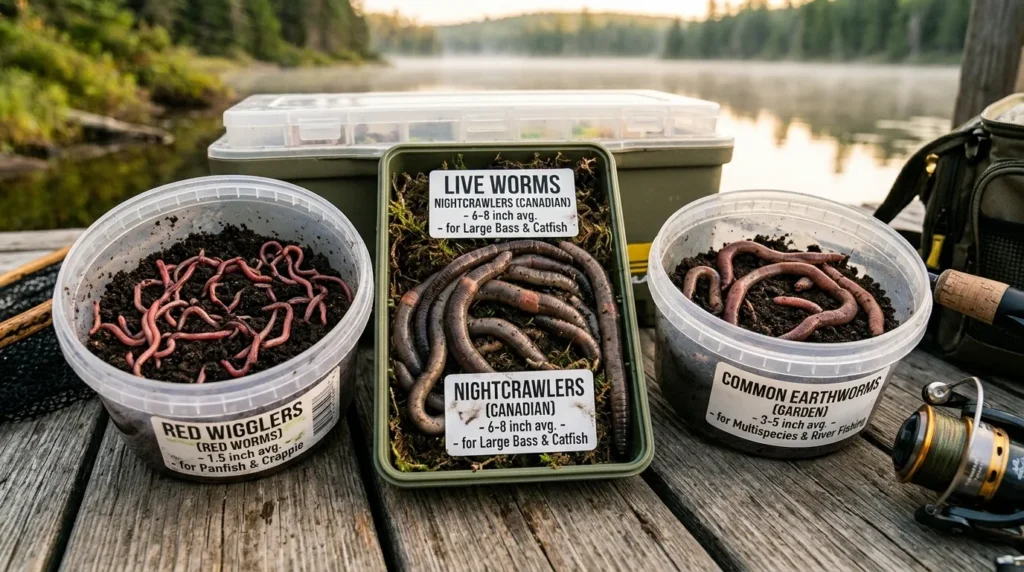
The best live worms for bass fishing are usually nightcrawlers, red worms, and local earthworms. Match the size of the worm to the bass in your water and the size of fish you want to catch.
– Nightcrawlers
Nightcrawlers are the top choice for catching bass with live worms. They are large, durable, easy to find at a bait shop, and attractive to bigger fish.
Use a full nightcrawler for largemouth bass around brush, docks, and weed beds. If smaller fish keep stealing your bait, use half a crawler or hook it so only a short tail extends behind the hook.
– Red Worms
Red worms are smaller than nightcrawlers and work well for pressured ponds, clear water, and finicky bass. They are also excellent when bluegill or other panfish are aggressive, because their smaller profile can still get eaten quickly.
For bigger bass, thread two or three red worms onto a size 2 or 1/0 hook to create a larger bait profile.
– Earthworms
Common earthworms from your yard can catch bass, especially in small ponds and creeks. Keep them cool, moist, and out of direct sunlight. Avoid worms from areas treated with pesticides or fertilizer.
– Mealworms and Other Natural Alternatives
Mealworms, leeches, crayfish, and minnows can all catch bass, but they are not true worms. Mealworms work best as a finesse bait around docks, rocks, and calm water. If you want a live bait that mimics a fleeing baitfish, a small minnow or fluke-style plastic may outperform a worm.
When Is the Best Time to Catch Bass With Live Worms?
The best time to catch bass with live worms is early morning, late evening, and periods when bass hold near cover rather than chasing prey.
Early Morning and Late Evening
Low light makes bass more comfortable moving shallow. Cast a worm along weed edges, dock posts, fallen trees, and shallow flats during the first and last two hours of daylight.
A bobber can help in shallow water because it keeps the worm suspended above weeds and makes bites easier to see. In deeper water, fish the worm on the bottom instead.
Seasonal Bass Activity
| Time of year | Where bass hold | Best live-worm approach |
|---|---|---|
| Spring | Shallow flats, spawning areas, creek mouths | Fish slowly around cover; use a split shot or light weight |
| Summer | Shade, weed edges, deeper brush, docks | Fish early and late; drag a worm through cooler cover |
| Fall | Shallow bays, rocky banks, baitfish areas | Keep the worm moving slightly; cover more water |
| Winter | Deep drops, slow-moving bass | Use a small worm, light weight, and very slow presentation |
Fishing During Warmer and Cooler Weather
In warm water, bass may feed early, then retreat to shade or deeper water. Target docks, weed beds, brush piles, and drop-offs.
In cooler water, slow down even more. Let the worm sit longer between movements. A bass may take several seconds to inspect the bait before striking.
Best Places to Find Bass When Using Live Worms
Bass relate to cover, current breaks, and changes in bottom depth. Focus on places where a bass can ambush prey without expending much energy.
– Weed Beds and Vegetation
Weed beds hold baitfish, insects, crayfish, and shade. Cast beyond the weeds and slowly drag the worm along the outside edge. A weedless Texas rig helps keep the hook from snagging.
– Fallen Trees and Submerged Logs
Wood absorbs heat and gives bass an ambush point. Make several casts to different sides of the cover. Let the worm fall beside the trunk, then slowly crawl it away.
– Rocky Shorelines and Drop-offs
Rocks hold crayfish and baitfish. A Carolina rig or split-shot rig works well here because the worm can drift naturally across the bottom.
– Docks, Brush Piles, and Shallow Cover
Docks create shade and vertical cover. Brush piles hold bass year-round. In a pond, work the shaded side first, then try the deepest available cover near the bank.
Best Rigs for Bass Fishing With Live Worms
The best live worm rig for bass depends on depth, cover, and how active the fish are. Start simple, then change rigs when the bite changes.
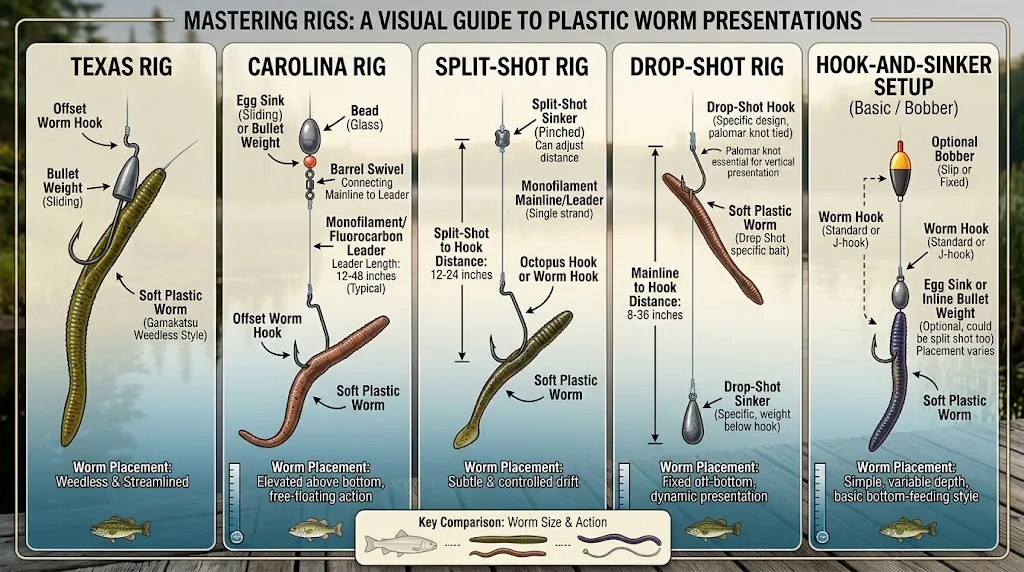
– Texas Rig With a Live Worm
A Texas rig is the best choice around weeds, brush, and wood. Use an EWG hook, bury the hook point slightly into the worm, and add a bullet weight if needed.
This rigged worm slips through cover with fewer snags. Keep the weight light enough that the worm falls naturally.
– Carolina Rig
A Carolina rig separates the weight from the hook, letting the worm move freely along the bottom. It works well on sandy flats, rocky points, and deeper drop-offs.
Slide a egg sinker onto your main line, add a bead, tie on a swivel, then attach a 12- to 18-inch leader and hook. Drag it slowly and pause often.
– Split-Shot Rig
A split-shot rig is one of the easiest ways to fish a live worm. Pin a small split shot 12 to 18 inches above the hook and cast it along the bottom.
This setup excels in shallow ponds, around docks, and in clear water where bass spook from heavy tackle.
– Drop-Shot Rig
Tie a drop-shot hook several inches to a foot above a weight that sits on the bottom. Hook the worm through the nose or middle so the tail can move freely.
A drop-shot rig keeps the live worm off the bottom and in front of suspended bass. It is especially good for smallmouth bass around rocks.
– Simple Hook-and-Sinker Setup
For beginners, use a size 1/0 or 2/0 hook, a small split shot or egg sinker, and a nightcrawler. Cast near cover, keep the line semi-tight, and watch for a tap, line movement, or a slow pull.
Best Hooks, Weights, and Fishing Gear for Live Worms
The right tackle helps you detect subtle bites and pull bass away from cover.
Recommended Hook Sizes for Bass
- Size 2 or 1: small red worms, mealworms, and finesse presentations.
- Size 1/0: average nightcrawlers and most pond bass.
- Size 2/0 or 3/0: full nightcrawlers, heavier cover, and bigger fish.
- EWG hooks: best for Texas-rigging worms through weeds and brush.
A hook that is too large can kill the worm’s action. A hook that is too small can result in missed hooksets.
Choosing the Right Sinker Weight
Use the lightest weight that lets you feel the bottom and maintain contact.
- 1/16 to 1/8 ounce: shallow water and slow falls.
- 1/4 ounce: average pond and lake fishing.
- 3/8 to 1/2 ounce: wind, current, deeper water, or heavier cover.
Too much weight makes the bait fall unnaturally and increases snags.
Spinning vs. Baitcasting Setups
A spinning rod and reel is easier for light worms, small weights, and long casts. Use a 6-foot-6-inch to 7-foot medium or medium-light rod.
A baitcasting setup gives more control with heavier line and bigger worms around thick cover. Use a medium-heavy or heavy rod when fishing brush piles or docks.
Best Fishing Line for Live Worm Presentations
- 6- to 8-pound monofilament: easy casting and forgiving hooksets.
- 8- to 12-pound fluorocarbon: low visibility and better sensitivity.
- 10- to 15-pound braid with a fluorocarbon leader: strong option for heavy cover.
Use heavier line when bass wrap you around wood or thick vegetation. Lighter line helps smaller baits move naturally in clear water.
How to Hook a Live Worm for Bass Fishing
Learning how to hook a live worm for bass fishing can make a noticeable difference in your fishing success. But should you thread the entire worm onto the hook or leave part of it hanging? The right hooking technique keeps your bait lively, creates natural movement, and makes it easier for bass to find and strike.
For bass fishing, hook a live worm once or twice through the body, leaving a section dangling freely to wiggle underwater. Use a size 1 to 2/0 bait hook for smaller worms and larger hooks for big nightcrawlers. Pair your worm with a Texas rig, split-shot rig, or bobber setup to match the water depth and cover.
From choosing the right hook size to avoiding common baiting mistakes, a few simple techniques can help you get more bites. Let’s walk through the best ways to hook live worms, keep them alive longer, and present them naturally to hungry largemouth and smallmouth bass.
Learning how to rig live worms for bass can help you catch more fish without spending money on expensive artificial lures. But which rig works best for live worms?
Hooking Nightcrawlers Properly
For a simple bottom rig, insert the hook through the worm’s head or collar, then thread it partway down the body. Leave 1 to 2 inches of tail exposed.
For a Texas rig, thread the worm onto the hook, then tuck the hook point back into the body. This creates a more weedless presentation. Threading vs. Hooking Through the Middle
Threading the worm makes it look streamlined and works well when bass are cautious. Hooking through the middle creates a curled, wriggling profile that can trigger reaction bites.
Try both. If bass follow but do not commit, change the hooking style before changing locations.
Keeping Worms Alive and Active
- Keep worms in a cool, ventilated container.
- Keep bedding damp, not soaked.
- Store them in shade, never in a hot car.
- Buy only what you can use in a day or two.
- Handle worms gently; damaged worms lose action quickly.
Avoiding Excessive Worm Damage
Do not thread the entire worm onto the hook. A bunched-up worm may stay on better, but it moves less and looks less natural. Leave a lively tail to create movement.
How to Fish With Live Worms to Catch More Bass
To catch more bass with live worms, choose lively nightcrawlers or smaller earthworms, match your hook size to the bait, and present the worm near weed beds, submerged timber, rocks, and other bass-holding structures.
Use a Texas rig, a simple split-shot rig, or a bobber setup to control depth and movement. Keep your presentation natural, watch your line closely, and adjust your technique to match water conditions and bass activity.
But choosing the right worm is only part of the equation. From hooking live worms correctly to selecting the best fishing rigs, finding productive locations, and detecting subtle bites, a few practical adjustments can make a real difference. Ready to put more bass in your fishing log? Let’s explore the techniques that help you get the most from every live worm.
The biggest trick in bass fishing with live worms is presentation. Most anglers fish too fast and use too much weight.
Fishing Slowly Along the Bottom
Cast past your target, let the worm sink, then move it only a few inches at a time. Keep contact with the bottom or cover. Pause for several seconds before moving again.
Bass often strike as the worm falls or during a pause.
Dragging Worms Through Vegetation
In weeds, use a Texas rig and crawl the worm along the outside edge. Pull it slowly through openings rather than ripping it through thick vegetation.
If you feel grass, stop and let the worm settle. Bass often grab it when it separates from the weeds.
Using Natural Pauses and Subtle Movements
A small twitch, slow drag, or gentle lift can make the worm look alive. Avoid constant reeling. Let the worm do the work.
In current, let the bait drift naturally with the flow instead of dragging it against the current.
Detecting Bites and Setting the Hook
Watch your line where it enters the water. A bite may look like a twitch, sideways movement, or slow pull.
When you detect a bite:
- Point the rod toward the fish.
- Reel down until you feel the bass.
- Sweep the rod firmly sideways or upward.
- Keep the rod bent and steer the fish away from cover.
Do not jerk at every tiny tick. Give the bass a brief moment to take the worm, especially with a larger nightcrawler.
Common Mistakes to Avoid When Bass Fishing With Live Worms
Avoid these mistakes and you will catch more bass with the same bait.
- Using oversized hooks: A huge hook reduces worm action and makes the bait look unnatural.
- Fishing too quickly: Bass often need time to find and eat a live worm.
- Using too much weight: Heavy sinkers kill the natural fall and cause snags.
- Choosing dead or damaged worms: A limp worm produces fewer bites.
- Setting the hook too early: Wait until you feel weight or see steady line movement.
- Ignoring cover: Open water rarely holds as many bass as weeds, wood, docks, or rocks.
- Using the same rig all day: Change depth, weight, and hooking style when bites slow down.
Frequently Asked Questions About Bass Fishing With Live Worms
Do bass prefer live worms or artificial worms?
Bass do not always prefer one over the other. Live worms offer real scent and movement, while plastic worms are easier to cast, store, and fish through cover. Use live worms when fish are sluggish; use artificial worms when you need to cover water quickly.
Are nightcrawlers good for largemouth bass?
Yes. Nightcrawlers are one of the best live baits for largemouth bass, especially around weeds, docks, brush, and pond cover.
What size hook is best for bass fishing with worms?
A size 1/0 or 2/0 hook fits most nightcrawlers and bass. Use size 2 or 1 for small worms and 3/0 for full-size crawlers or bigger fish.
Can you catch smallmouth bass with live worms?
How can you catch bass with worms? Yes. Smallmouth bass readily eat live worms, particularly around rocky banks, current breaks, and drop-offs. A drop-shot rig or split-shot rig works very well.
Should you use a bobber when fishing for bass with worms?
Use a bobber in shallow water, around vegetation, or when fishing with kids. Skip it when you need the worm to reach deeper water or crawl along the bottom.
Is live worm fishing effective in winter?
Live worm fishing for bass can be, but you must slow down. Use a smaller worm, lighter weight, and longer pauses. Bass feed less aggressively in cold water, so subtle presentations matter more.
What lure was banned by Bassmaster?
Bassmaster (B.A.S.S.) banned multi-lure rigs, most notably the Alabama Rig, from Elite Series competition under its one-lure rule. bassmaster
Which fish carry the most parasites?
Wild freshwater fish such as bass, perch, and especially bottom-feeders like carp and catfish often carry more parasites; among commonly eaten fish, wild-caught freshwater species generally pose a higher parasite risk than most ocean fish.
Do real worms attract large mouth bass?
Real worms, especially nightcrawlers, attract largemouth bass through natural scent, wriggling movement, and an easy-to-eat profile. They work best fished slowly near weeds, docks, brush, and other cover, though they may also attract panfish and catfish.
Conclusion
Bass fishing with live worms remains one of the most dependable ways to catch bass, whether you fish a small pond from the bank or work deeper brush piles from a boat. A live nightcrawler gives bass the natural scent, motion, and easy meal they recognize, while the right rig keeps your bait in the strike zone longer.
Start with a 1/0 or 2/0 hook, use the lightest weight that reaches the bottom, and target weeds, wood, docks, rocks, and drop-offs. Fish slowly, watch your line, and let the worm pause where bass are likely to ambush prey. When the bite slows, change the size of the worm, reduce your weight, or switch from a simple hook-and-sinker setup to a Texas rig, Carolina rig, or drop-shot rig.
You do not need expensive tackle or complicated techniques to catch bass with live worms. You need the right bait, a sensible rig, good cover, and patience. Put a lively worm in front of a bass, give it time to inspect the offering, and set the hook when you feel that unmistakable pull.
Related Articles you might love:
- Are Minnows Good Bait For Bass Fishing? (21 Fun Facts About Minnows)
- How To Choose The Best Salmon Lures For Rivers (Complete Guide)
- Do You Need A Bite Alarm For Carp Fishing? (Bite Alarms For Beginners Guide)